Andersson Helen A, Kim Yoo-Shin, O'Neill Brian E, Shi Zheng-Zheng, Serda Rita E
Department of Nanomedicine, Houston Methodist Research Institute, Houston, TX.
Department of Translational Imaging, Houston Methodist Research Institute, Houston, TX.
Vaccines (Basel). 2014 Mar 25;2(2):216-27. doi: 10.3390/vaccines2020216.
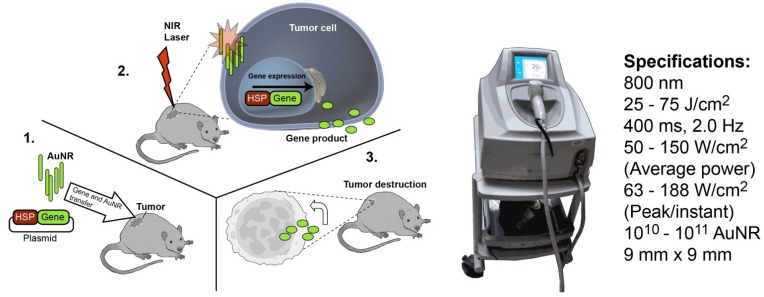
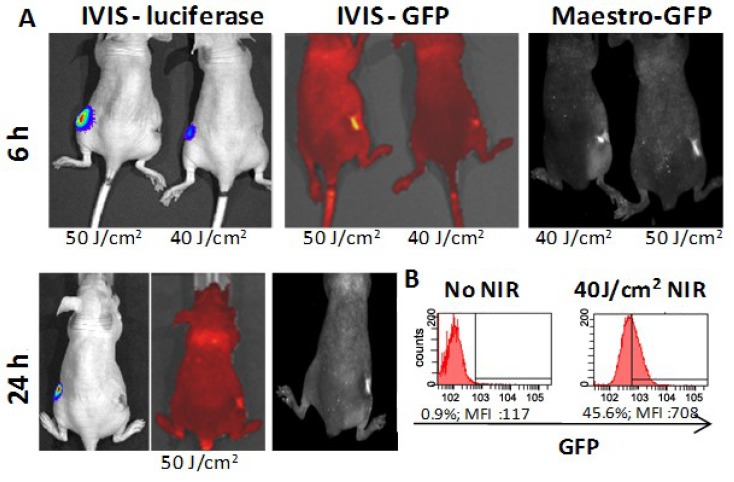
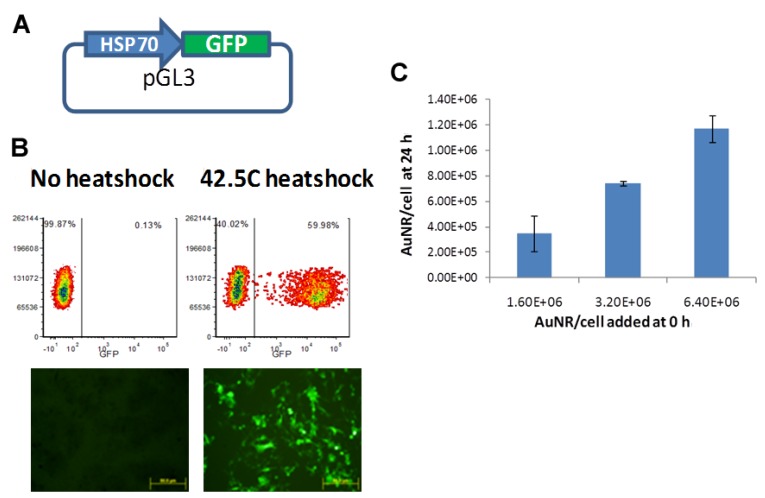
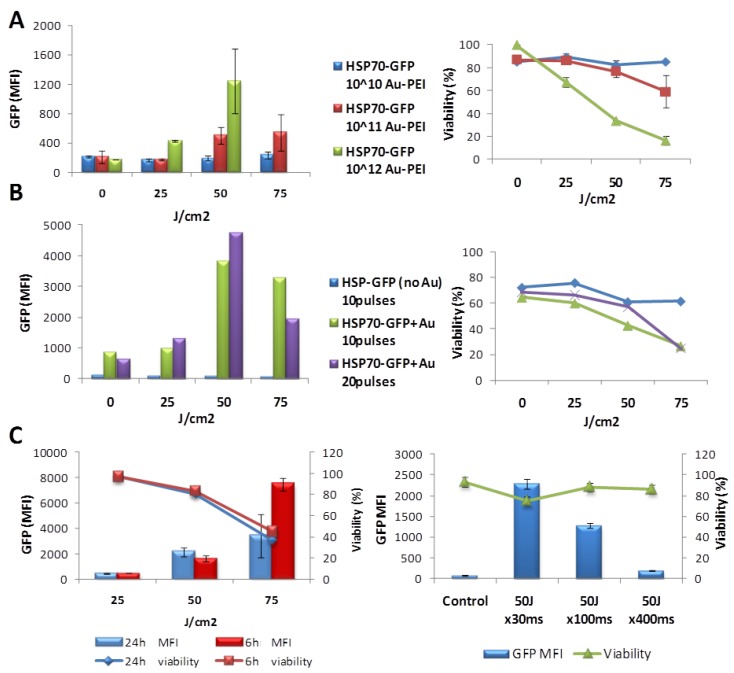
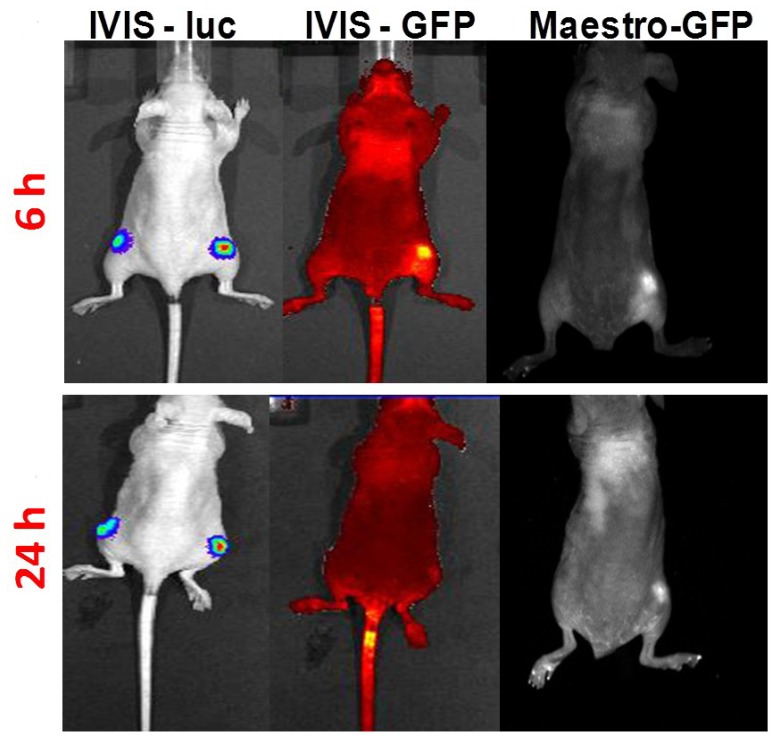
Modulation of the cytokine milieu is one approach for vaccine development. However, therapy with pro-inflammatory cytokines, such as IL-12, is limited in practice due to adverse systemic effects. Spatially-restricted gene expression circumvents this problem by enabling localized amplification. Intracellular co-delivery of gold nanorods (AuNR) and a heat shock protein 70 (HSP70) promoter-driven expression vector enables gene expression in response to near infrared (NIR) light. AuNRs absorb the light, convert it into heat and thereby stimulate photothermal expression of the cytokine. As proof-of-concept, human HeLa and murine B16 cancer cells were transfected with a HSP70-Enhanced Green Fluorescent Protein (EGFP) plasmid and polyethylenimine (PEI)-conjugated AuNRs. Exposure to either 42 °C heat-shock or NIR light induced significant expression of the reporter gene. In vivo NIR driven expression of the reporter gene was confirmed at 6 and 24 h in mice bearing B16 melanoma tumors using in vivo imaging and flow-cytometric analysis. Overall, we demonstrate a novel opportunity for site-directed, heat-inducible expression of a gene based upon the NIR-absorbing properties of AuNRs and a HSP70 promoter-driven expression vector.
调节细胞因子环境是疫苗开发的一种方法。然而,由于全身性不良反应,使用促炎细胞因子(如IL-12)进行治疗在实践中受到限制。空间受限的基因表达通过实现局部扩增来规避这一问题。金纳米棒(AuNR)与热休克蛋白70(HSP70)启动子驱动的表达载体的细胞内共递送能够响应近红外(NIR)光进行基因表达。AuNR吸收光,将其转化为热,从而刺激细胞因子的光热表达。作为概念验证,用HSP70增强型绿色荧光蛋白(EGFP)质粒和聚乙烯亚胺(PEI)偶联的AuNR转染人HeLa细胞和小鼠B16癌细胞。暴露于42°C热休克或NIR光会诱导报告基因的显著表达。使用体内成像和流式细胞术分析,在携带B16黑色素瘤肿瘤的小鼠中,在6小时和24小时时证实了报告基因的体内NIR驱动表达。总体而言,我们基于AuNR的近红外吸收特性和HSP70启动子驱动的表达载体,展示了一种用于基因的定点、热诱导表达的新机会。