Harris J Kirk, El Kasmi Karim C, Anderson Aimee L, Devereaux Michael W, Fillon Sophie A, Robertson Charles E, Wagner Brandie D, Stevens Mark J, Pace Norman R, Sokol Ronald J
Department of Pediatrics, Section of Pulmonary Medicine, University of Colorado, Aurora, Colorado, United States of America.
Department of Pediatrics, Section of Gastroenterology, Hepatology and Nutrition, Digestive Health Institute, Children's Hospital Colorado, University of Colorado School of Medicine, Aurora, Colorado, United States of America.
PLoS One. 2014 Oct 20;9(10):e110396. doi: 10.1371/journal.pone.0110396. eCollection 2014.
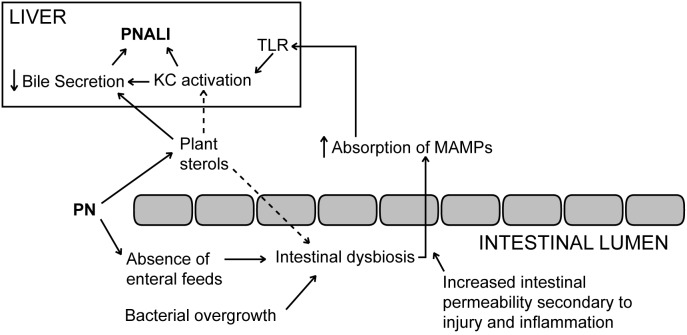
Parenteral nutrition (PN) has been a life-saving treatment in infants intolerant of enteral feedings. However, PN is associated with liver injury (PN Associated Liver Injury: PNALI) in a significant number of PN-dependent infants. We have previously reported a novel PNALI mouse model in which PN infusion combined with intestinal injury results in liver injury. In this model, lipopolysaccharide activation of toll-like receptor 4 signaling, soy oil-derived plant sterols, and pro-inflammatory activation of Kupffer cells (KCs) played key roles. The objective of this study was to explore changes in the intestinal microbiome associated with PNALI.
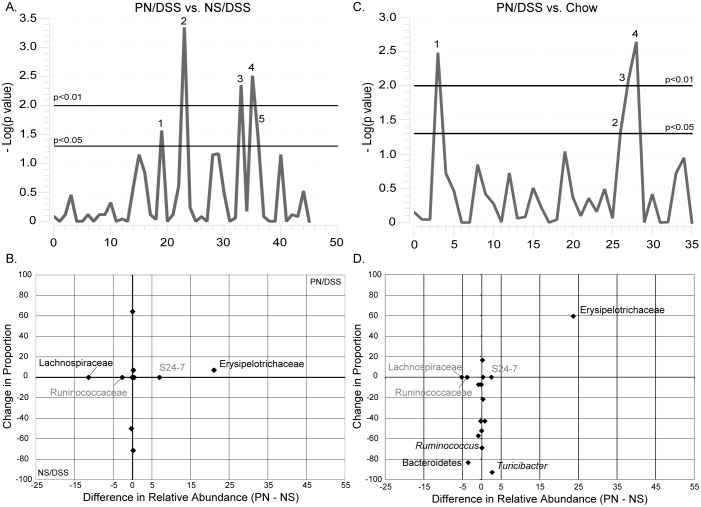
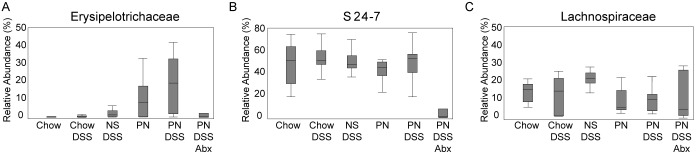
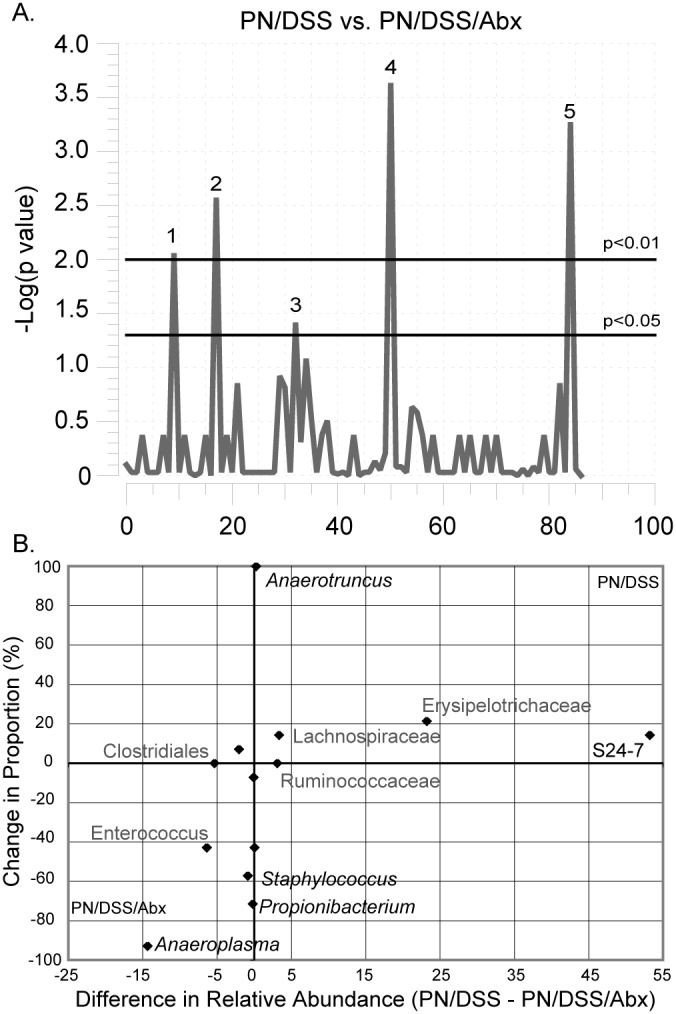
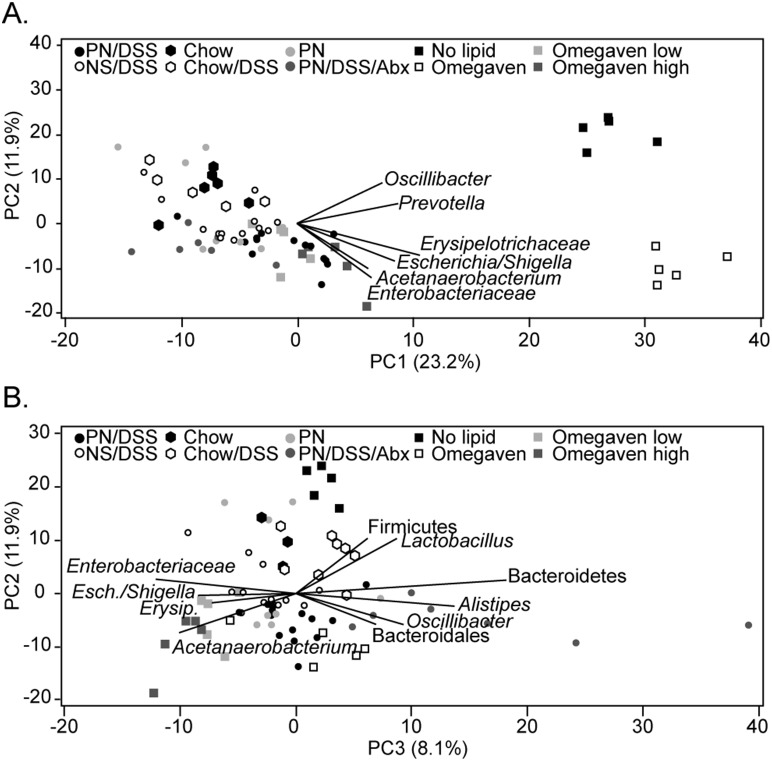
Microbiome analysis in the PNALI mouse identified specific alterations within colonic microbiota associated with PNALI and further association of these communities with the lipid composition of the PN solution. Intestinal inflammation or soy oil-based PN infusion alone (in the absence of enteral feeds) caused shifts within the gut microbiota. However, the combination resulted in accumulation of a specific taxon, Erysipelotrichaceae (23.8% vs. 1.7% in saline infused controls), in PNALI mice. Moreover, PNALI was markedly attenuated by enteral antibiotic treatment, which also was associated with significant reduction of Erysipelotrichaceae (0.6%) and a Gram-negative constituent, the S24-7 lineage of Bacteroidetes (53.5% in PNALI vs. 0.8%). Importantly, removal of soy oil based-lipid emulsion from the PN solution resulted in significant reduction of Erysipelotrichaceae as well as attenuation of PNALI. Finally, addition of soy-derived plant sterol (stigmasterol) to fish oil-based PN restored Erysipelotrichaceae abundance and PNALI.
Soy oil-derived plant sterols and the associated specific bacterial groups in the colonic microbiota are associated with PNALI. Products from these bacteria may directly trigger activation of KCs and promote PNALI. Furthermore, the results indicate that lipid modification of PN solutions may alter specific intestinal bacterial species associated with PNALI, and thus suggest strategies for management of PNALI.
肠外营养(PN)一直是不耐受肠内喂养婴儿的一种挽救生命的治疗方法。然而,在大量依赖PN的婴儿中,PN与肝损伤(PN相关性肝损伤:PNALI)有关。我们之前报道了一种新型的PNALI小鼠模型,其中PN输注与肠道损伤相结合会导致肝损伤。在这个模型中,Toll样受体4信号通路的脂多糖激活、大豆油衍生的植物甾醇以及库普弗细胞(KCs)的促炎激活起到了关键作用。本研究的目的是探索与PNALI相关的肠道微生物群的变化。
对PNALI小鼠的微生物群分析确定了结肠微生物群中与PNALI相关的特定改变,以及这些群落与PN溶液脂质组成的进一步关联。单独的肠道炎症或基于大豆油的PN输注(在没有肠内喂养的情况下)会导致肠道微生物群的变化。然而,两者结合导致特定分类群——丹毒丝菌科(在输注生理盐水的对照组中为1.7%,在PNALI小鼠中为23.8%)在PNALI小鼠中积累。此外,肠内抗生素治疗显著减轻了PNALI,这也与丹毒丝菌科(0.6%)和革兰氏阴性成分——拟杆菌门的S24-7谱系(PNALI中为53.5%,而对照组为0.8%)的显著减少有关。重要的是,从PN溶液中去除基于大豆油的脂质乳剂导致丹毒丝菌科显著减少以及PNALI减轻。最后,在基于鱼油的PN中添加大豆衍生的植物甾醇(豆甾醇)恢复了丹毒丝菌科的丰度和PNALI。
大豆油衍生的植物甾醇和结肠微生物群中相关的特定细菌群与PNALI有关。这些细菌的产物可能直接触发KCs的激活并促进PNALI。此外,结果表明PN溶液的脂质修饰可能会改变与PNALI相关的特定肠道细菌种类,从而提出了管理PNALI的策略。