The Howard Hughes Medical Institute and Department of Immunology, The University of Texas Southwestern Medical Center at Dallas, Dallas, TX 75390, USA.
Science. 2012 Jun 8;336(6086):1268-73. doi: 10.1126/science.1223490. Epub 2012 Jun 6.
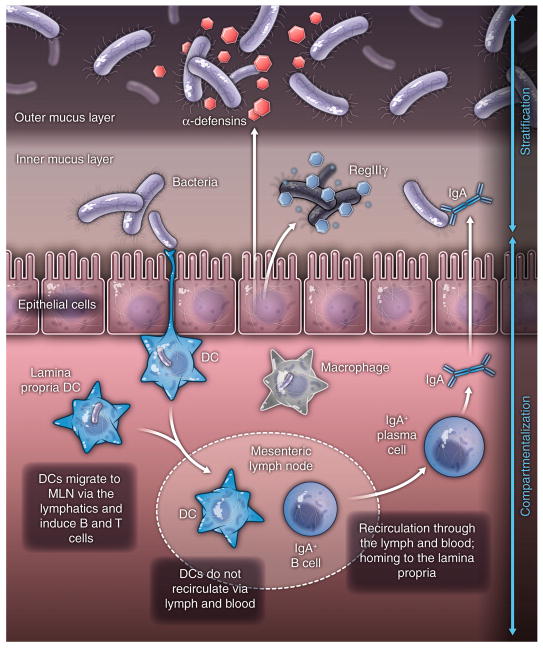
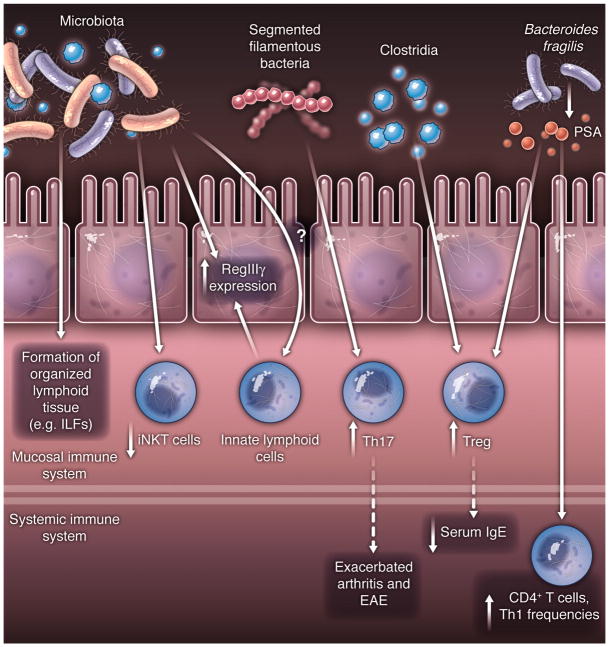
The large numbers of microorganisms that inhabit mammalian body surfaces have a highly coevolved relationship with the immune system. Although many of these microbes carry out functions that are critical for host physiology, they nevertheless pose the threat of breach with ensuing pathologies. The mammalian immune system plays an essential role in maintaining homeostasis with resident microbial communities, thus ensuring that the mutualistic nature of the host-microbial relationship is maintained. At the same time, resident bacteria profoundly shape mammalian immunity. Here, we review advances in our understanding of the interactions between resident microbes and the immune system and the implications of these findings for human health.
大量栖息在哺乳动物体表的微生物与免疫系统有着高度协同进化的关系。尽管其中许多微生物发挥着对宿主生理至关重要的功能,但它们仍然构成了突破宿主防御从而引发相关疾病的威胁。哺乳动物的免疫系统在维持与常驻微生物群落的体内平衡中发挥着至关重要的作用,从而确保了宿主与微生物之间共生关系的维持。与此同时,常驻细菌也深刻地影响着哺乳动物的免疫。在这里,我们回顾了对常驻微生物与免疫系统之间相互作用的理解的进展,以及这些发现对人类健康的影响。