Vallely Lisa M, Homiehombo Primrose, Kelly-Hanku Angela, Kumbia Antonia, Mola Glen D L, Whittaker Andrea
Sexual and Reproductive Health Unit, Papua New Guinea Institute of Medical Research, Alotau, Milne Bay Province, Papua New Guinea.
Sexual and Reproductive Health Unit, Papua New Guinea Institute of Medical Research, Goroka, Eastern Highlands Province, Papua New Guinea.
PLoS One. 2014 Oct 17;9(10):e110791. doi: 10.1371/journal.pone.0110791. eCollection 2014.
In Papua New Guinea abortion is restricted under the Criminal Code Act. While safe abortions should available in certain situations, frequently they are not available to the majority of women. Sepsis from unsafe abortion is a leading cause of maternal mortality. Our findings form part of a wider, mixed methods study designed to identify complications requiring hospital treatment for post abortion care and to explore the circumstances surrounding unsafe abortion.
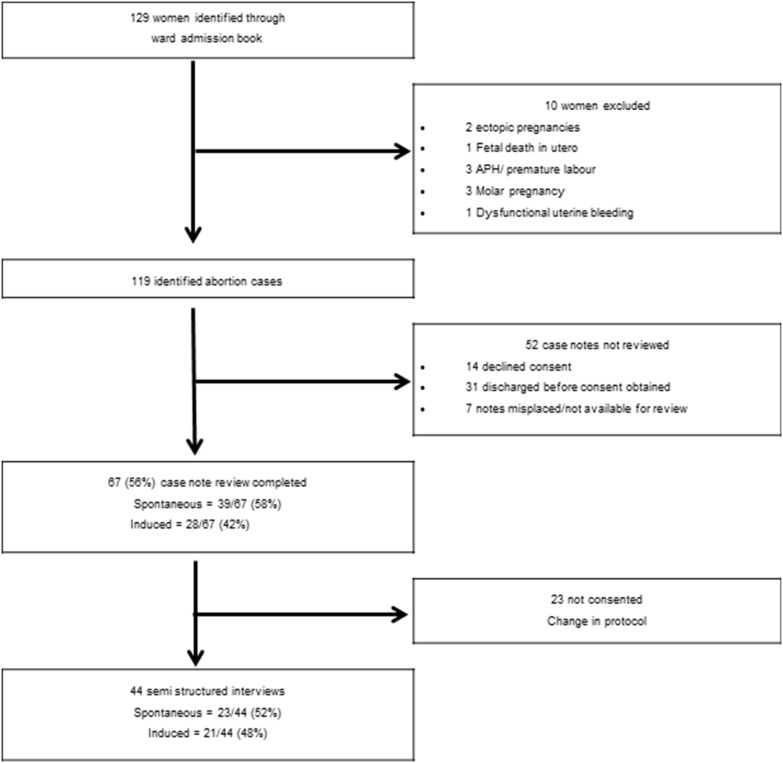
Through a six month prospective study we identified all women presenting to the Eastern Highlands Provincial Hospital following spontaneous and induced abortions. We undertook semi-structured interviews with women and reviewed individual case notes, extracting demographic and clinical information.
Case notes were reviewed for 56% (67/119) of women presenting for post abortion care. At least 24% (28/119) of these admissions were due to induced abortion. Women presenting following induced abortions were significantly more likely to be younger, single, in education at the time of the abortion and report that the baby was unplanned and unwanted, compared to those reporting spontaneous abortion. Obtained illegally, misoprostol was the method most frequently used to end the pregnancy. Physical and mechanical means and traditional herbs were also widely reported.
In a country with a low contraceptive prevalence rate and high unmet need for family planning, all reproductive age women need access to contraceptive information and services to avoid, postpone or space pregnancies. In the absence of this, women are resorting to unsafe means to end an unwanted pregnancy, putting their lives at risk and putting an increased strain on an already struggling health system. Women in this setting need access to safe, effective means of abortion.
在巴布亚新几内亚,堕胎受到《刑法典》的限制。虽然在某些情况下应提供安全堕胎服务,但大多数妇女往往无法获得。不安全堕胎引起的败血症是孕产妇死亡的主要原因。我们的研究结果是一项更广泛的混合方法研究的一部分,该研究旨在确定堕胎后护理需要住院治疗的并发症,并探讨不安全堕胎的相关情况。
通过为期六个月的前瞻性研究,我们确定了所有因自然流产和人工流产后到东高地省医院就诊的妇女。我们对这些妇女进行了半结构化访谈,并查阅了个人病历,提取了人口统计学和临床信息。
对前来接受堕胎后护理的妇女中56%(67/119)的病历进行了审查。这些入院病例中至少24%(28/119)是由于人工流产。与自然流产的妇女相比,人工流产后就诊的妇女明显更年轻、单身、流产时正在接受教育,并且报告称孩子是意外怀孕且不想要的。米索前列醇是非法获取的,是最常被用于终止妊娠的方法。物理和机械手段以及传统草药也被广泛提及。
在一个避孕普及率低且计划生育需求未得到满足程度高的国家,所有育龄妇女都需要获得避孕信息和服务,以避免、推迟或间隔怀孕。如果没有这些,妇女会采取不安全的方式来终止意外怀孕,将自己的生命置于危险之中,并给本就不堪重负的卫生系统带来更大压力。在这种情况下,妇女需要获得安全、有效的堕胎方式。