Aslam Tariq, Delcourt Cécile, Holz Frank, García-Layana Alfredo, Leys Anita, Silva Rufino M, Souied Eric
Manchester Royal Eye Hospital, Manchester, UK.
University of Bordeaux, Bordeaux, France.
Clin Ophthalmol. 2014 Oct 10;8:2045-53. doi: 10.2147/OPTH.S63937. eCollection 2014.
To evaluate ophthalmologists' opinion of, and use of, micronutritional dietary supplements 10 years after publication of the first Age-Related Eye Disease Study (AREDS) study.
Participation was solicited from 4,000 European ophthalmologists. Responding physicians were screened, and those treating at least 40 patients with age-related macular degeneration (AMD) per month and prescribing nutrition supplements at least 4 times per month were admitted and completed a 40-item questionnaire.
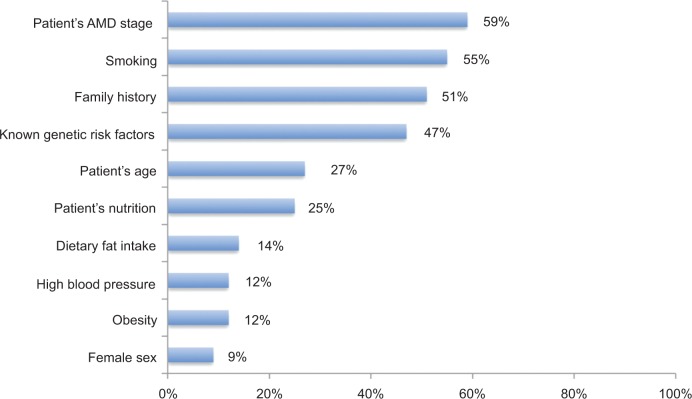
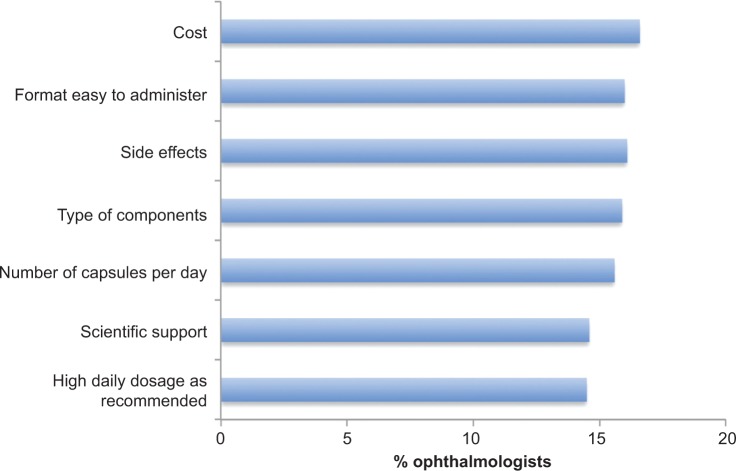
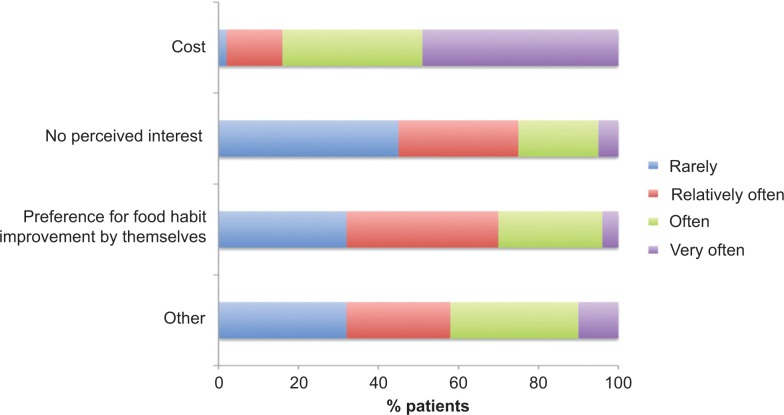
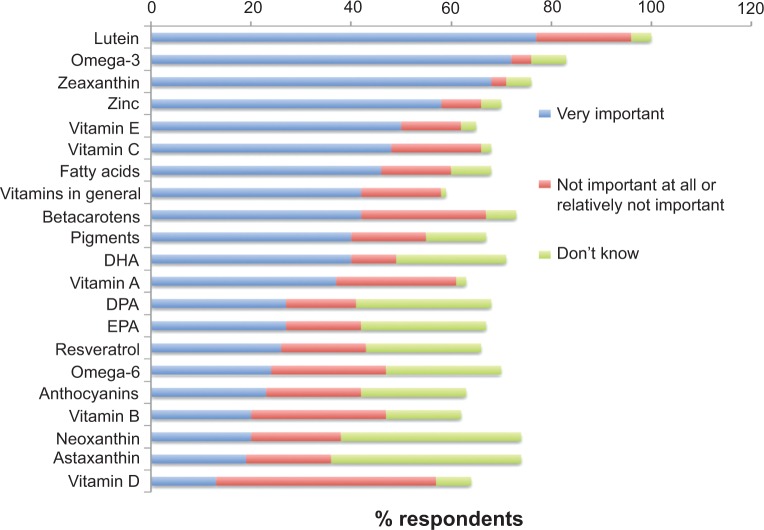
The surveyed sample included 112 general ophthalmologists and 104 retinal specialists. Most nutritional supplements (46%) were initiated when early/intermediate AMD was confirmed, although 18% were initiated on confirmation of neovascular AMD. Clinical studies were well known: 90% were aware of AREDS, with 88% aware of AREDS1 and 36% aware of the, as-yet-unpublished, AREDS2 studies. Respondents considered lutein, zeaxanthin, zinc, omega-3, and vitamins to be the most important components of nutritional supplements, with the results of AREDS2 already having been taken into consideration by many. Ophthalmologists anticipate more scientific studies as well as improved product quality but identify cost as a barrier to wider uptake.
Micronutrition is now part of the routine management of AMD for many ophthalmologists. Ophthalmologists choosing to use nutritional supplements are well-informed regarding current scientific studies.
在首项年龄相关性眼病研究(AREDS)发表10年后,评估眼科医生对微量营养膳食补充剂的看法及使用情况。
向4000名欧洲眼科医生发出参与邀请。对回复的医生进行筛选,每月治疗至少40例年龄相关性黄斑变性(AMD)患者且每月至少开具营养补充剂处方4次的医生被纳入研究并完成一份包含40个条目的问卷。
被调查样本包括112名普通眼科医生和104名视网膜专科医生。大多数营养补充剂(46%)是在确诊早期/中期AMD时开始使用的,不过18%是在确诊新生血管性AMD时开始使用的。临床研究广为人知:90%的人知晓AREDS,88%的人知晓AREDS1,36%的人知晓尚未发表的AREDS2研究。受访者认为叶黄素、玉米黄质、锌、ω-3脂肪酸和维生素是营养补充剂中最重要的成分,许多人已经考虑到了AREDS2的研究结果。眼科医生期望有更多的科学研究以及产品质量的提升,但认为成本是更广泛应用的障碍。
对许多眼科医生来说,微量营养现在是AMD常规治疗的一部分。选择使用营养补充剂的眼科医生对当前的科学研究有充分了解。