Albert Frank W, Muzzey Dale, Weissman Jonathan S, Kruglyak Leonid
Department of Human Genetics, University of California, Los Angeles, Los Angeles, California, United States of America.
Department of Cellular and Molecular Pharmacology, California Institute for Quantitative Biomedical Research, Center for RNA Systems Biology, and Howard Hughes Medical Institute, University of California, San Francisco, San Francisco, California, United States of America.
PLoS Genet. 2014 Oct 23;10(10):e1004692. doi: 10.1371/journal.pgen.1004692. eCollection 2014 Oct.
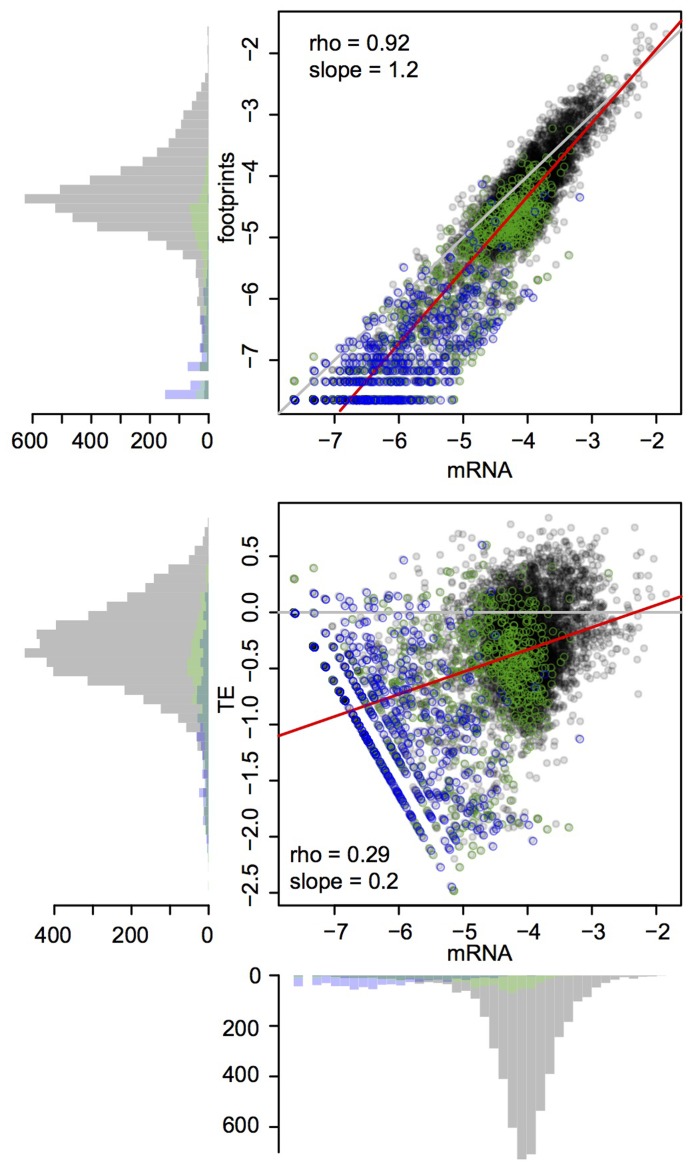
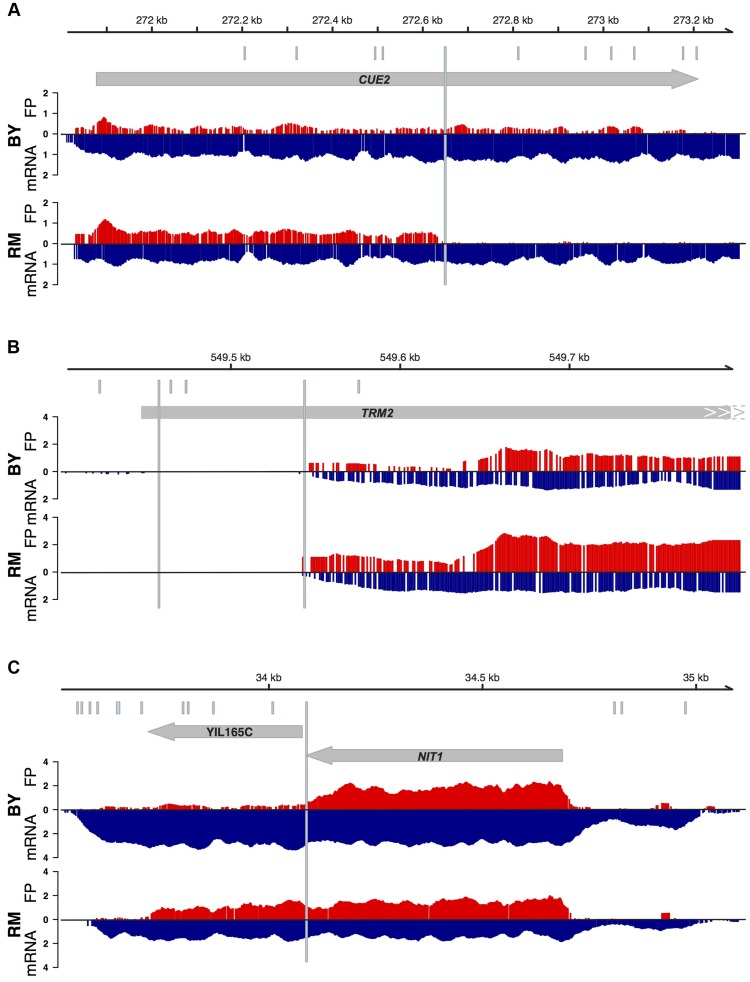
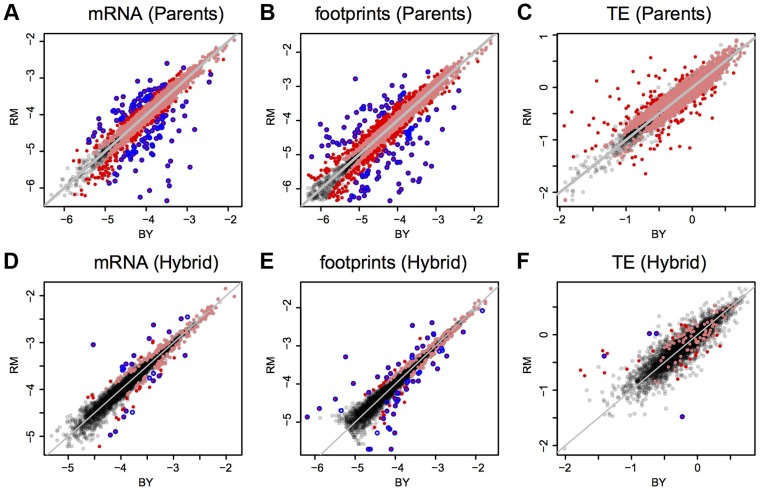
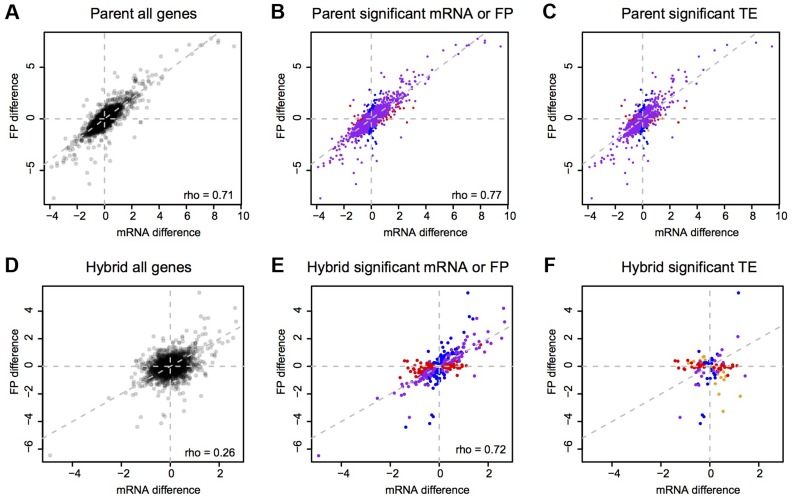
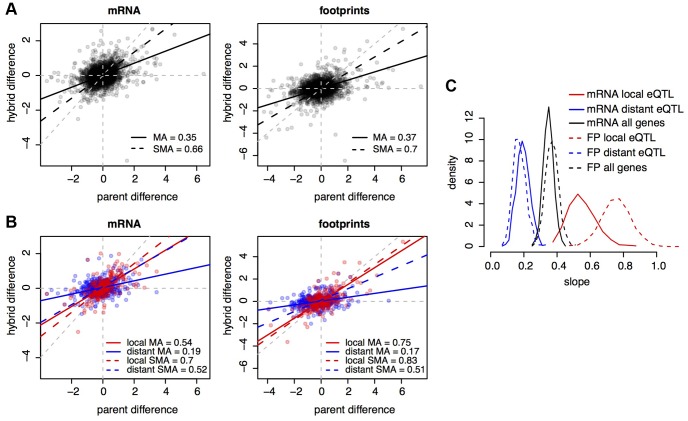
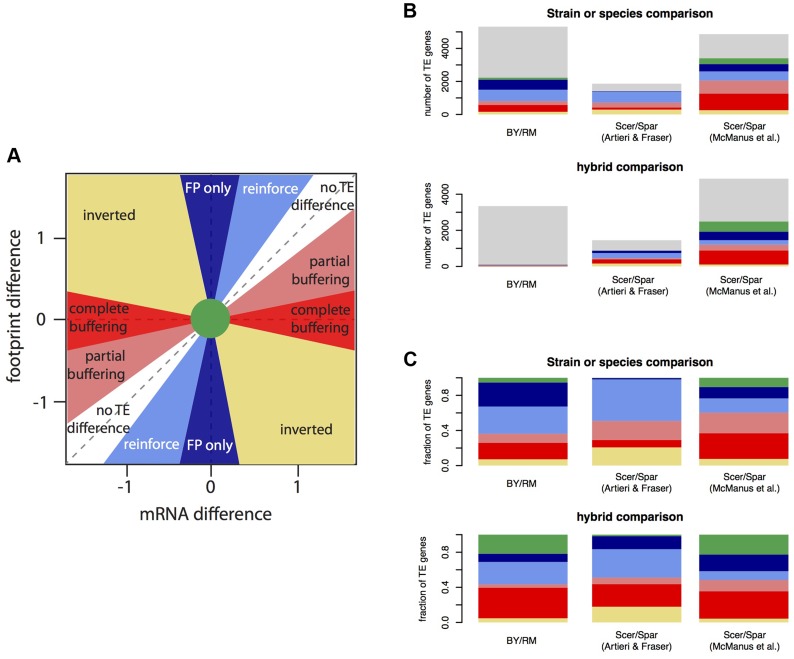
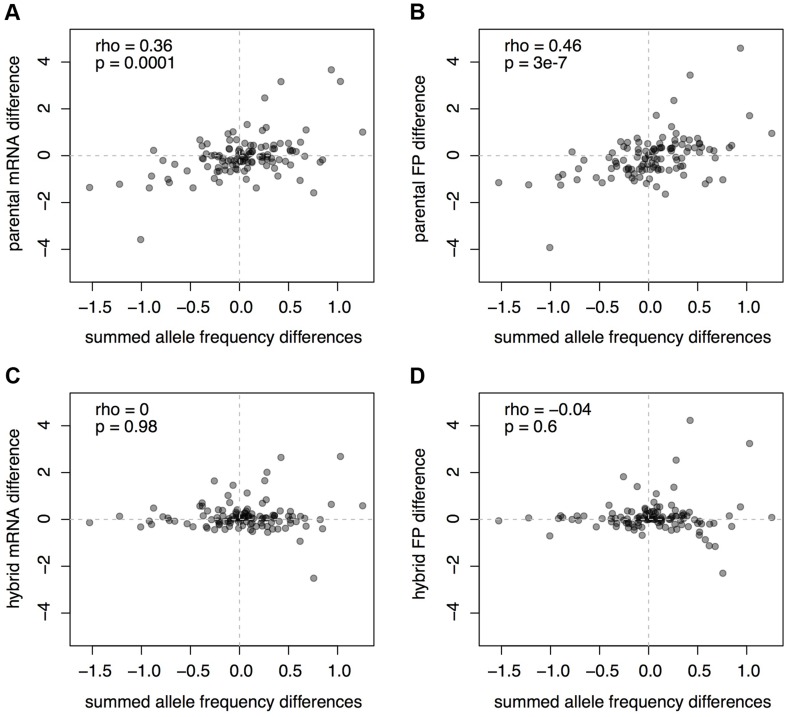
Heritable differences in gene expression between individuals are an important source of phenotypic variation. The question of how closely the effects of genetic variation on protein levels mirror those on mRNA levels remains open. Here, we addressed this question by using ribosome profiling to examine how genetic differences between two strains of the yeast S. cerevisiae affect translation. Strain differences in translation were observed for hundreds of genes. Allele specific measurements in the diploid hybrid between the two strains revealed roughly half as many cis-acting effects on translation as were observed for mRNA levels. In both the parents and the hybrid, most effects on translation were of small magnitude, such that the direction of an mRNA difference was typically reflected in a concordant footprint difference. The relative importance of cis and trans acting variation on footprint levels was similar to that for mRNA levels. There was a tendency for translation to cause larger footprint differences than expected given the respective mRNA differences. This is in contrast to translational differences between yeast species that have been reported to more often oppose than reinforce mRNA differences. Finally, we catalogued instances of premature translation termination in the two yeast strains and also found several instances where erroneous reference gene annotations lead to apparent nonsense mutations that in fact reside outside of the translated gene body. Overall, genetic influences on translation subtly modulate gene expression differences, and translation does not create strong discrepancies between genetic influences on mRNA and protein levels.
个体之间基因表达的可遗传差异是表型变异的重要来源。遗传变异对蛋白质水平的影响与对mRNA水平的影响究竟有多相似,这个问题仍然没有答案。在这里,我们通过核糖体分析来研究酿酒酵母两个菌株之间的遗传差异如何影响翻译,从而解决了这个问题。数百个基因存在翻译上的菌株差异。在两个菌株的二倍体杂种中进行的等位基因特异性测量显示,对翻译的顺式作用效应大约只有对mRNA水平的一半。在亲本和杂种中,大多数对翻译的影响程度较小,因此mRNA差异的方向通常反映在一致的足迹差异中。顺式和反式作用变异对足迹水平的相对重要性与对mRNA水平的相似。与已报道的酵母物种之间的翻译差异相比,翻译更倾向于导致比预期更大的足迹差异,而酵母物种之间的翻译差异更多是相反而非加强mRNA差异。最后,我们梳理了两个酵母菌株中过早翻译终止的情况,还发现了几个实例,即错误的参考基因注释导致明显的无义突变,而实际上这些突变位于翻译基因体之外。总体而言,遗传对翻译的影响微妙地调节了基因表达差异,并且翻译并没有在遗传对mRNA和蛋白质水平的影响之间造成强烈差异。