Forrester Naomi L, Coffey Lark L, Weaver Scott C
Institute for Human Infections and Immunity, Department of Pathology, University of Texas Medical Branch, Galveston, TX 77555-0610, USA.
Center for Vectorborne Diseases and Department of Pathology, Microbiology and Immunology, School of Veterinary Medicine, University of California, Davis, CA 95616, USA.
Viruses. 2014 Oct 23;6(10):3991-4004. doi: 10.3390/v6103991.
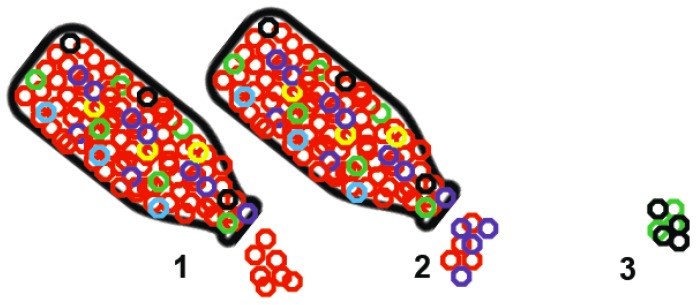
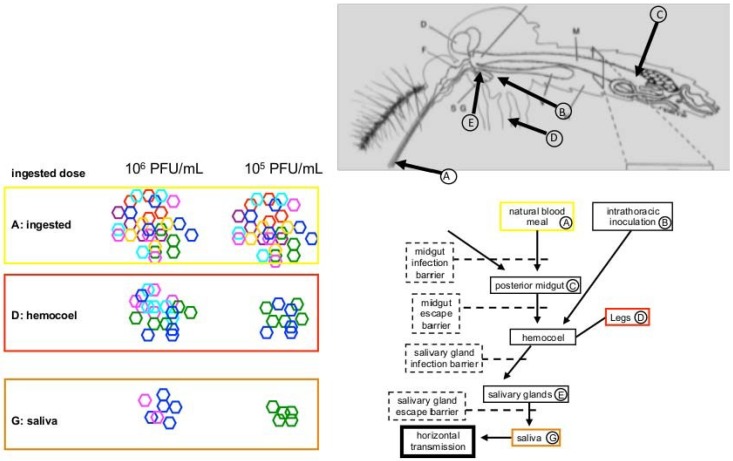
The term arbovirus denotes viruses that are transmitted by arthropods, such as ticks, mosquitoes, and other biting arthropods. The infection of these vectors produces a certain set of evolutionary pressures on the virus; involving migration from the midgut, where the blood meal containing the virus is processed, to the salivary glands, in order to transmit the virus to the next host. During this process the virus is subject to numerous bottlenecks, stochastic events that significantly reduce the number of viral particles that are able to infect the next stage. This article reviews the latest research on the bottlenecks that occur in arboviruses and the way in which these affect the evolution and fitness of these viruses. In particular we focus on the latest research on three important arboviruses, West Nile virus, Venezuelan equine encephalitis virus and Chikungunya viruses and compare the differing effects of the mosquito bottlenecks on these viruses as well as other evolutionary pressures that affect their evolution and transmission.
虫媒病毒一词指的是由节肢动物传播的病毒,如蜱、蚊子和其他叮咬性节肢动物。这些媒介的感染会给病毒带来一系列特定的进化压力;包括从含有病毒的血餐被处理的中肠迁移到唾液腺,以便将病毒传播给下一个宿主。在此过程中,病毒会经历众多瓶颈,即随机事件,这些事件会显著减少能够感染下一阶段的病毒颗粒数量。本文综述了关于虫媒病毒中出现的瓶颈以及这些瓶颈影响这些病毒进化和适应性的方式的最新研究。特别是,我们重点关注了三种重要虫媒病毒——西尼罗河病毒、委内瑞拉马脑炎病毒和基孔肯雅病毒的最新研究,并比较了蚊子瓶颈对这些病毒的不同影响以及影响它们进化和传播的其他进化压力。