Lois Giannis, Linke Julia, Wessa Michèle
Department of Clinical Psychology and Neuropsychology, Institute of Psychology, Johannes Gutenberg-University Mainz, Mainz, Germany.
PLoS One. 2014 Oct 24;9(10):e107829. doi: 10.1371/journal.pone.0107829. eCollection 2014.
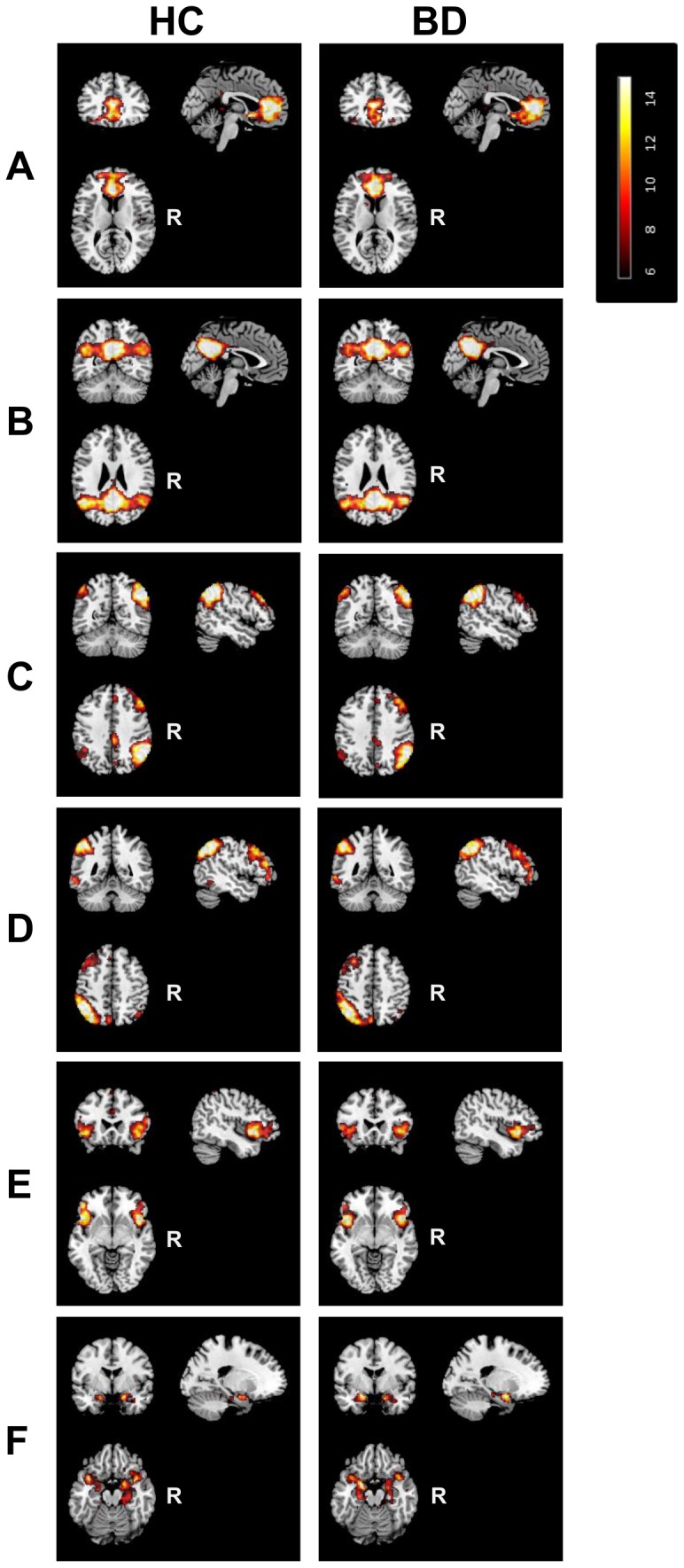
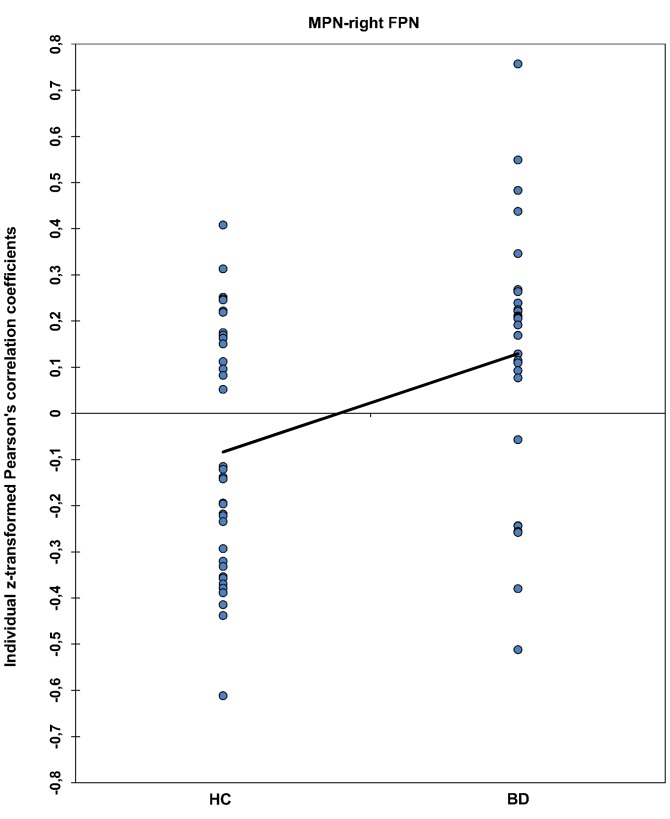
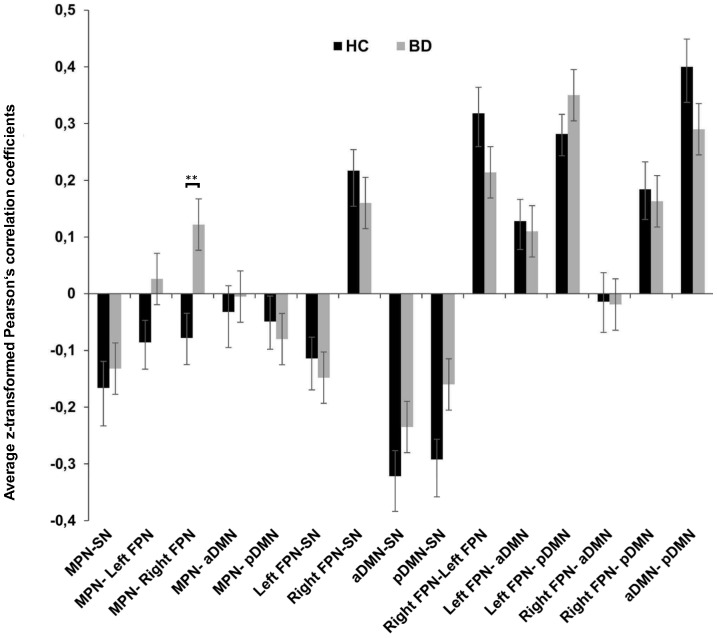
Bipolar disorder is characterized by a functional imbalance between hyperactive ventral/limbic areas and hypoactive dorsal/cognitive brain regions potentially contributing to affective and cognitive symptoms. Resting-state studies in bipolar disorder have identified abnormal functional connectivity between these brain regions. However, most of these studies used a seed-based approach, thus restricting the number of regions that were analyzed. Using data-driven approaches, researchers identified resting state networks whose spatial maps overlap with frontolimbic areas such as the default mode network, the frontoparietal networks, the salient network, and the meso/paralimbic network. These networks are specifically engaged during affective and cognitive tasks and preliminary evidence suggests that functional connectivity within and between some of these networks is impaired in bipolar disorder. The present study used independent component analysis and functional network connectivity approaches to investigate functional connectivity within and between these resting state networks in bipolar disorder. We compared 30 euthymic bipolar I disorder patients and 35 age- and gender-matched healthy controls. Inter-network connectivity analysis revealed increased functional connectivity between the meso/paralimbic and the right frontoparietal network in bipolar disorder. This abnormal connectivity pattern did not correlate with variables related to the clinical course of the disease. The present finding may reflect abnormal integration of affective and cognitive information in ventral-emotional and dorsal-cognitive networks in euthymic bipolar patients. Furthermore, the results provide novel insights into the role of the meso/paralimbic network in bipolar disorder.
双相情感障碍的特征是腹侧/边缘系统区域过度活跃与背侧/认知脑区活动不足之间的功能失衡,这可能导致情感和认知症状。双相情感障碍的静息态研究已经确定了这些脑区之间异常的功能连接。然而,这些研究大多采用基于种子点的方法,因此限制了所分析区域的数量。使用数据驱动方法,研究人员识别出静息态网络,其空间图谱与前额叶边缘区域重叠,如默认模式网络、额顶叶网络、突显网络和中脑/边缘旁网络。这些网络在情感和认知任务中特别活跃,初步证据表明,双相情感障碍患者中这些网络内部以及之间的功能连接受损。本研究采用独立成分分析和功能网络连接方法,研究双相情感障碍患者中这些静息态网络内部以及之间的功能连接。我们比较了30名处于缓解期的双相I型障碍患者和35名年龄及性别匹配的健康对照者。网络间连接性分析显示,双相情感障碍患者中脑/边缘旁网络与右侧额顶叶网络之间的功能连接增加。这种异常的连接模式与疾病临床病程相关变量无关。目前的发现可能反映了处于缓解期的双相情感障碍患者腹侧情感网络和背侧认知网络中情感和认知信息的异常整合。此外,研究结果为中脑/边缘旁网络在双相情感障碍中的作用提供了新的见解。