Murgiano Leonardo, Jagannathan Vidhya, Calderoni Valerio, Joechler Monika, Gentile Arcangelo, Drögemüller Cord
Institute of Genetics, Vetsuisse Faculty, University of Bern, Bern, Switzerland.
Bovine practitioner, Fontanelice, Italy.
PLoS One. 2014 Oct 27;9(10):e110628. doi: 10.1371/journal.pone.0110628. eCollection 2014.
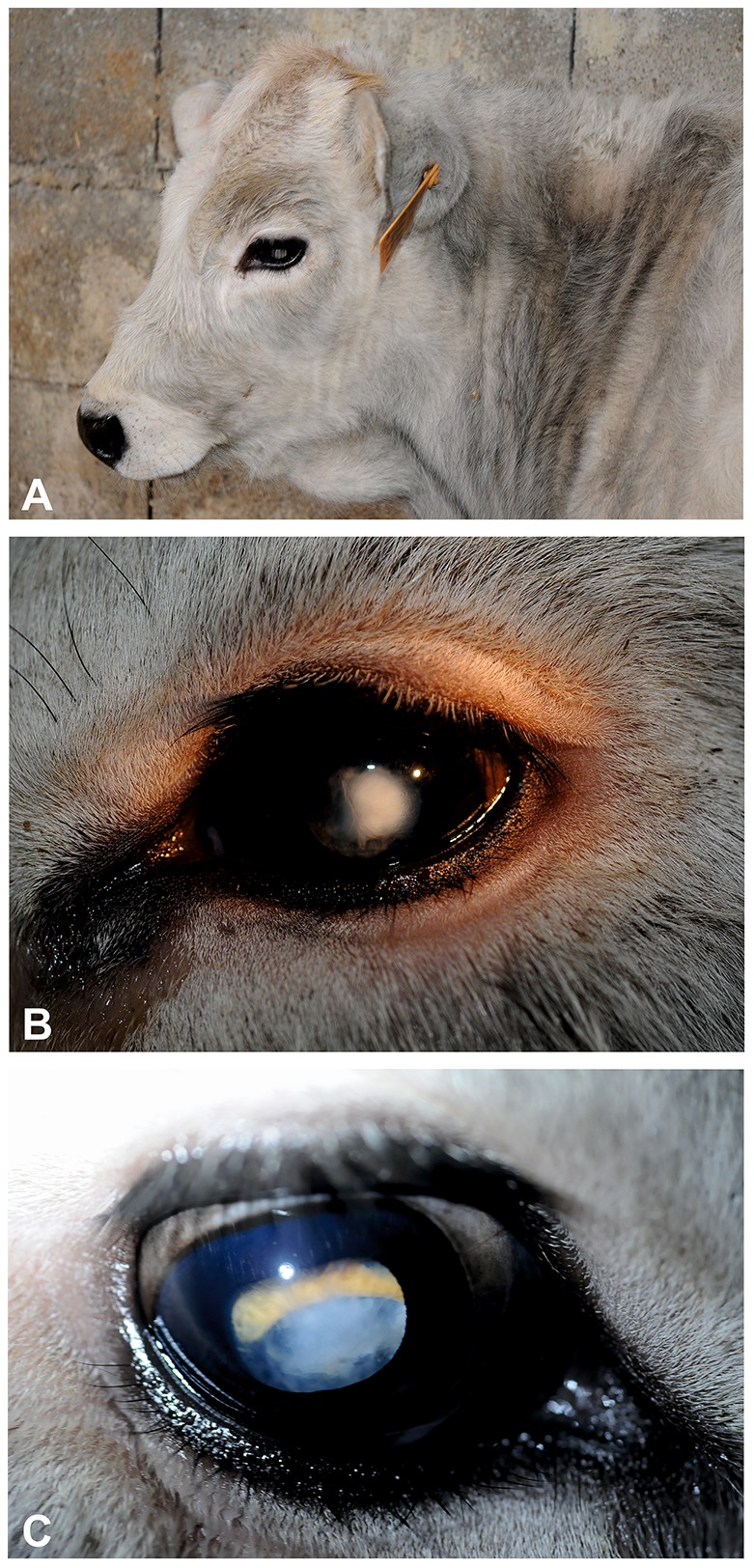
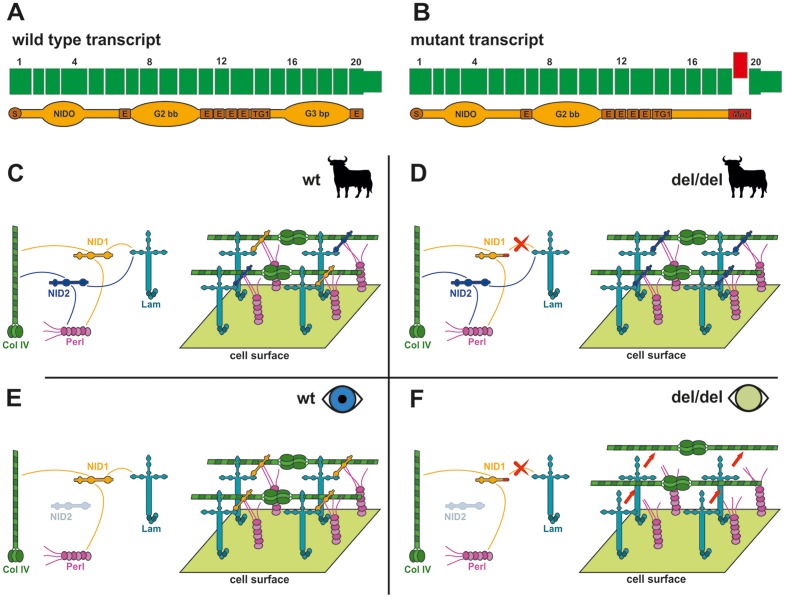
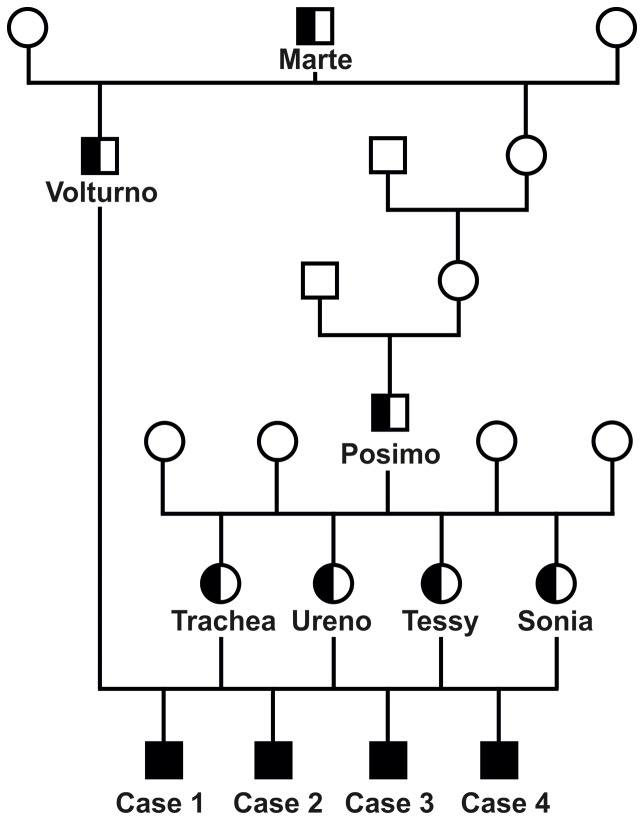
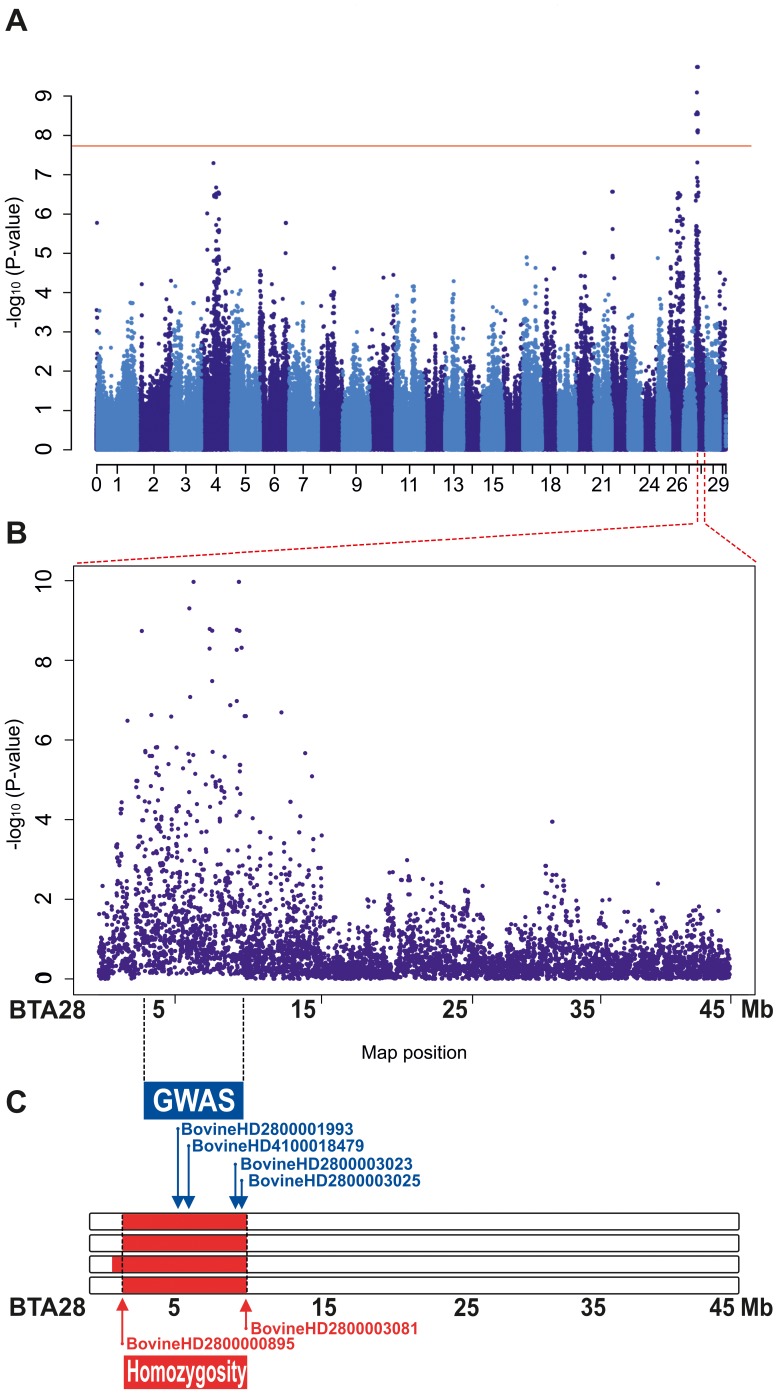
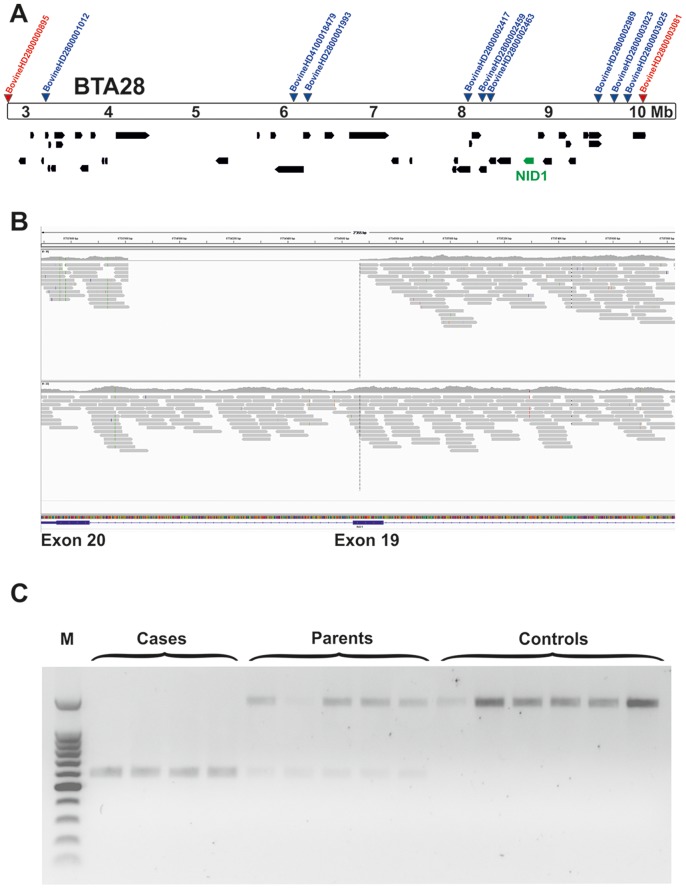
Cataract is a known condition leading to opacification of the eye lens causing partial or total blindness. Mutations are known to cause autosomal dominant or recessive inherited forms of cataracts in humans, mice, rats, guinea pigs and dogs. The use of large-sized animal models instead of those using mice for the study of this condition has been discussed due to the small size of rodent lenses. Four juvenile-onset cases of bilateral incomplete immature nuclear cataract were recently observed in Romagnola cattle. Pedigree analysis suggested a monogenic autosomal recessive inheritance. In addition to the cataract, one of the cases displayed abnormal head movements. Genome-wide association and homozygosity mapping and subsequent whole genome sequencing of a single case identified two perfectly associated sequence variants in a critical interval of 7.2 Mb on cattle chromosome 28: a missense point mutation located in an uncharacterized locus and an 855 bp deletion across the exon 19/intron 19 border of the bovine nidogen 1 (NID1) gene (c.3579_3604+829del). RT-PCR showed that NID1 is expressed in bovine lenses while the transcript of the second locus was absent. The NID1 deletion leads to the skipping of exon 19 during transcription and is therefore predicted to cause a frameshift and premature stop codon (p.1164fs27X). The truncated protein lacks a C-terminal domain essential for binding with matrix assembly complexes. Nidogen 1 deficient mice show neurological abnormalities and highly irregular crystal lens alterations. This study adds NID1 to the list of candidate genes for inherited cataract in humans and is the first report of a naturally occurring mutation leading to non-syndromic catarct in cattle provides a potential large animal model for human cataract.
白内障是一种已知的导致眼球晶状体混浊进而引起部分或完全失明的病症。已知突变会在人类、小鼠、大鼠、豚鼠和狗中引发常染色体显性或隐性遗传性白内障。由于啮齿动物晶状体体积小,因此人们讨论了使用大型动物模型而非小鼠模型来研究这种病症。最近在罗马诺拉牛中观察到4例双侧不完全未成熟核性白内障的幼年发病病例。系谱分析表明这是一种单基因常染色体隐性遗传。除白内障外,其中一个病例还表现出异常的头部运动。对其中一个病例进行全基因组关联和纯合性定位分析以及随后的全基因组测序,在牛28号染色体上一个7.2 Mb的关键区间内鉴定出两个完全相关的序列变异:一个位于未表征位点的错义点突变,以及一个跨越牛巢蛋白1(NID1)基因外显子19/内含子19边界的855 bp缺失(c.3579_3604 + 829del)。逆转录聚合酶链反应显示NID1在牛晶状体中表达,而第二个位点的转录本不存在。NID1缺失导致转录过程中外显子19跳跃,因此预计会导致移码和提前终止密码子(p.1164fs27X)。截短的蛋白质缺乏与基质组装复合物结合所必需的C末端结构域。巢蛋白1缺陷型小鼠表现出神经学异常和高度不规则的晶状体改变。本研究将NID1添加到人类遗传性白内障候选基因列表中,并且是关于导致牛非综合征性白内障的自然发生突变的首次报道,为人类白内障提供了一个潜在的大型动物模型。