Oh Sangtaek, Gwak Jungsug, Park Seoyoung, Yang Chung S
Department of Bio and Fermentation Convergence Technology, Kookmin University, Seoul, Republic of Korea.
Biofactors. 2014 Nov-Dec;40(6):586-95. doi: 10.1002/biof.1185. Epub 2014 Oct 29.
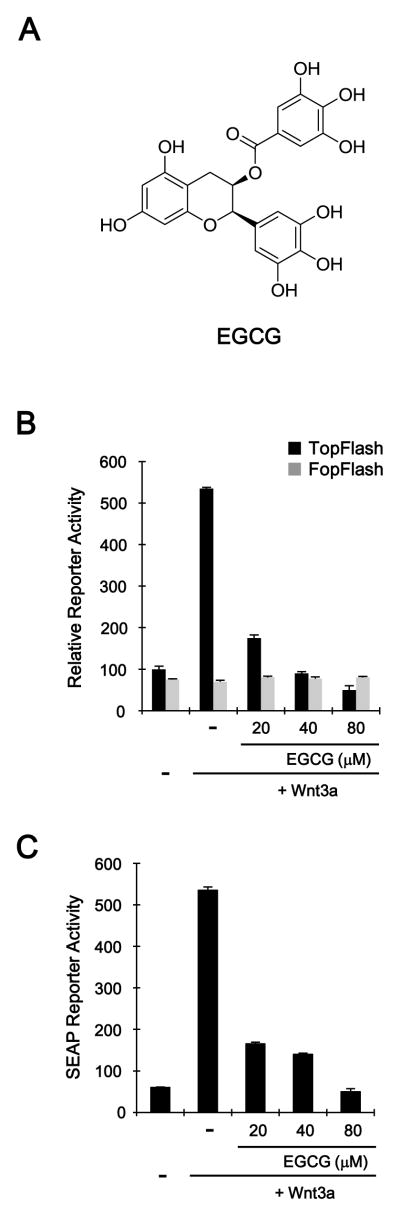
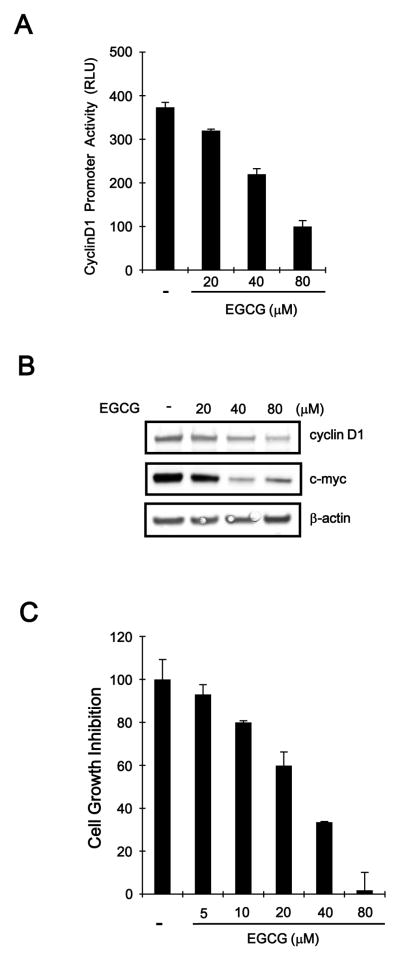
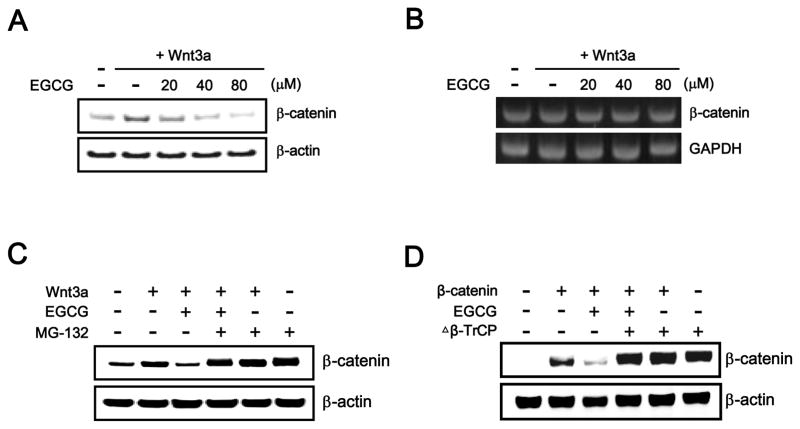
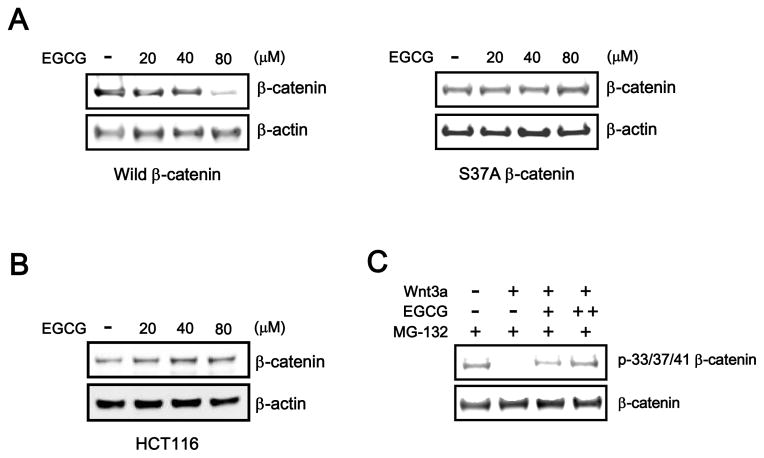
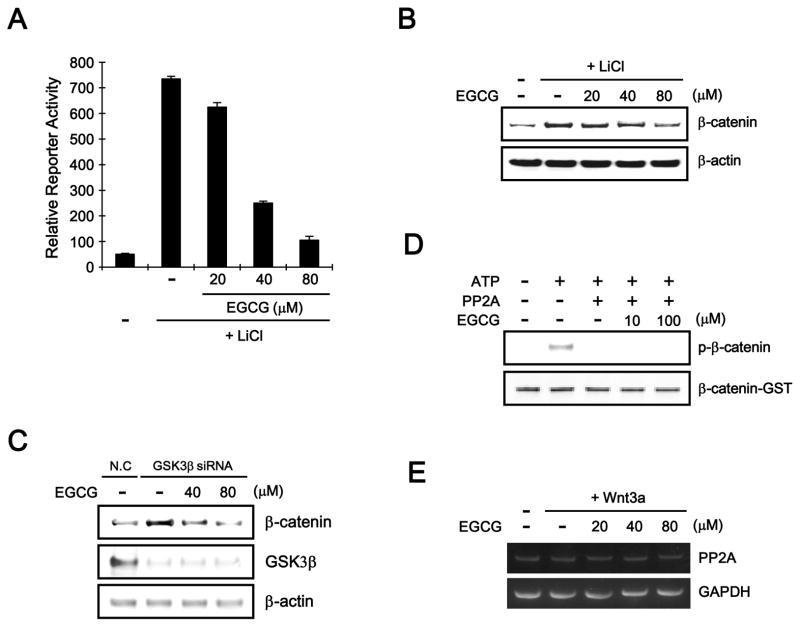
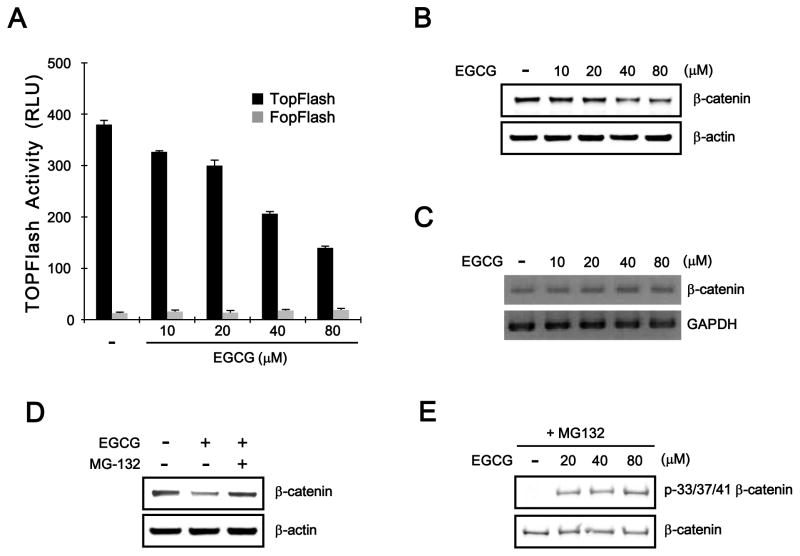
(-)-Epigallocatechin-3-gallate (EGCG), the major polyphenol in green tea, has been reported to inhibit the Wnt/β-catenin pathway, which is aberrantly up-regulated in colorectal cancers, but its precise mechanism of action remains unclear. Here, we used a sensitive cell-based system to demonstrate that EGCG suppresses β-catenin response transcription (CRT), activated by Wnt3a-conditioned medium (Wnt3a-CM), by promoting the degradation of intracellular β-catenin. EGCG induced β-catenin N-terminal phosphorylation at the Ser33/37 residues and subsequently promoted its degradation; however, this effect was not observed for oncogenic forms of β-catenin. Pharmacological inhibition or depletion of glycogen synthase kinase-3β (GSK-3β) did not abrogate the EGCG-mediated β-catenin degradation. EGCG did not affect the activity and expression of protein phosphatase 2A (PP2A). Consistently, the phosphorylation and degradation of β-catenin was found in adenomatous polyposis coli (APC) mutated colon cancer cells after EGCG treatment. EGCG repressed the expression of cyclin D1 and c-myc, which are β-catenin/T-cell factor-dependent genes, and inhibited the proliferation of colon cancer cells. Our findings suggest that EGCG exerts its cancer-preventive or anticancer activity against colon cancer cells by promoting the phosphorylation and proteasomal degradation of β-catenin through a mechanism independent of the GSK-3β and PP2A.
(-)-表没食子儿茶素-3-没食子酸酯(EGCG)是绿茶中的主要多酚类物质,据报道它可抑制Wnt/β-连环蛋白信号通路,该通路在结直肠癌中异常上调,但其确切作用机制尚不清楚。在此,我们使用一种基于细胞的敏感系统来证明,EGCG通过促进细胞内β-连环蛋白的降解,抑制由Wnt3a条件培养基(Wnt3a-CM)激活的β-连环蛋白反应转录(CRT)。EGCG诱导β-连环蛋白在Ser33/37残基处的N端磷酸化,随后促进其降解;然而,对于致癌形式的β-连环蛋白未观察到这种作用。糖原合酶激酶-3β(GSK-3β)的药理学抑制或缺失并未消除EGCG介导的β-连环蛋白降解。EGCG不影响蛋白磷酸酶2A(PP2A)的活性和表达。同样,在EGCG处理后的腺瘤性息肉病大肠杆菌(APC)突变结肠癌细胞中发现了β-连环蛋白的磷酸化和降解。EGCG抑制细胞周期蛋白D1和c-myc的表达,这两种蛋白是β-连环蛋白/T细胞因子依赖性基因,并抑制结肠癌细胞的增殖。我们的研究结果表明,EGCG通过一种独立于GSK-3β和PP2A的机制促进β-连环蛋白的磷酸化和蛋白酶体降解,从而对结肠癌细胞发挥其防癌或抗癌活性。