Katiyatiya C L F, Muchenje V, Mushunje A
Department of Agricultural Economics and Extension, University of Fort Hare, Alice 5700, South Africa .
Asian-Australas J Anim Sci. 2014 Nov;27(11):1663-70. doi: 10.5713/ajas.2014.14174.
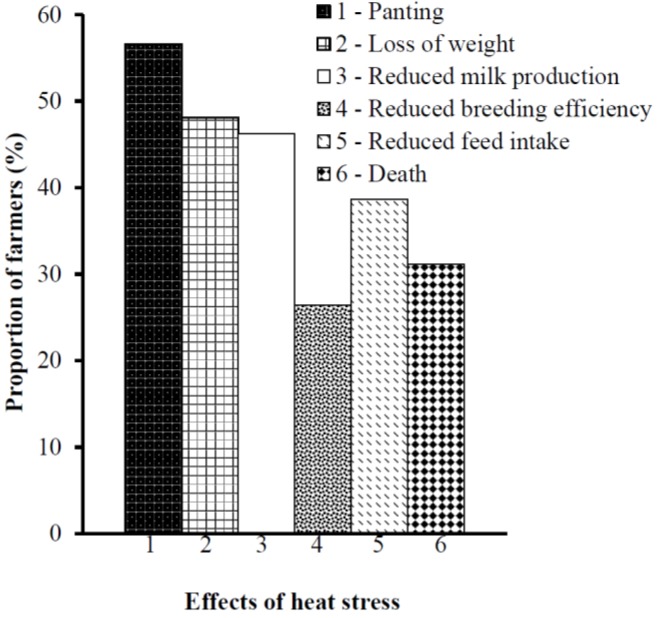
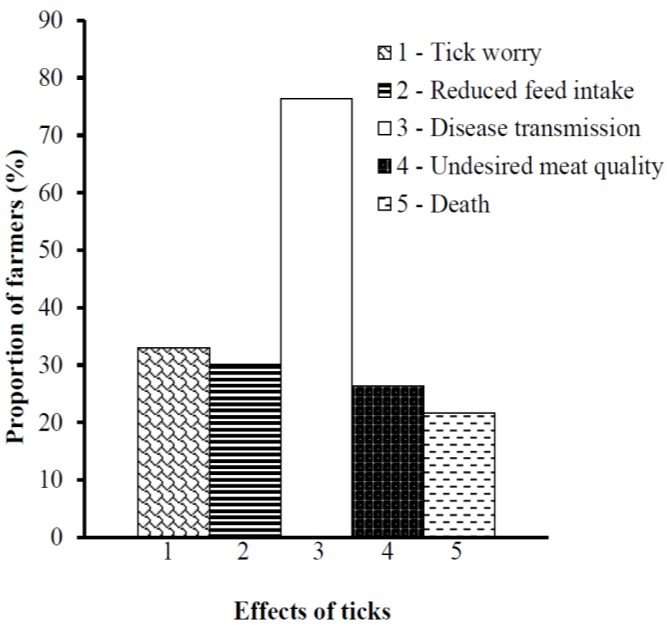
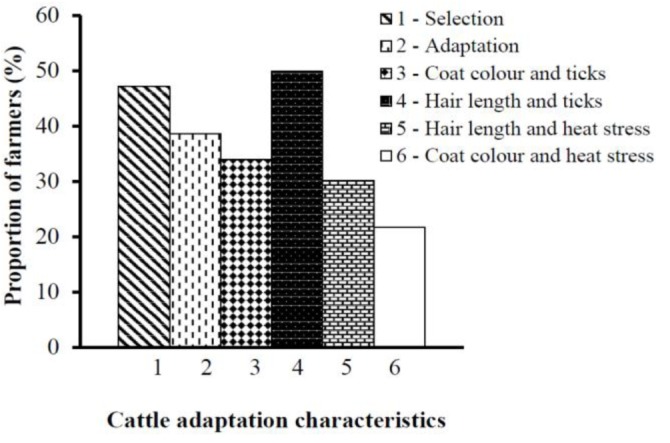
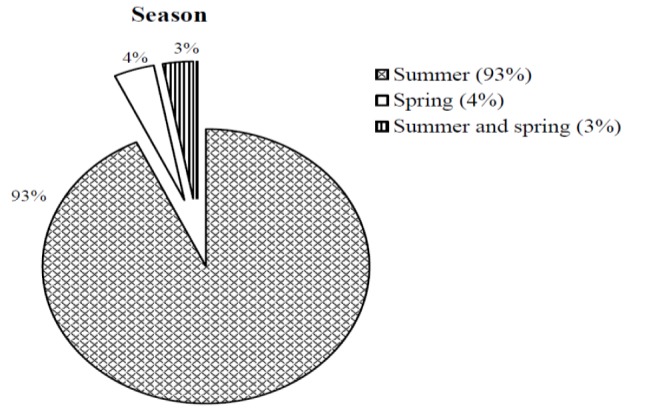
The objective of this study was to determine the perceptions and knowledge of farmers of heat stress and tick resistance in cattle. A cross-sectional survey was conducted and 110 farmers in four villages in the sour and sweet velds of the Eastern Cape Province, South Africa were interviewed. The associations among area (municipality), gender, age, level of education, employment and religion were computed using Chi-square tests. The majority of the respondents had on average 4 bulls, 4 cows, 4 heifers, 4 calves, and 4 oxen. Milk was considered as the major (28.3%) reason for keeping cattle. Most farmers owned non-descript (72.6%), and Nguni (45.3%) cattle because of their heat tolerance (54.7%), tick resistance (54.7%), and milking ability (28.2%) traits. Excessive panting (56.6%) and disease transmission (76%) were regarded as the major effects of heat stress and tick infestation in cattle, respectively. About 50% of the respondents agreed that hair length influences tick resistance and 47.17% considered coat colour when acquiring cattle. In the sampled areas, ticks were prevalent in the summer season (93%), and 77.36% of the respondents use acaricides every fortnight. Gall sickness was reported to be a major problem in the cattle herds by 36.79% of the respondents. Our results showed that farmers in the two municipalities had knowledge of cattle adaptation to heat stress and tick resistance.
本研究的目的是确定农民对牛热应激和蜱虫抗性的认知和了解。开展了一项横断面调查,对南非东开普省酸草原和甜草原四个村庄的110名农民进行了访谈。使用卡方检验计算地区(市)、性别、年龄、教育程度、就业情况和宗教之间的关联。大多数受访者平均拥有4头公牛、4头母牛、4头小母牛、4头小牛和4头公牛。牛奶被认为是饲养牛的主要原因(28.3%)。大多数农民拥有无特定品种(72.6%)和恩古尼牛(45.3%),因为它们具有耐热性(54.7%)、抗蜱性(54.7%)和产奶能力(28.2%)等特性。气喘吁吁(56.6%)和疾病传播(76%)分别被视为牛热应激和蜱虫侵扰的主要影响。约50%的受访者认为毛发长度会影响抗蜱性,47.17%的受访者在购买牛时会考虑毛色。在抽样地区,蜱虫在夏季很普遍(93%),77.36%的受访者每两周使用一次杀螨剂。36.79%的受访者报告说,胆病是牛群中的一个主要问题。我们的结果表明,两个市的农民了解牛对热应激的适应性和蜱虫抗性。