Nguyen Thanh Thi, Yoon Somy, Yang Yi, Lee Ho-Bin, Oh Soonok, Jeong Min-Hye, Kim Jong-Jin, Yee Sung-Tae, Crişan Florin, Moon Cheol, Lee Kwang Youl, Kim Kyung Keun, Hur Jae-Seoun, Kim Hangun
Korean Lichen Research Institute, Sunchon National University, Sunchon, Republic of Korea; Faculty of Natural Science and Technology, Tay Nguyen University, Buon Ma Thuot, Vietnam.
Medical Research Center for Gene Regulation, Chonnam National University Medical School, Gwangju, Republic of Korea.
PLoS One. 2014 Oct 31;9(10):e111575. doi: 10.1371/journal.pone.0111575. eCollection 2014.
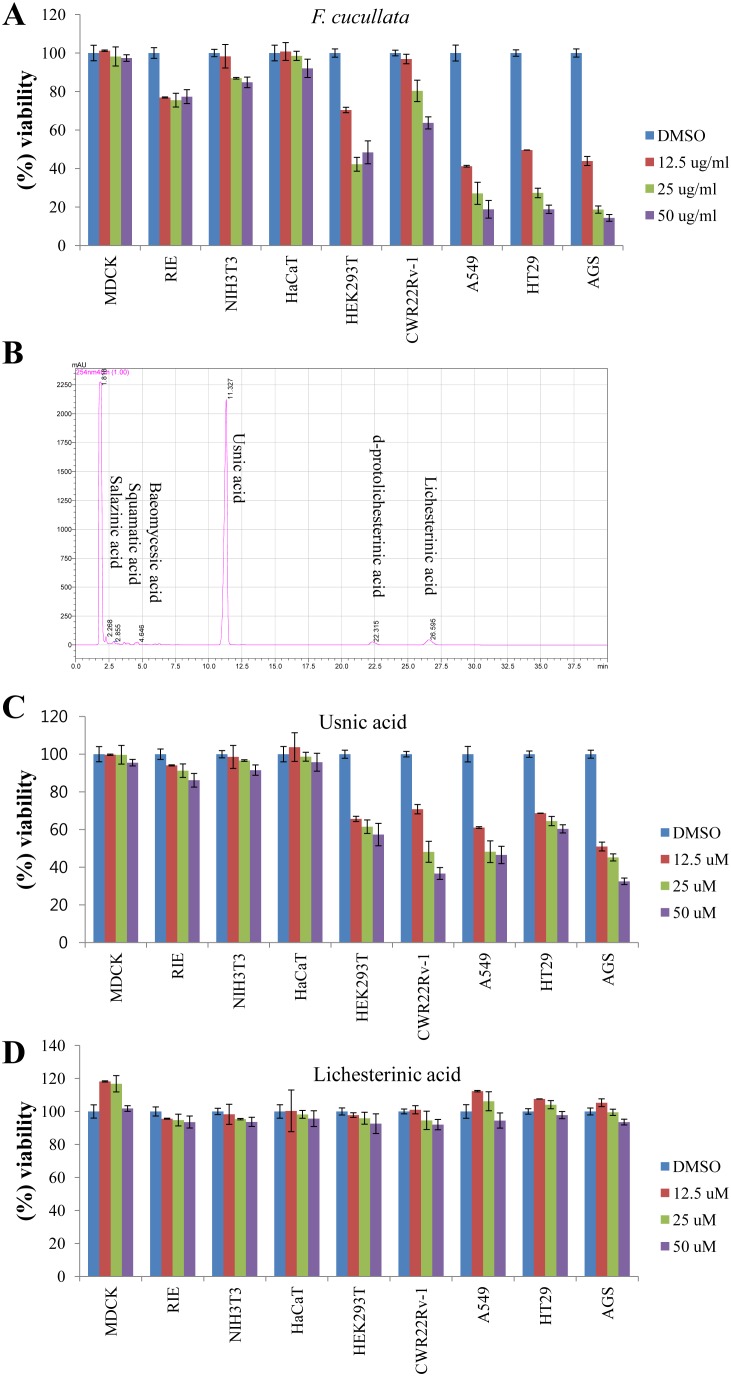
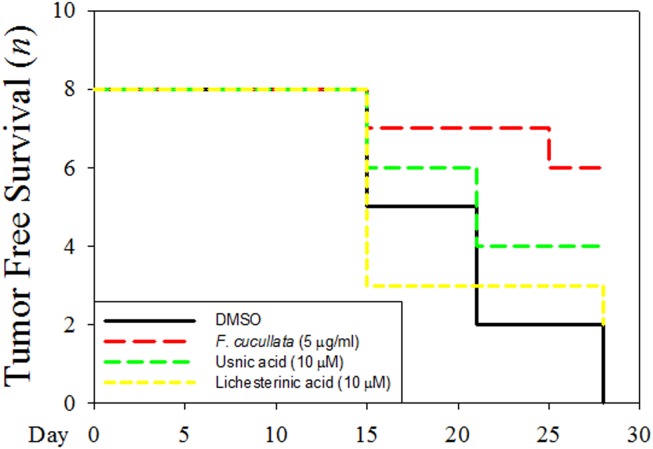
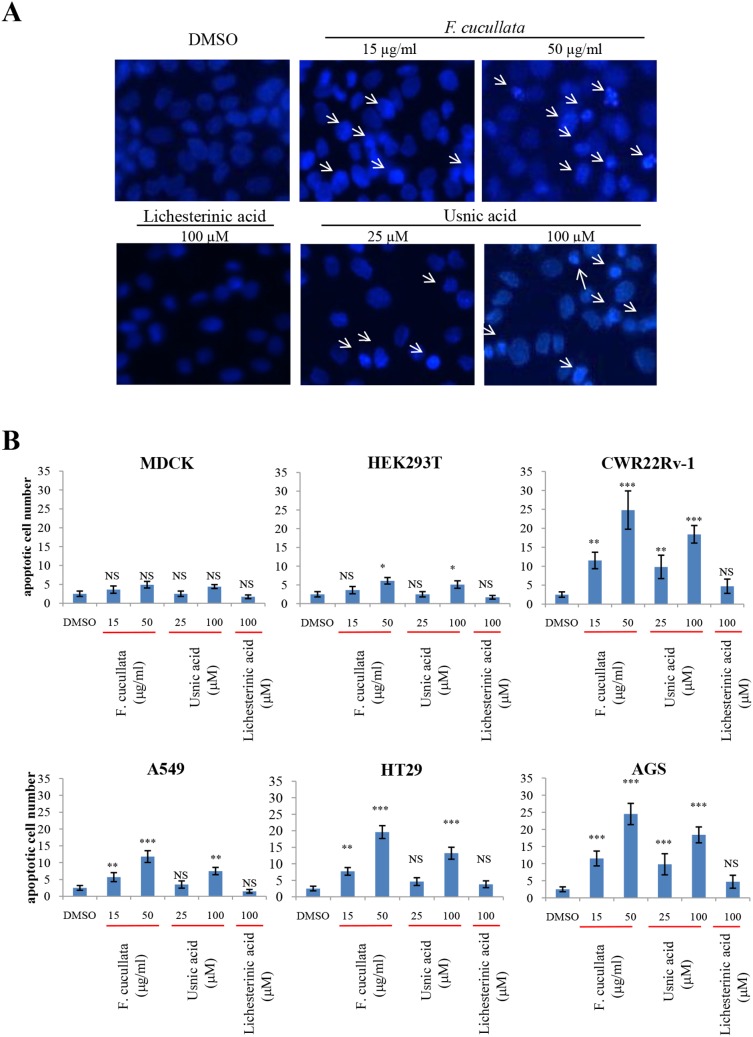
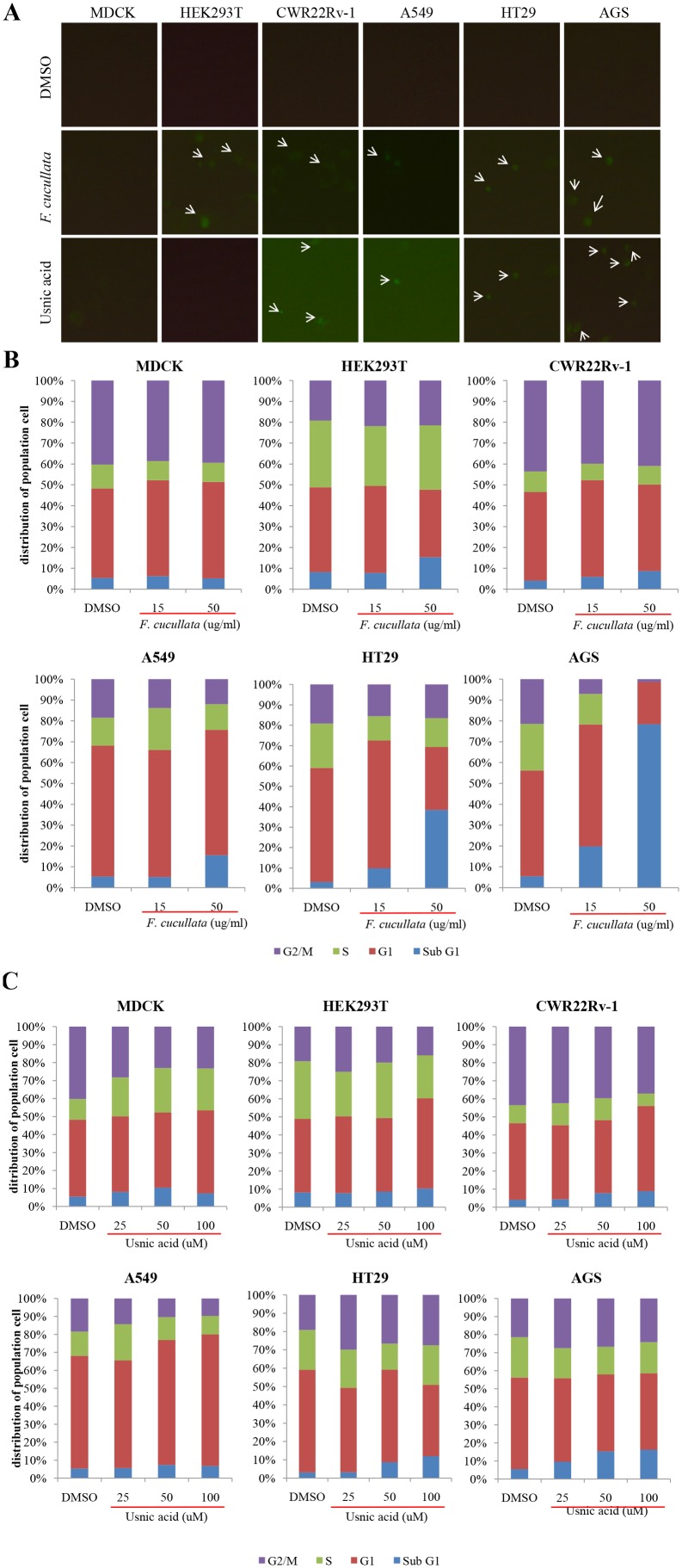
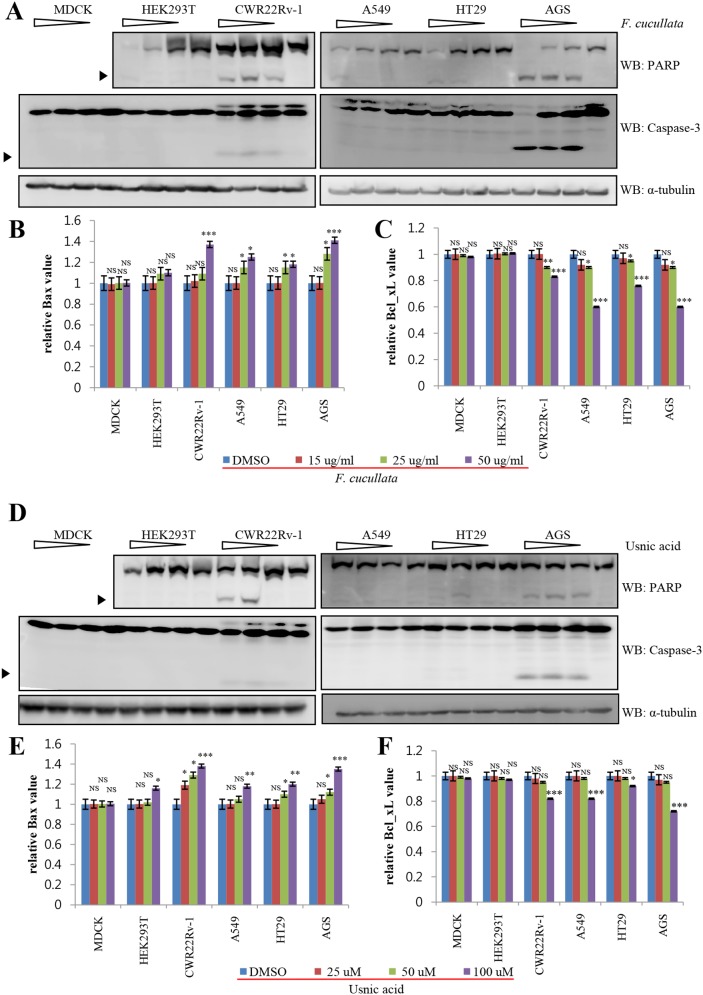
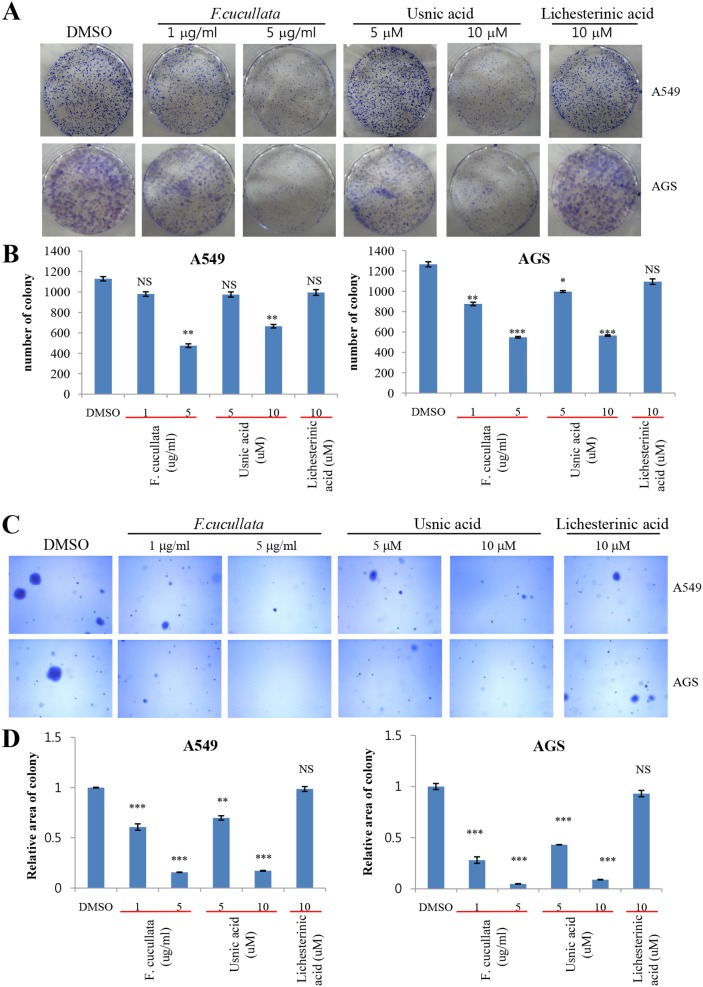
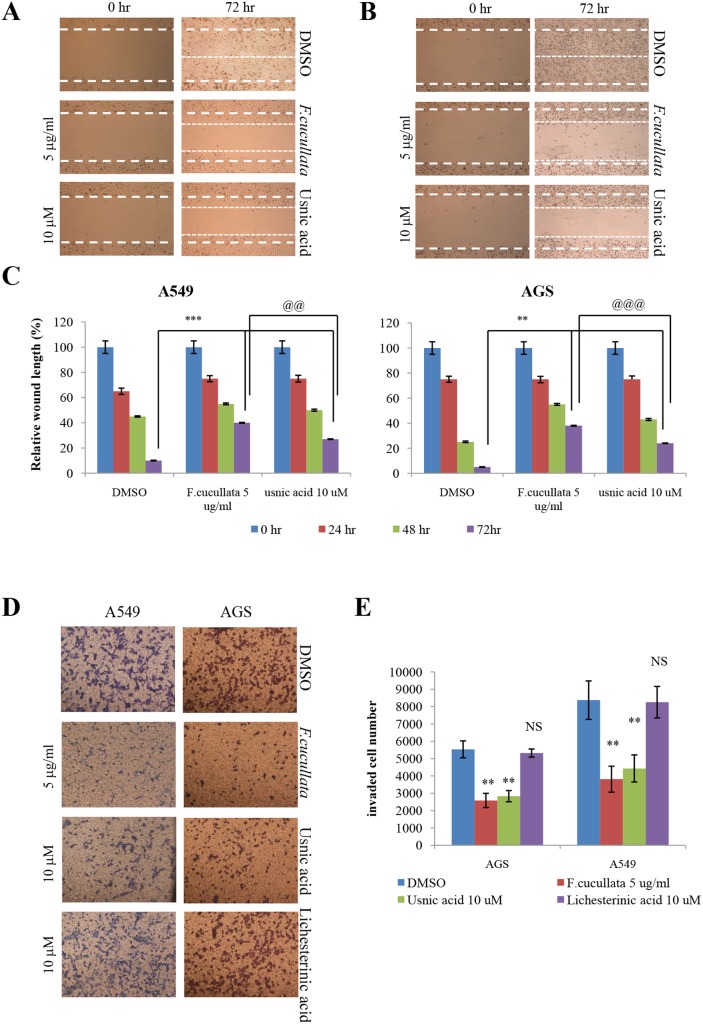
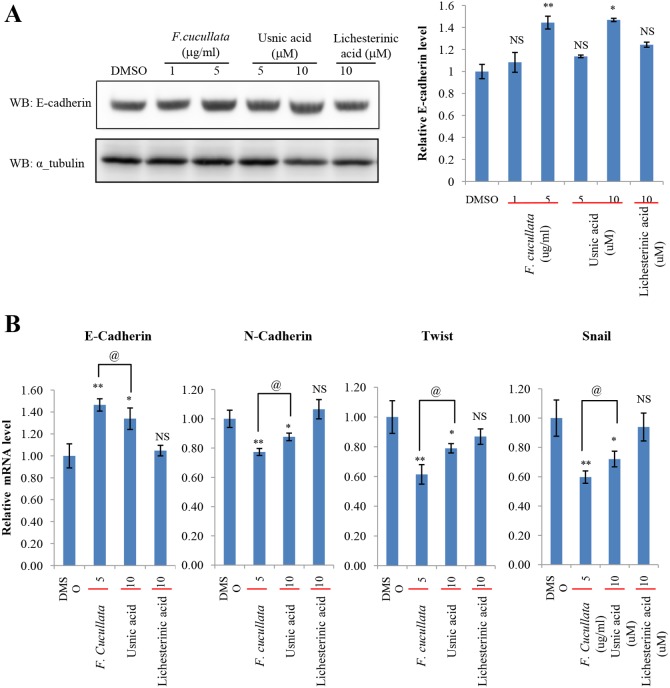
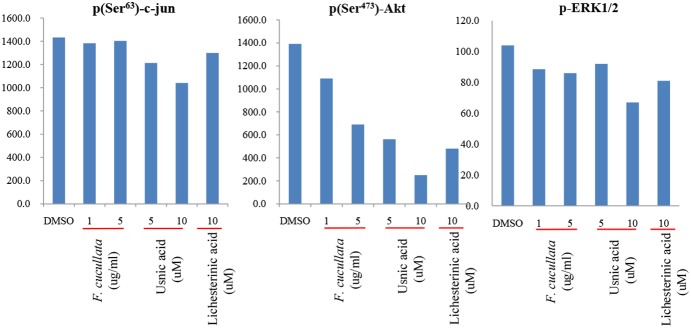
Lichens are symbiotic organisms which produce distinct secondary metabolic products. In the present study, we tested the cytotoxic activity of 17 lichen species against several human cancer cells and further investigated the molecular mechanisms underlying their anti-cancer activity. We found that among 17 lichens species, F. cucullata exhibited the most potent cytotoxicity in several human cancer cells. High performance liquid chromatography analysis revealed that the acetone extract of F. cucullata contains usnic acid, salazinic acid, Squamatic acid, Baeomycesic acid, d-protolichesterinic acid, and lichesterinic acid as subcomponents. MTT assay showed that cancer cell lines were more vulnerable to the cytotoxic effects of the extract than non-cancer cell lines. Furthermore, among the identified subcomponents, usnic acid treatment had a similar cytotoxic effect on cancer cell lines but with lower potency than the extract. At a lethal dose, treatment with the extract or with usnic acid greatly increased the apoptotic cell population and specifically activated the apoptotic signaling pathway; however, using sub-lethal doses, extract and usnic acid treatment decreased cancer cell motility and inhibited in vitro and in vivo tumorigenic potentials. In these cells, we observed significantly reduced levels of epithelial-mesenchymal transition (EMT) markers and phosphor-Akt, while phosphor-c-Jun and phosphor-ERK1/2 levels were only marginally affected. Overall, the anti-cancer activity of the extract is more potent than that of usnic acid alone. Taken together, F. cucullata and its subcomponent, usnic acid together with additional component, exert anti-cancer effects on human cancer cells through the induction of apoptosis and the inhibition of EMT.
地衣是产生独特次生代谢产物的共生生物。在本研究中,我们测试了17种地衣物种对几种人类癌细胞的细胞毒性活性,并进一步研究了其抗癌活性的分子机制。我们发现,在17种地衣物种中,兜状石蕊在几种人类癌细胞中表现出最强的细胞毒性。高效液相色谱分析表明,兜状石蕊的丙酮提取物含有松萝酸、水杨嗪酸、鳞状酸、芽生酸、d-原地衣甾酸和地衣甾酸作为子成分。MTT法显示,癌细胞系比非癌细胞系更容易受到提取物细胞毒性作用的影响。此外,在已鉴定的子成分中,松萝酸处理对癌细胞系具有类似的细胞毒性作用,但效力低于提取物。在致死剂量下,用提取物或松萝酸处理可大大增加凋亡细胞群体,并特异性激活凋亡信号通路;然而,使用亚致死剂量时,提取物和松萝酸处理可降低癌细胞的运动性,并抑制体外和体内的致瘤潜能。在这些细胞中,我们观察到上皮-间质转化(EMT)标志物和磷酸化Akt的水平显著降低,而磷酸化c-Jun和磷酸化ERK1/2的水平仅受到轻微影响。总体而言,提取物的抗癌活性比单独的松萝酸更强。综上所述,兜状石蕊及其子成分松萝酸以及其他成分通过诱导凋亡和抑制EMT对人类癌细胞发挥抗癌作用。