Dela Cruz Thomas Edison E, Timbreza Lawrence P, Sangvichien Ek, Notarte Kin Israel R, Santiago Krystle Angelique A
The Graduate School, University of Santo Tomas, España Blvd., Manila 1015, Philippines.
Fungal Biodiversity, Ecogenomics and Systematics-Metabolomics (FBeS) Group, Research Center for the Natural and Applied Sciences, University of Santo Tomas, España Blvd., Manila 1015, Philippines.
J Fungi (Basel). 2023 Nov 17;9(11):1117. doi: 10.3390/jof9111117.
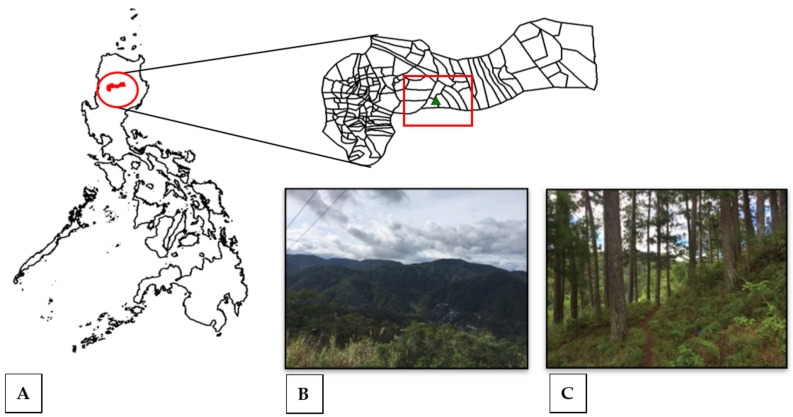
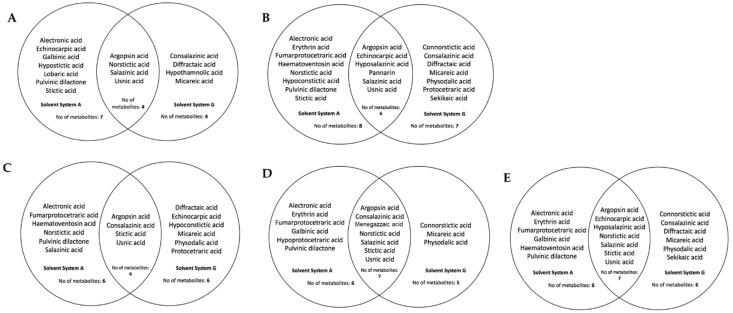
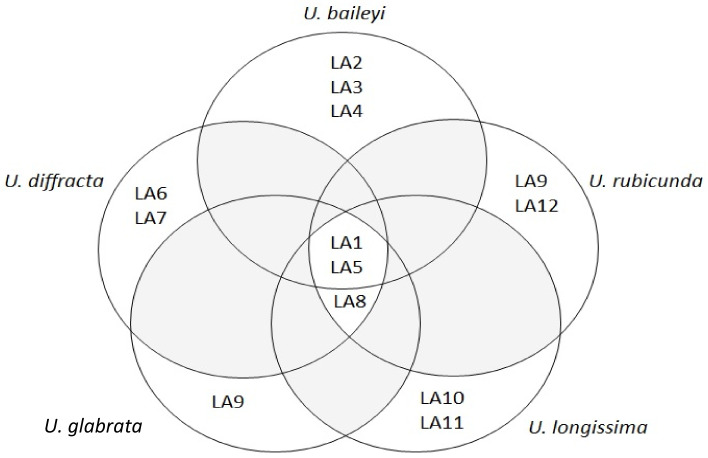
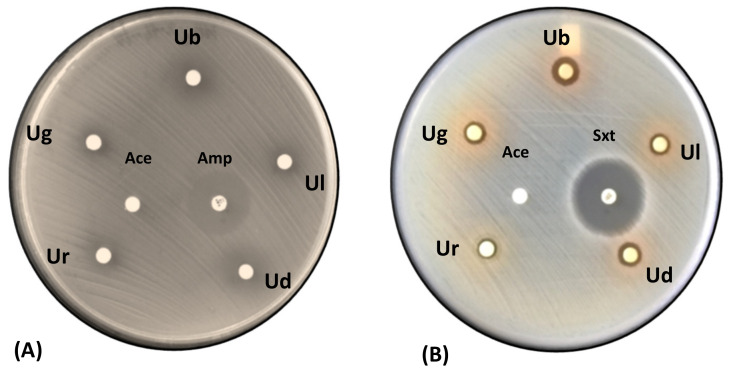
The rapid emergence of resistant bacteria is occurring worldwide, endangering the efficacy of antibiotics. Hence, there is a need to search for new sources of antibiotics that either exhibit novel structures or express a new mechanism of action. The lichen , with its wide range of unique, biologically potent secondary metabolites, may solve this problem. In this study, species were collected in the Northern Philippines, identified through combined morphological and biochemical characterization, and tested for antimicrobial activities against the multidrug-resistant ESKAPE pathogens, i.e., , , , , , and , two standard antibiotic-sensitive test bacteria, and a yeast. A total of 46 lichen specimens were collected and later identified as (10), (10), (12), (4), and (10). The results show that the crude extracts of the species exhibited promising in vitro inhibitory activities against standard antibiotic-sensitive ( ATCC 29212) and multidrug-resistant (methicillin-resistant and ) Gram-positive bacteria. Additionally, lichen compounds of representative specimens per species were identified and profiled using thin-layer chromatography (TLC) and high-performance liquid chromatography (HPLC). The detection of lichen acids (LA) via HPLC showed the presence of 24 peaks of lichen acids. TLC-bioautography identified the bioactive lichen acids as alectronic acid, connorstictic acid, consalazinic acid, diffractaic acid, echinocarpic acid, erythrin acid, galbinic acid, hypoconstictic acid, hyposalazinic acid, hypostictic acid, lobaric acid, menegazzaic acid, micareic acid, pannarin, salazinic acid, stictic acid, and usnic acid. Our study highlighted the wide spectrum of opportunities for using lichens for the discovery of potential antimicrobial agents.
耐药菌在全球范围内迅速出现,危及抗生素的疗效。因此,有必要寻找具有新结构或新作用机制的抗生素新来源。地衣含有多种独特的、具有生物活性的次生代谢产物,或许可以解决这一问题。在本研究中,从菲律宾北部采集了地衣物种,通过形态学和生化特征相结合的方法进行鉴定,并测试其对多重耐药性ESKAPE病原体(即粪肠球菌、屎肠球菌、金黄色葡萄球菌、肺炎克雷伯菌、鲍曼不动杆菌和铜绿假单胞菌)、两种标准抗生素敏感试验菌以及一种酵母菌的抗菌活性。共采集了46种地衣标本,后来鉴定为皱波角叉菜(10种)、长松萝(10种)、肺衣(12种)、冰岛衣(4种)和石耳(10种)。结果表明,这些地衣物种的粗提物对标准抗生素敏感菌(大肠埃希菌ATCC 29212)和多重耐药菌(耐甲氧西林金黄色葡萄球菌和耐甲氧西林表皮葡萄球菌)革兰氏阳性菌表现出有前景的体外抑制活性。此外,使用薄层色谱法(TLC)和高效液相色谱法(HPLC)对每个物种代表性标本的地衣化合物进行了鉴定和分析。通过HPLC检测地衣酸(LA)显示存在24种地衣酸峰。TLC-生物自显影鉴定出具有生物活性的地衣酸为阿莱克酸、康诺斯地衣酸、康萨地衣酸、衍射地衣酸、棘果地衣酸、刺酮酸、加宾酸、次康地衣酸、次萨地衣酸、次点地衣酸、洛巴地衣酸、梅内加地衣酸、米卡地衣酸、盘状地衣酸、萨地衣酸、点地衣酸和松萝酸。我们的研究突出了利用地衣发现潜在抗菌剂的广泛机会。