Cengiz Mustafa, Ozenirler Seren, Yılmaz Guldal
Department of Gastroenterology, Dr. A.Y. Ankara Oncology Training and Research Hospital, Ankara, Turkey.
Department of Gastroenterology, Faculty of Medicine, Gazi University, Ankara, Turkey.
Hepat Mon. 2014 Sep 24;14(9):e21885. doi: 10.5812/hepatmon.21885. eCollection 2014 Sep.
Hepatic damage due to chronic hepatitis C virus (HCV) genotype 1b infection varies widely.
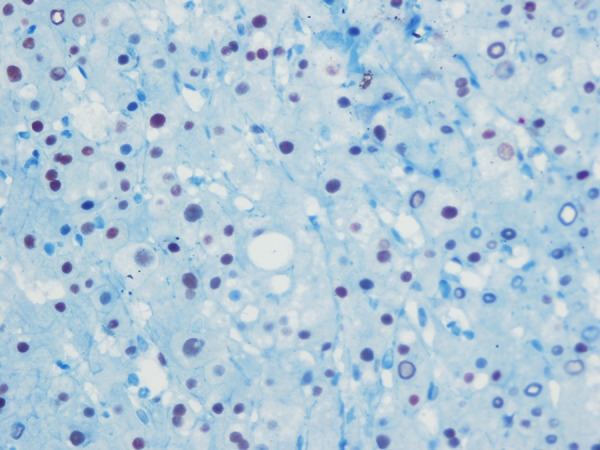
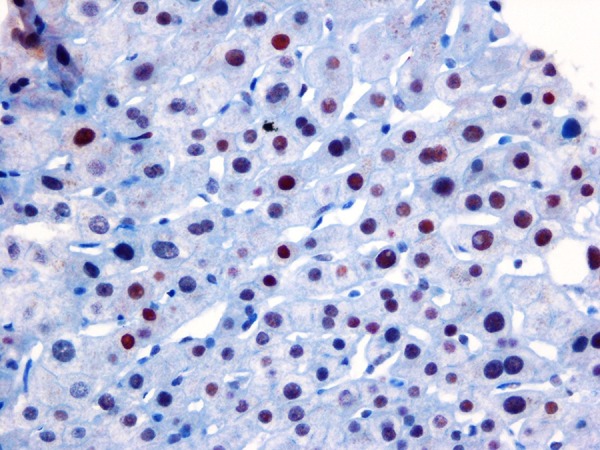
We aimed to investigate whether estrogen receptor alpha (ERα) plays a role in liver fibrosis in patients infected with HCV genotype 1b.
All the consecutive patients who received the same standard treatment protocol for HCV genotype 1b were subdivided into two subgroups according to their fibrosis scores as fibrotic stages < 2 in mild fibrosis group and fibrotic stages ≥ 2 in advanced fibrosis group, depending on the presence of septal fibrosis. ERα was stained in liver biopsy specimens. Demographics and clinical properties were compared between the groups. Multivariate logistic regression analysis was performed to predict advanced fibrosis.
There were 66 patients in the mild fibrosis group and 24 in the advanced fibrosis group. Among the mild and advanced fibrosis groups, 65.1% and 50%were female, respectively (P = 0.19). There was an inverse correlation between ERα and fibrotic stage (r: -0.413; P < 0.001). Age, platelet counts, neutrophil counts, Alanine aminotransferase (ALT), Aspartate aminotransferase (AST), Gamma glutamyl transferase (GGT) and ERα were statistically significant in the univariate analysis. In multivariate logistic regression analyses, ERα expression continued to be an independent predicting factor of liver fibrosis in patients infected with chronic HCV genotype 1b (OR: 0.10; 95% CI: 0.018-0.586; P < 0.001).
ERα expression in liver was inversely correlated with liver fibrosis among patients infected with chronic HCV genotype 1b.
慢性丙型肝炎病毒(HCV)1b型感染所致的肝损伤差异很大。
我们旨在研究雌激素受体α(ERα)在HCV 1b型感染患者肝纤维化中是否起作用。
所有接受相同标准治疗方案的HCV 1b型连续患者,根据其纤维化评分分为两个亚组,即轻度纤维化组纤维化分期<2,重度纤维化组纤维化分期≥2,依据是否存在间隔纤维化来划分。对肝活检标本进行ERα染色。比较两组之间的人口统计学和临床特征。进行多因素逻辑回归分析以预测重度纤维化。
轻度纤维化组有66例患者,重度纤维化组有24例患者。轻度和重度纤维化组中,女性分别占65.1%和50%(P = 0.19)。ERα与纤维化分期呈负相关(r:-0.413;P < 0.001)。在单因素分析中,年龄、血小板计数、中性粒细胞计数、丙氨酸氨基转移酶(ALT)、天冬氨酸氨基转移酶(AST)、γ-谷氨酰转移酶(GGT)和ERα具有统计学意义。在多因素逻辑回归分析中,ERα表达仍然是慢性HCV 1b型感染患者肝纤维化的独立预测因素(OR:0.10;95%CI:0.018 - 0.586;P < 0.001)。
在慢性HCV 1b型感染患者中,肝脏中ERα表达与肝纤维化呈负相关。