Casanova Manuel Fernando, Hensley Marie K, Sokhadze Estate M, El-Baz Ayman S, Wang Yao, Li Xiaoli, Sears Lonnie
Department of Psychiatry and Behavioral Sciences, University of Louisville Louisville, KY, USA ; Department of Bioengineering, University of Louisville Louisville, KY, USA.
Department of Bioengineering, University of Louisville Louisville, KY, USA.
Front Hum Neurosci. 2014 Oct 21;8:851. doi: 10.3389/fnhum.2014.00851. eCollection 2014.
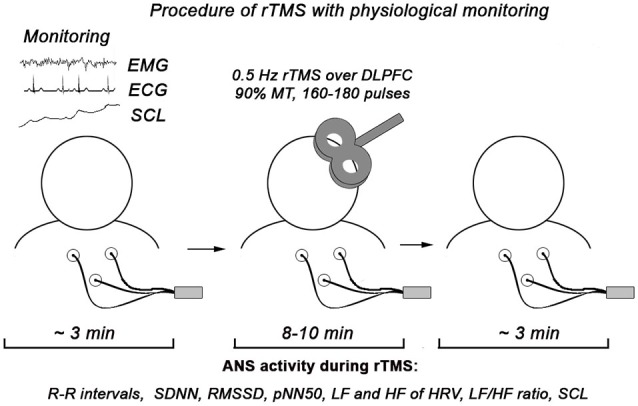
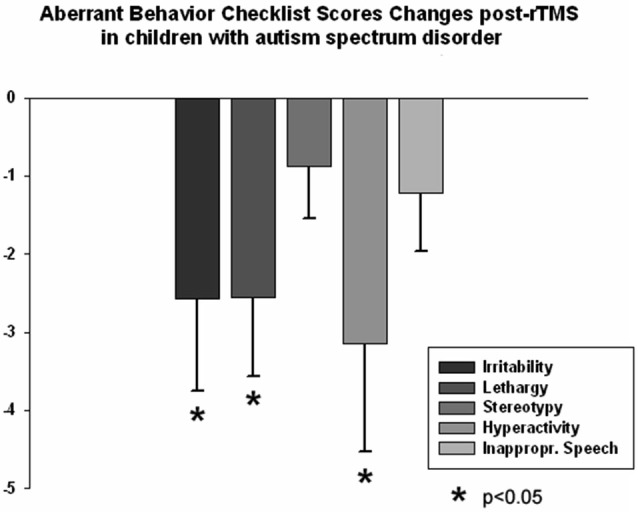
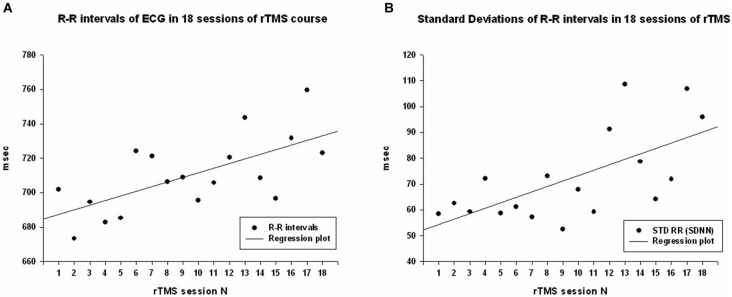
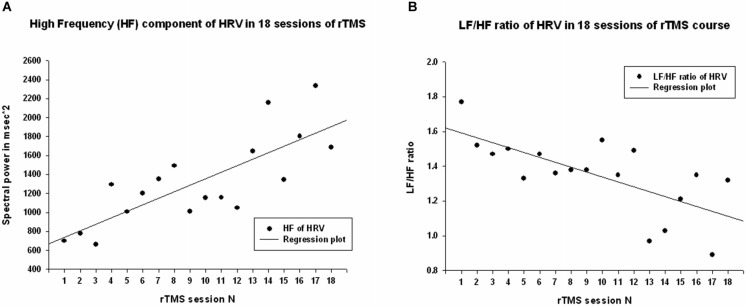
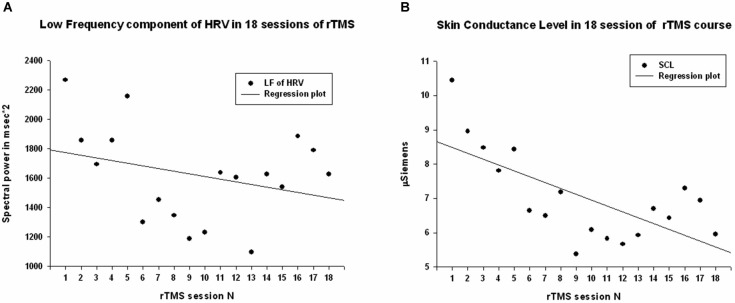
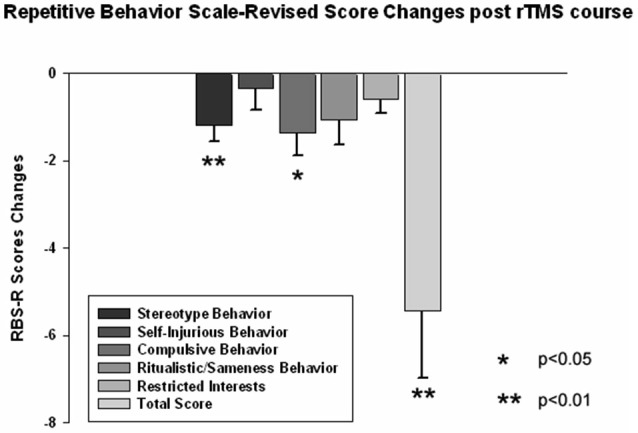
The term autism spectrum disorder (ASD) describes a range of conditions characterized by impairments in social interactions, communication, and by restricted and repetitive behaviors. Autism spectrum disorder may also present with symptoms suggestive of autonomic nervous system (ANS) dysfunction. The objective of this study was to determine the effect of 18 sessions of low frequency (LF) repetitive transcranial magnetic stimulation (rTMS) on autonomic function in children with ASD by recording electrocardiogram (ECG) and electrodermal activity (EDA) pre- post- and during each rTMS session. The autonomic measures of interest in this study were R-R cardiointervals in EKG (R-R), time and frequency domain measures of heart rate variability (HRV) and skin conductance level (SCL). Heart rate variability measures such as R-R intervals, standard deviation of cardiac intervals, pNN50 (percentage of cardiointervals >50 ms different from preceding interval), power of high frequency (HF) and LF components of HRV spectrum, LF/HF ratio, were then derived from the recorded EKG. We expected that the course of 18 weekly inhibitory LF rTMS applied to the dorsolateral prefrontal cortex (DLPFC) would enhance autonomic balance by facilitating frontal inhibition of limbic activity thus resulting in decreased overall heart rate (HR), increased HRV (in a form of increased HF power), decreased LF power (resulting in decreased LF/HF ratio), and decreased SCL. Behavioral evaluations post-18 TMS showed decreased irritability, hyperactivity, stereotype behavior and compulsive behavior ratings while autonomic measures indicated a significant increase in cardiac interval variability and a decrease of tonic SCL. The results suggest that 18 sessions of LF rTMS in ASD results in increased cardiac vagal control and reduced sympathetic arousal.
术语自闭症谱系障碍(ASD)描述了一系列以社交互动、沟通障碍以及受限和重复行为为特征的病症。自闭症谱系障碍也可能表现出提示自主神经系统(ANS)功能障碍的症状。本研究的目的是通过在每次重复经颅磁刺激(rTMS)治疗前、治疗后以及治疗期间记录心电图(ECG)和皮肤电活动(EDA),来确定18次低频(LF)重复经颅磁刺激对自闭症谱系障碍儿童自主功能的影响。本研究感兴趣的自主测量指标包括心电图中的R-R心动间期(R-R)、心率变异性(HRV)的时域和频域测量指标以及皮肤电导水平(SCL)。然后从记录的心电图中得出诸如R-R间期、心动间期标准差、pNN50(与前一个间期相差>50毫秒的心动间期百分比)、HRV频谱的高频(HF)和低频(LF)成分功率、LF/HF比值等心率变异性测量指标。我们预期,每周18次应用于背外侧前额叶皮层(DLPFC)的抑制性低频rTMS疗程将通过促进额叶对边缘系统活动的抑制来增强自主平衡,从而导致总体心率(HR)降低、HRV增加(以高频功率增加的形式)、低频功率降低(导致LF/HF比值降低)以及SCL降低。18次TMS治疗后的行为评估显示,易怒、多动、刻板行为和强迫行为评分降低,而自主测量指标表明心脏间期变异性显著增加,紧张性SCL降低。结果表明,ASD患者进行18次低频rTMS治疗可导致心脏迷走神经控制增加和交感神经兴奋降低。