Miller Elizabeth M
Department of Anthropology, University of South Florida, Tampa, Florida, United States of America.
PLoS One. 2014 Nov 6;9(11):e112216. doi: 10.1371/journal.pone.0112216. eCollection 2014.
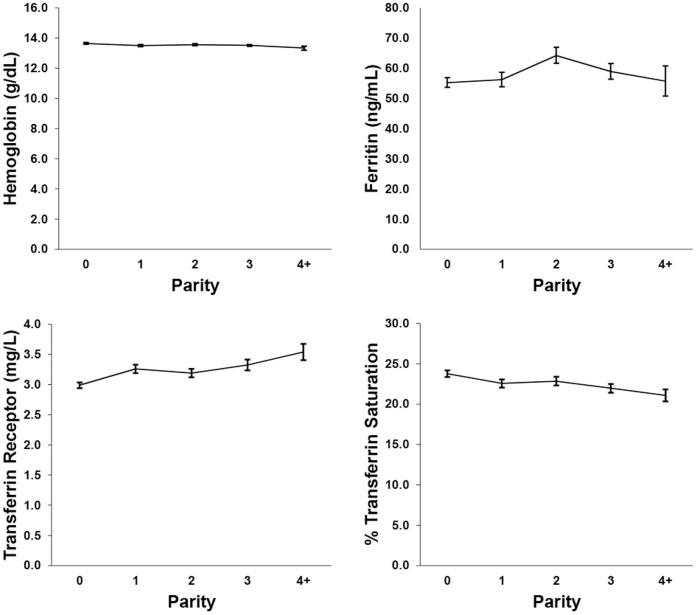
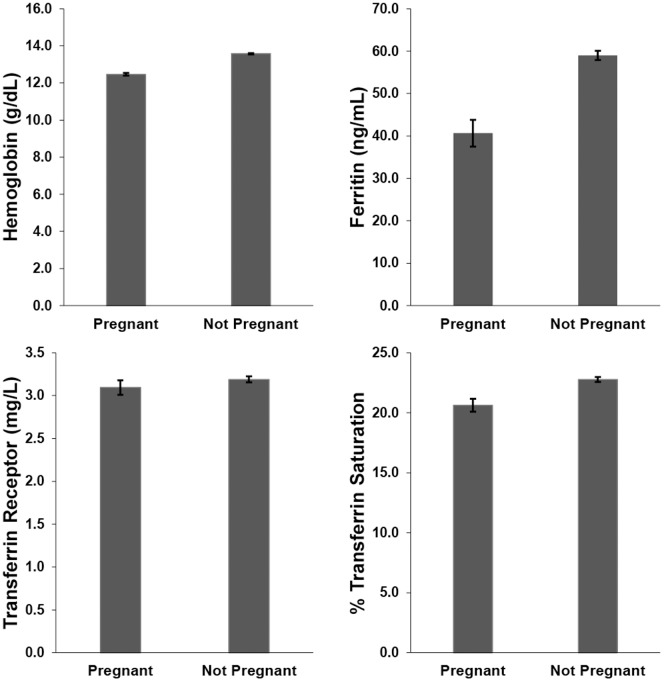
Women experience significant changes in iron status throughout their reproductive lifespans. While this is evident in regions with high rates of malnutrition and infectious disease, the extent of reproductive-related changes is less well known in countries with low rates of iron deficiency anemia, such as the United States. The goal of this study is determine the relationship between women's reproductive variables (pregnancy, parity, currently breastfeeding, regular menstruation, hormonal contraceptive use, and age at menarche) and iron status (hemoglobin, ferritin, transferrin receptor, and % transferrin saturation) using an anthropological framework for interpreting the results. Data from women aged 18-49 were taken from the 1999-2006 US NHANES, a nationally representative cross-sectional sample of US women. Using multiple imputation and complex survey statistics, women's reproductive variables were regressed against indicators of iron status. Pregnant women had significantly poorer iron status, by most indicators, than non-pregnant women. All biomarkers demonstrated significantly lower iron levels with increasing parity. Women who were having regular periods had iron indicators that suggested decreased iron levels, while women who used hormonal contraceptives had iron indicators that suggested increased iron levels. Despite relatively good iron status and widespread availability of iron-rich foods in the US, women still exhibit patterns of iron depletion across several reproductive variables of interest. These results contribute to an ecological approach to iron status that seeks to understand variation in iron status, with the hopes that appropriate, population-specific recommendations can be developed to improve women's health.
女性在整个生殖寿命期间铁状态会发生显著变化。虽然在营养不良和传染病高发地区这一点很明显,但在缺铁性贫血发生率较低的国家,如美国,与生殖相关的变化程度却鲜为人知。本研究的目的是使用一种人类学框架来解释结果,确定女性生殖变量(怀孕、生育次数、当前是否母乳喂养、规律月经、使用激素避孕药以及初潮年龄)与铁状态(血红蛋白、铁蛋白、转铁蛋白受体和转铁蛋白饱和度百分比)之间的关系。18至49岁女性的数据来自1999 - 2006年美国国家健康与营养检查调查(US NHANES),这是一个具有全国代表性的美国女性横断面样本。使用多重填补法和复杂的调查统计方法,将女性生殖变量与铁状态指标进行回归分析。大多数指标显示,孕妇的铁状态明显比非孕妇差。所有生物标志物都表明,随着生育次数增加,铁水平显著降低。月经规律的女性的铁指标显示铁水平下降,而使用激素避孕药的女性的铁指标显示铁水平上升。尽管美国女性的铁状态相对良好且富含铁的食物广泛可得,但在几个感兴趣的生殖变量方面,女性仍表现出铁消耗的模式。这些结果有助于采用一种生态学方法来研究铁状态,旨在了解铁状态的变化情况,希望能制定出适合特定人群的建议以改善女性健康。