Clinton Health Access Initiative, Boston MA 02127, USA.
Malar J. 2010 Jul 22;9:213. doi: 10.1186/1475-2875-9-213.
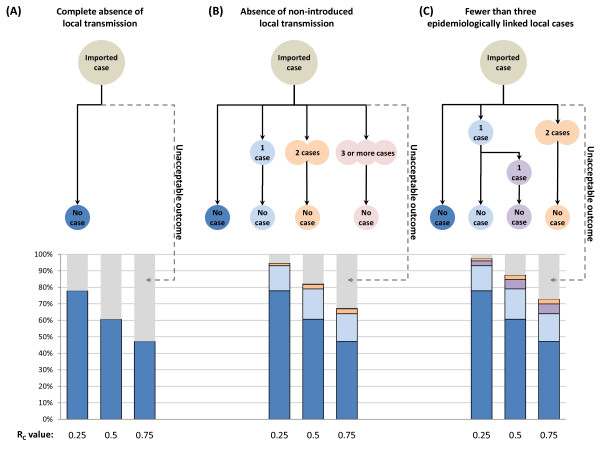
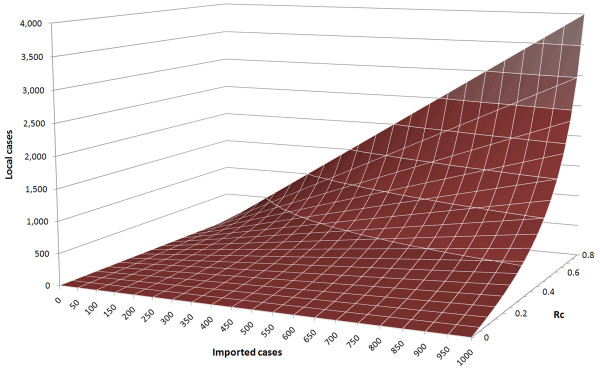
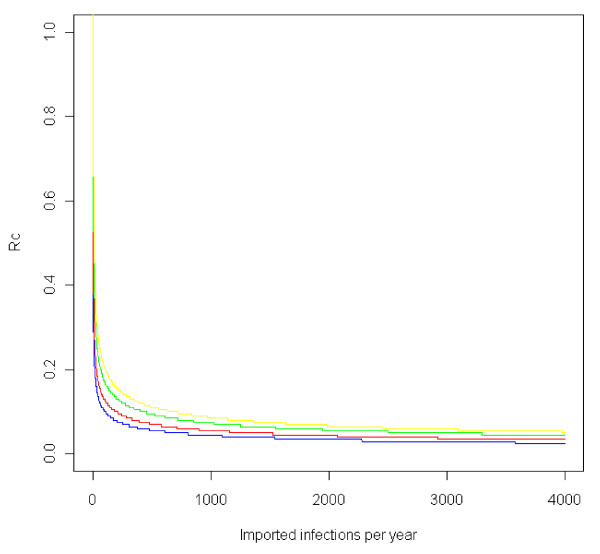
Decisions to eliminate malaria from all or part of a country involve a complex set of factors, and this complexity is compounded by ambiguity surrounding some of the key terminology, most notably "control" and "elimination." It is impossible to forecast resource and operational requirements accurately if endpoints have not been defined clearly, yet even during the Global Malaria Eradication Program, debate raged over the precise definition of "eradication." Analogous deliberations regarding the meaning of "elimination" and "control" are basically nonexistent today despite these terms' core importance to programme planning. To advance the contemporary debate about these issues, this paper presents a historical review of commonly used terms, including control, elimination, and eradication, to help contextualize current understanding of these concepts. The review has been supported by analysis of the underlying mathematical concepts on which these definitions are based through simple branching process models that describe the proliferation of malaria cases following importation. Through this analysis, the importance of pragmatic definitions that are useful for providing malaria control and elimination programmes with a practical set of strategic milestones is emphasized, and it is argued that current conceptions of elimination in particular fail to achieve these requirements. To provide all countries with precise targets, new conceptual definitions are suggested to more precisely describe the old goals of "control" - here more exactly named "controlled low-endemic malaria" - and "elimination." Additionally, it is argued that a third state, called "controlled non-endemic malaria," is required to describe the epidemiological condition in which endemic transmission has been interrupted, but malaria resulting from onwards transmission from imported infections continues to occur at a sufficiently high level that elimination has not been achieved. Finally, guidelines are discussed for deriving the separate operational definitions and metrics that will be required to make these concepts relevant, measurable, and achievable for a particular environment.
从一个国家的全部或部分地区消除疟疾的决策涉及一系列复杂的因素,而一些关键术语的模糊性使这种复杂性更加复杂,尤其是“控制”和“消除”。如果终点没有明确界定,就不可能准确预测资源和运营需求,但即使在全球疟疾消除计划期间,对于“消除”的确切定义也存在激烈的争论。尽管这些术语对规划方案至关重要,但今天,关于“消除”和“控制”的含义的类似审议基本上不存在。为了推进当前关于这些问题的辩论,本文对常用术语进行了历史回顾,包括控制、消除和根除,以帮助了解这些概念的当前理解。通过分析基本的数学概念来支持对这些定义的基础的分析,这些概念是基于描述疟疾病例在输入后的扩散的简单分支过程模型。通过这种分析,强调了实用定义的重要性,这些定义对于为疟疾控制和消除方案提供一套实用的战略里程碑非常有用,并认为当前消除的概念尤其未能满足这些要求。为了为所有国家提供明确的目标,建议采用新的概念定义来更准确地描述“控制”的旧目标——这里更准确地称为“受控制的低流行疟疾”——和“消除”。此外,还认为需要第三个状态,称为“受控制的非流行疟疾”,以描述流行传播已被中断的流行病学状况,但由于输入性感染而继续发生的疟疾的传播仍处于足够高的水平,以至于尚未实现消除。最后,讨论了用于得出这些概念在特定环境中相关、可衡量和可实现的单独操作定义和指标的指南。