Druege Uwe, Franken Philipp, Lischewski Sandra, Ahkami Amir H, Zerche Siegfried, Hause Bettina, Hajirezaei Mohammad R
Department of Plant Propagation, Leibniz Institute of Vegetable and Ornamental Crops (IGZ) Großbeeren/Erfurt, Germany.
Department of Cell and Metabolic Biology, Leibniz Institute of Plant Biochemistry Halle, Germany.
Front Plant Sci. 2014 Sep 26;5:494. doi: 10.3389/fpls.2014.00494. eCollection 2014.
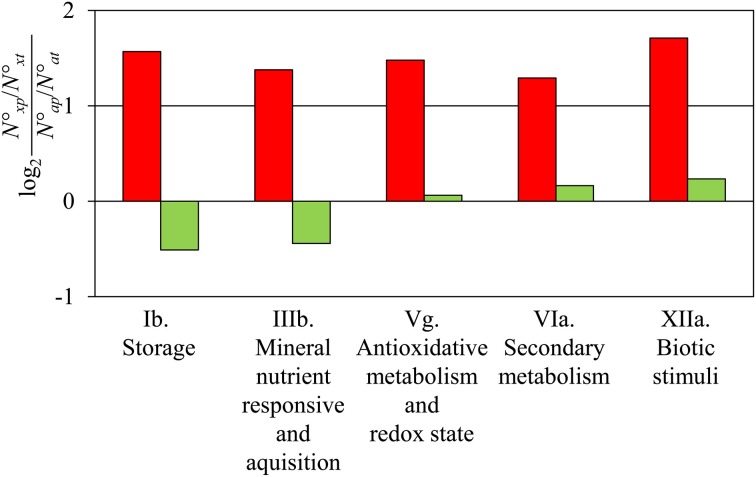
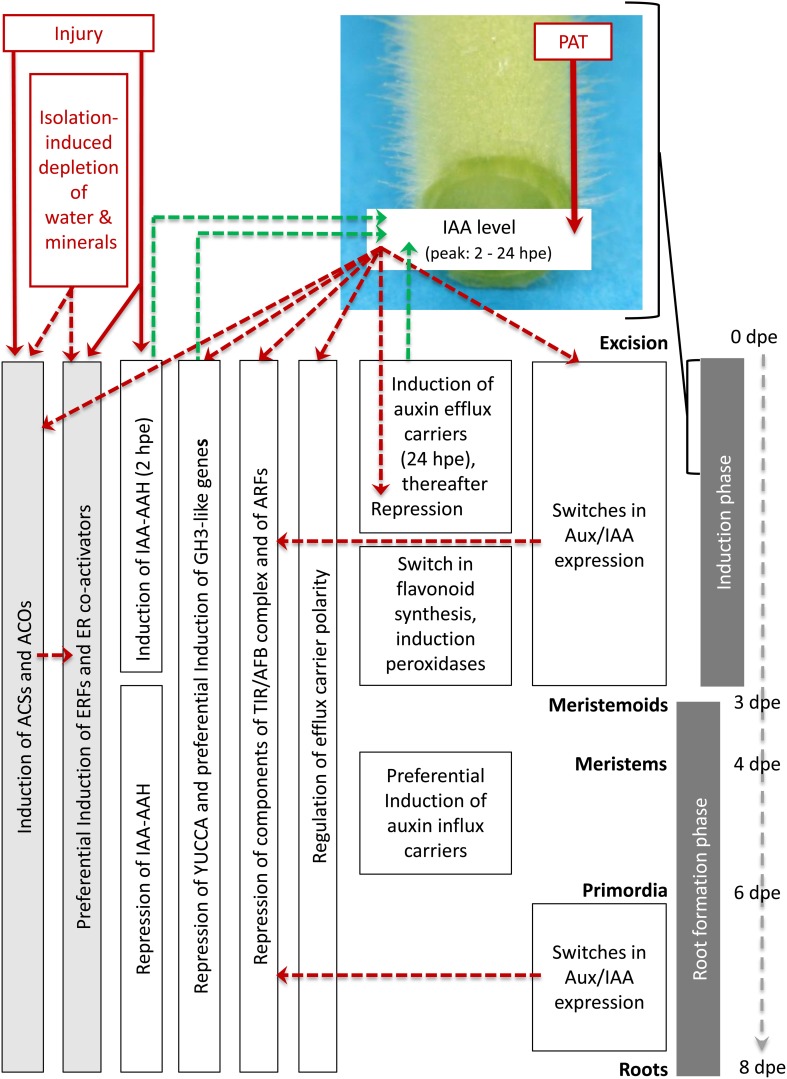
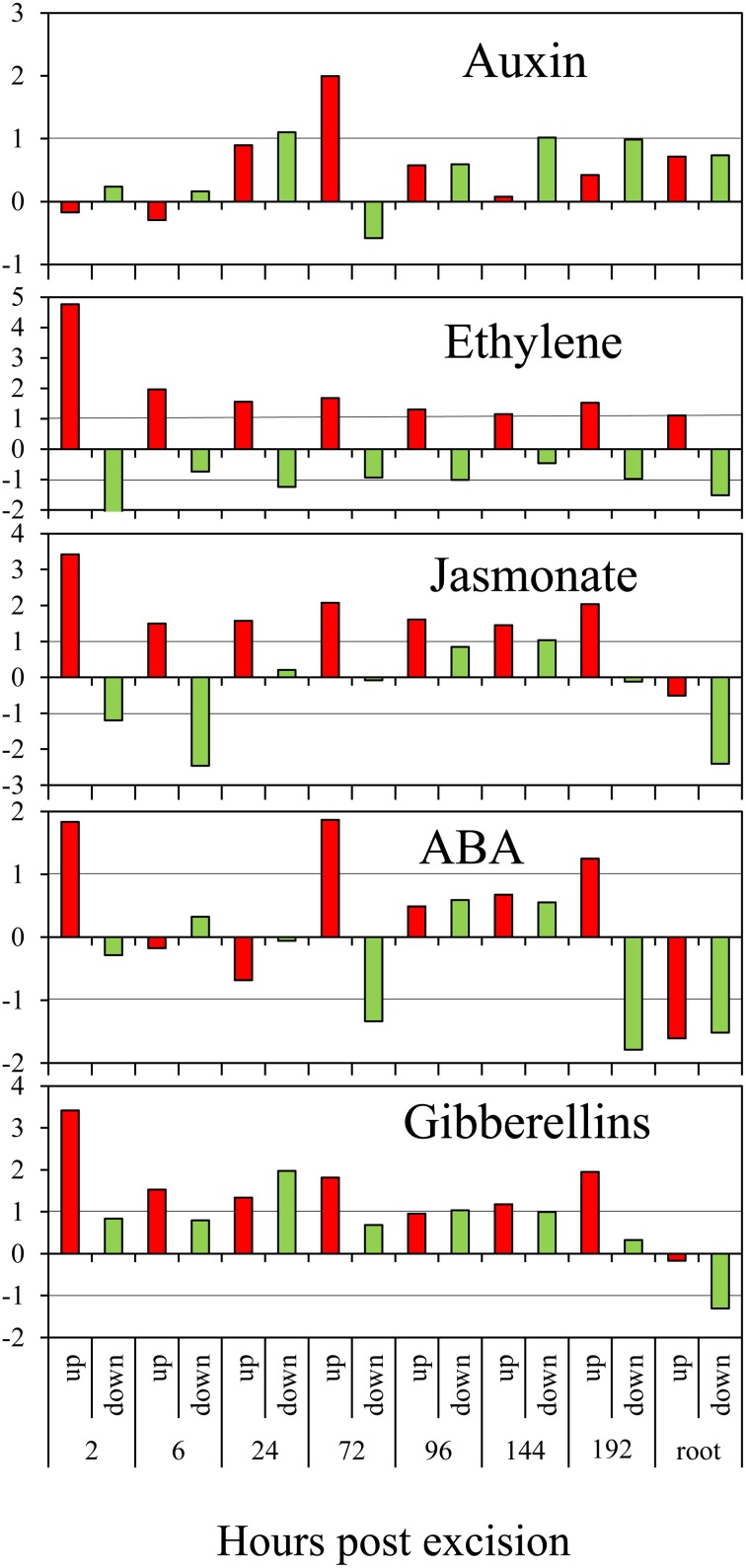
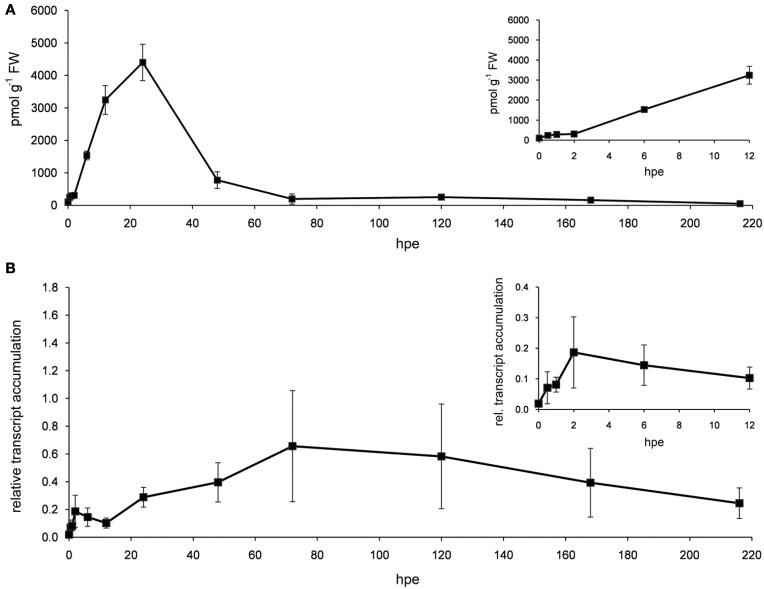
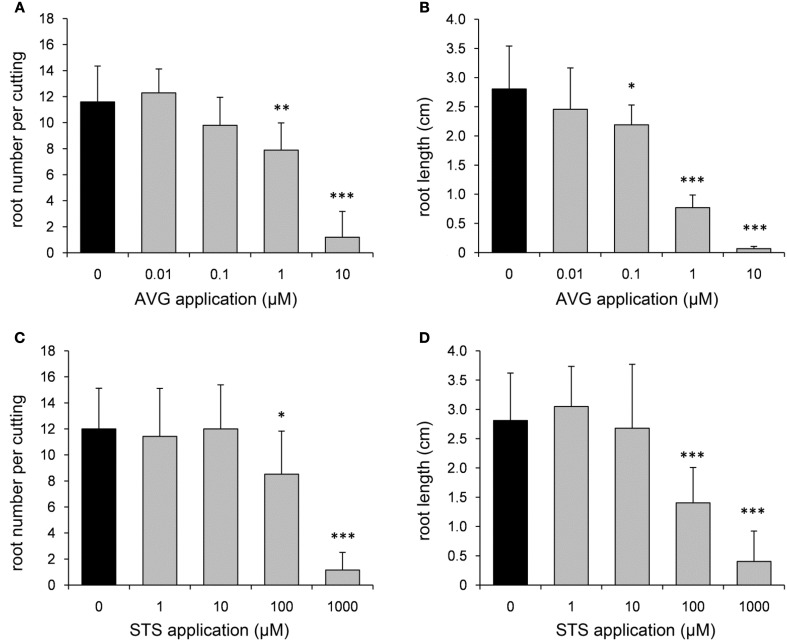
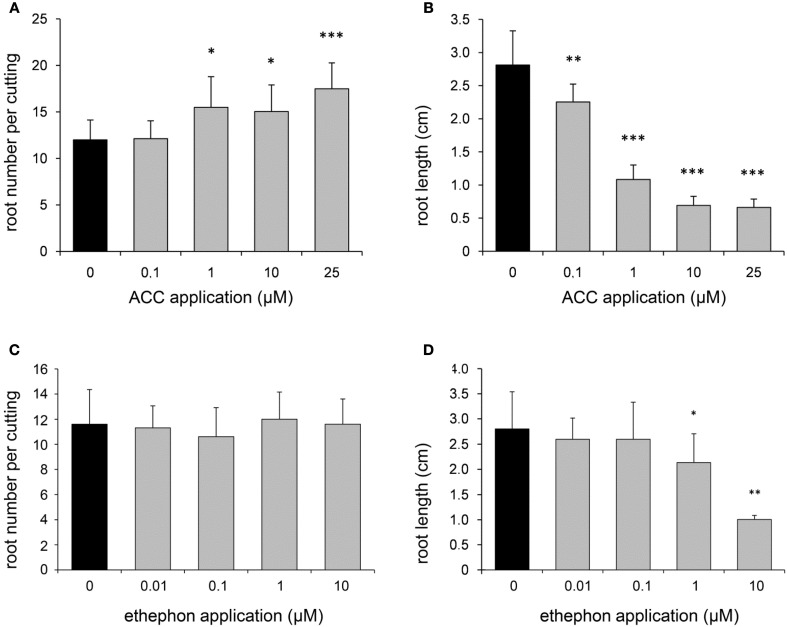
Adventitious root (AR) formation in the stem base (SB) of cuttings is the basis for propagation of many plant species and petunia is used as model to study this developmental process. Following AR formation from 2 to 192 hours post-excision (hpe) of cuttings, transcriptome analysis by microarray revealed a change of the character of the rooting zone from SB to root identity. The greatest shift in the number of differentially expressed genes was observed between 24 and 72 hpe, when the categories storage, mineral nutrient acquisition, anti-oxidative and secondary metabolism, and biotic stimuli showed a notable high number of induced genes. Analyses of phytohormone-related genes disclosed multifaceted changes of the auxin transport system, auxin conjugation and the auxin signal perception machinery indicating a reduction in auxin sensitivity and phase-specific responses of particular auxin-regulated genes. Genes involved in ethylene biosynthesis and action showed a more uniform pattern as a high number of respective genes were generally induced during the whole process of AR formation. The important role of ethylene for stimulating AR formation was demonstrated by the application of inhibitors of ethylene biosynthesis and perception as well as of the precursor aminocyclopropane-1-carboxylic acid, all changing the number and length of AR. A model is proposed showing the putative role of polar auxin transport and resulting auxin accumulation in initiation of subsequent changes in auxin homeostasis and signal perception with a particular role of Aux/IAA expression. These changes might in turn guide the entrance into the different phases of AR formation. Ethylene biosynthesis, which is stimulated by wounding and does probably also respond to other stresses and auxin, acts as important stimulator of AR formation probably via the expression of ethylene responsive transcription factor genes, whereas the timing of different phases seems to be controlled by auxin.
插条茎基部不定根(AR)的形成是许多植物物种繁殖的基础,矮牵牛被用作研究这一发育过程的模型。在插条切除后2至192小时(hpe)形成AR后,通过微阵列进行的转录组分析揭示了生根区特征从茎基部向根特征的转变。在24至72 hpe之间观察到差异表达基因数量的最大变化,此时储存、矿物质营养获取、抗氧化和次生代谢以及生物刺激等类别显示出大量诱导基因。对植物激素相关基因的分析揭示了生长素运输系统、生长素缀合和生长素信号感知机制的多方面变化,表明生长素敏感性降低以及特定生长素调节基因的阶段特异性反应。参与乙烯生物合成和作用的基因表现出更一致的模式,因为在AR形成的整个过程中通常会诱导大量相应的基因。通过应用乙烯生物合成和感知抑制剂以及前体氨基环丙烷-1-羧酸,证明了乙烯对刺激AR形成的重要作用,所有这些都改变了AR的数量和长度。提出了一个模型,显示了极性生长素运输的假定作用以及生长素在生长素稳态和信号感知后续变化起始中的积累,其中Aux/IAA表达具有特殊作用。这些变化可能反过来引导进入AR形成的不同阶段。乙烯生物合成受伤口刺激,可能也对其他胁迫和生长素作出反应,可能通过乙烯反应转录因子基因的表达作为AR形成的重要刺激物,而不同阶段的时间似乎由生长素控制。