University of Kabianga, P.O. Box 2030-20200, Kericho, Kenya.
Leibniz Institute of Vegetable and Ornamental Crops (IGZ), 99090, Erfurt, Germany.
Planta. 2021 Sep 6;254(4):65. doi: 10.1007/s00425-021-03709-x.
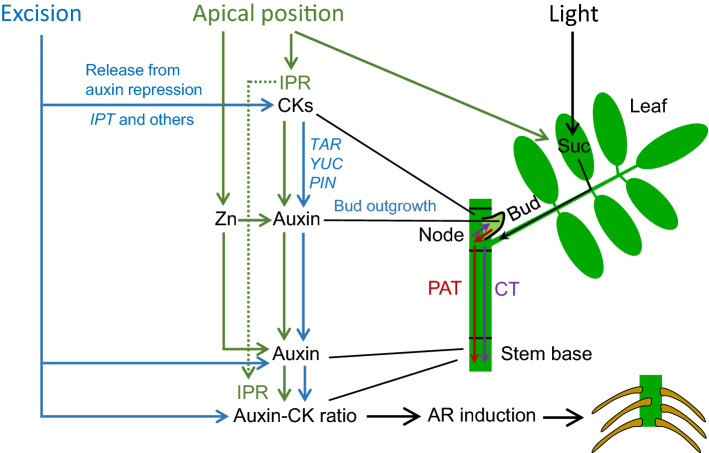
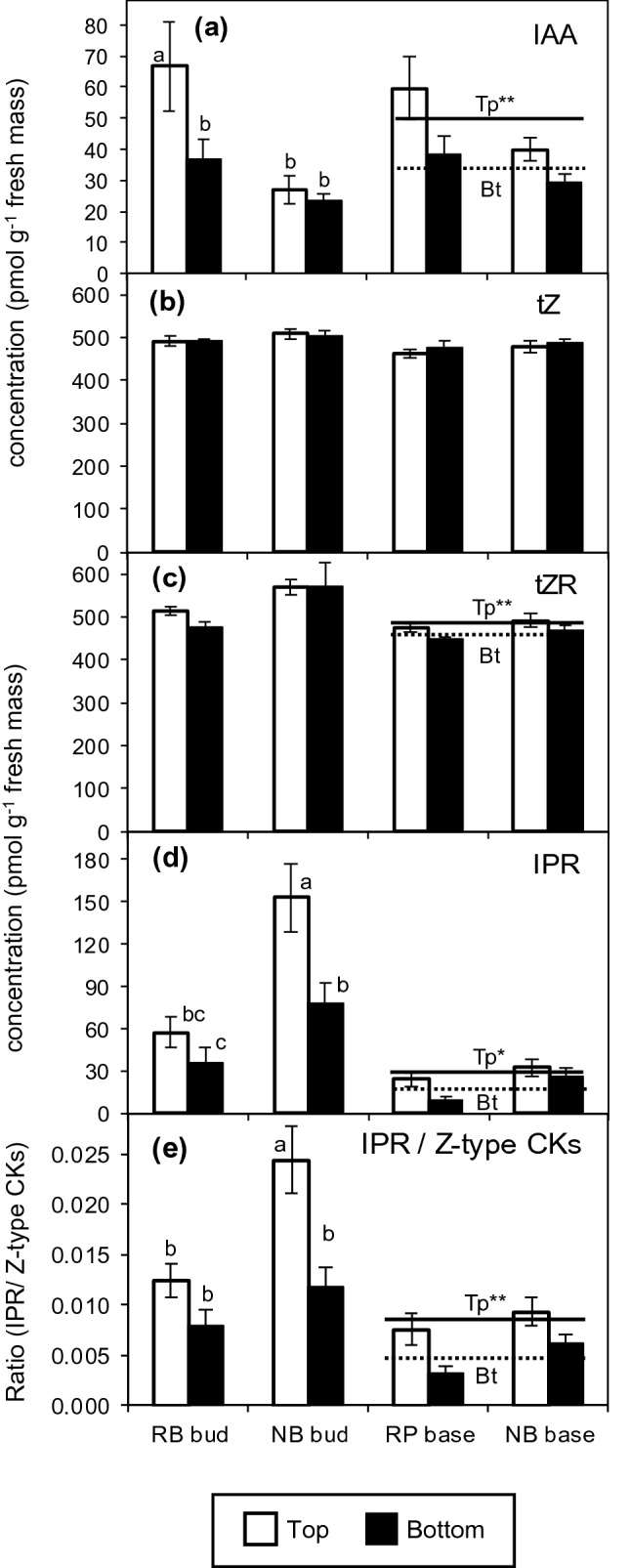
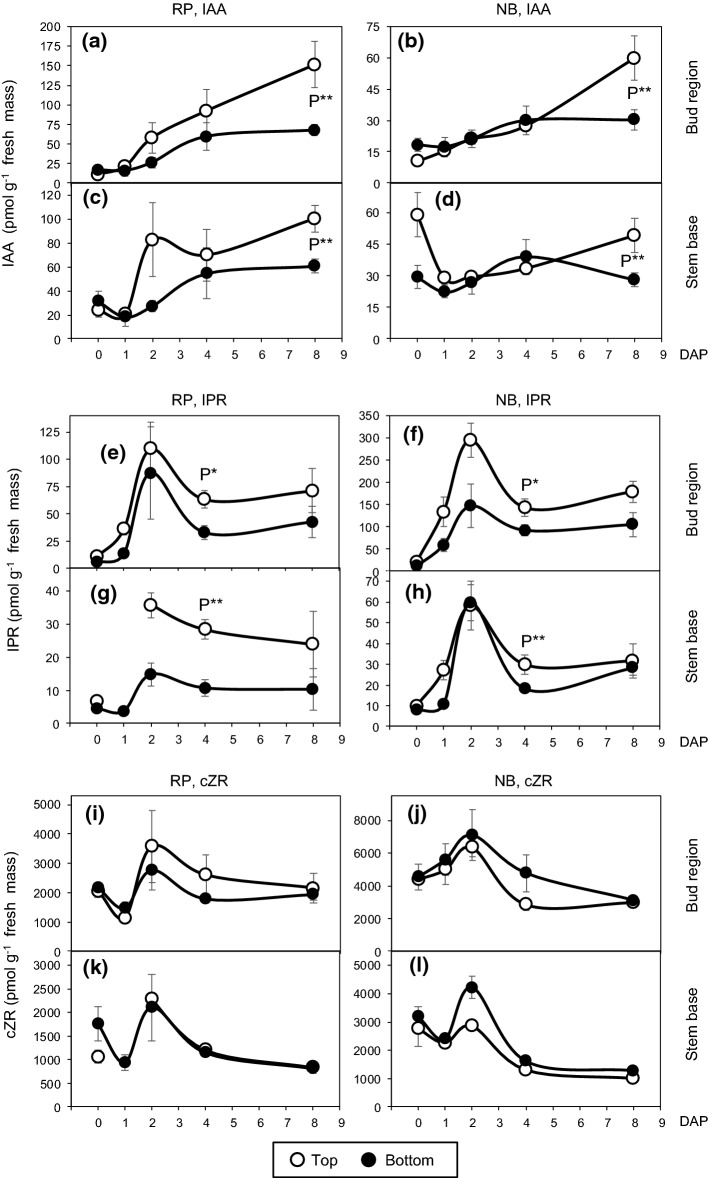
Enhanced levels of indole-3-acetic and raised auxin to cytokinin ratios in the stem base contribute to the positive acropetal gradient in rooting capacity of leafy single-node stem cuttings of rose. Cuttings excised from different nodal positions in stock plants can differ in subsequent adventitious root formation. We investigated the involvement of the auxin-cytokinin balance in position-affected rooting of Rosa hybrida. Leafy single-node stem cuttings of two rose cultivars were excised from top versus bottom positions. Concentrations of IAA and cytokinins were monitored in the bud region and the stem base during 8 days after planting using chromatography-MS/MS technology. The effects of nodal position and external supply of indole-butyric acid on rooting were analyzed. Most cytokinins increased particularly in the bud region and peaked at day two before the bud break was recorded. IAA increased in both tissues between day one and day eight. Top versus bottom cuttings revealed higher levels of isopentenyladenosine (IPR) in both tissues as well as higher concentrations of IAA and a higher ratio of IAA to cytokinins particularly in the stem base. The dynamic of hormones and correlation analysis indicated that the higher IPR contributed to the enhanced IAA in the bud region which served as auxin source for the auxin homeostasis in the stem base, where IAA determined the auxin-cytokinin balance. Bottom versus top cuttings produced lower numbers and lengths of roots, whereas this deficit was counterbalanced by auxin application. Further considering other studies of rose, it is concluded that cytokinin-, sucrose- and zinc-dependent auxin biosynthesis in the outgrowing buds is an important factor that contributes to the enhanced IAA levels and auxin/cytokinin ratios in the stem base of apical cuttings, promoting root induction.
茎基部吲哚乙酸水平升高和生长素与细胞分裂素比值升高有助于玫瑰多叶单节茎段插穗生根能力的正向向顶梯度。取自母株不同节位的插穗在随后不定根形成方面可能存在差异。我们研究了生长素-细胞分裂素平衡在蔷薇位置影响生根中的作用。从两个玫瑰品种的顶部和底部位置切取有叶单节茎段插穗。在种植后 8 天内,使用色谱-MS/MS 技术监测芽区和茎基部的 IAA 和细胞分裂素浓度。分析了节位和吲哚丁酸外源供应对生根的影响。大多数细胞分裂素在芽区增加,在芽突破记录前的第二天达到峰值。IAA 在第一至第八天在两种组织中均增加。与底部相比,顶部插穗在两种组织中均显示出更高水平的异戊烯腺苷(IPR),以及更高浓度的 IAA 和更高的 IAA 与细胞分裂素比值,特别是在茎基部。激素的动态和相关分析表明,较高的 IPR 有助于增强芽区的 IAA,IAA 作为茎基部生长素稳态的生长素源,其中 IAA 决定生长素-细胞分裂素平衡。与顶部相比,底部插穗产生的根数量和长度较少,但通过施加生长素可以平衡这种不足。进一步考虑玫瑰的其他研究,得出结论,在生长中的芽中,细胞分裂素、蔗糖和锌依赖性生长素生物合成是一个重要因素,有助于增加顶端插穗茎基部的 IAA 水平和生长素/细胞分裂素比值,促进生根。