Wang Meizhen, Li Ping, Li Cong, Pan Yanlin, Jiang Xiyuan, Zhu Dengyun, Zhao Qian, Yu Jingjuan
BMC Plant Biol. 2014 Nov 18;14:290. doi: 10.1186/s12870-014-0290-7.
Late embryogenesis abundant (LEA) proteins are involved in protecting higher plants from damage caused by environmental stresses. Foxtail millet (Setaria italica) is an important cereal crop for food and feed in semi-arid areas. However, the molecular mechanisms underlying tolerance to these conditions are not well defined.
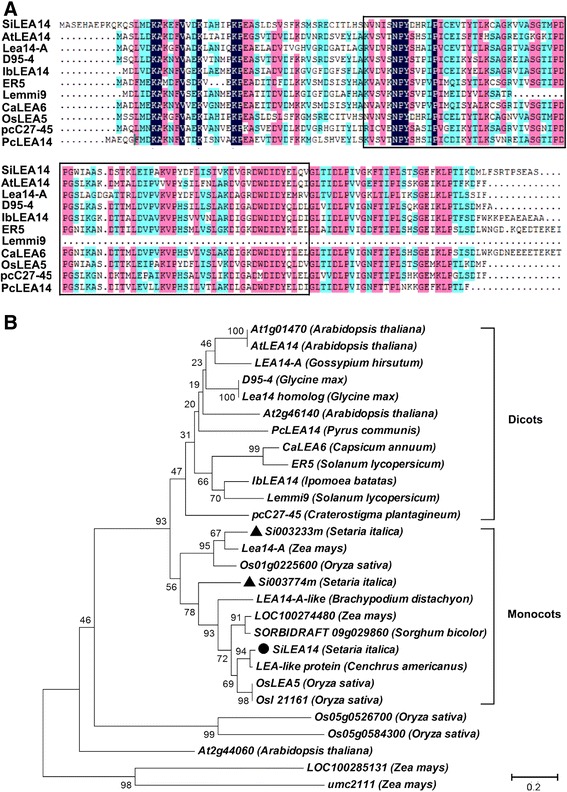
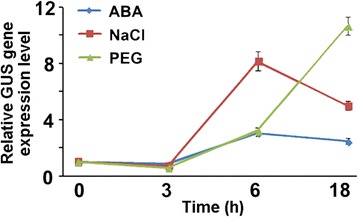
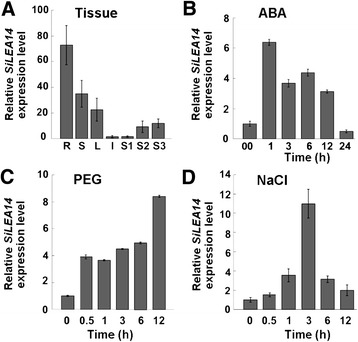
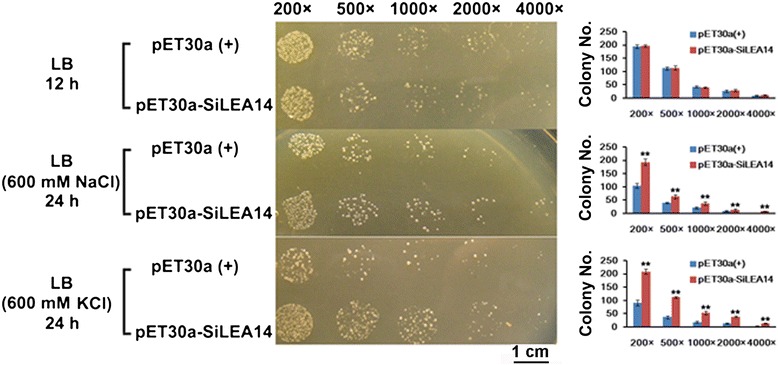
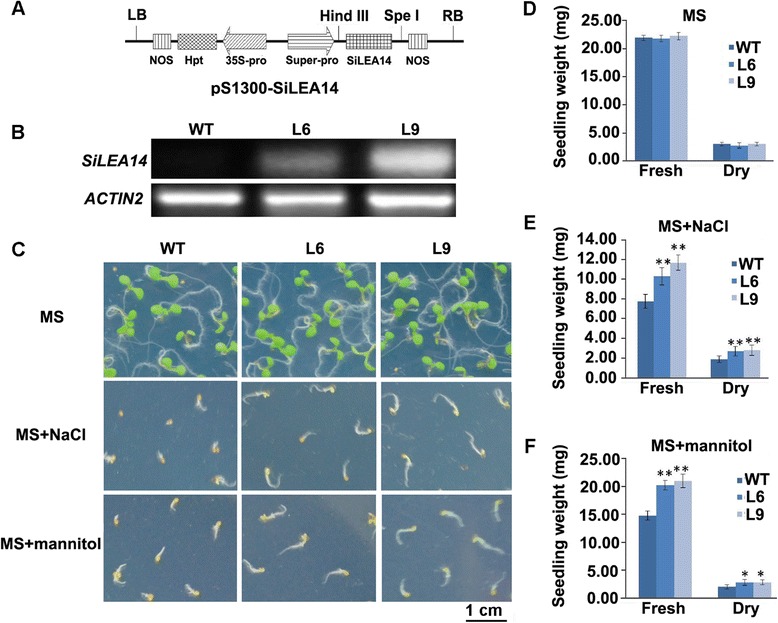
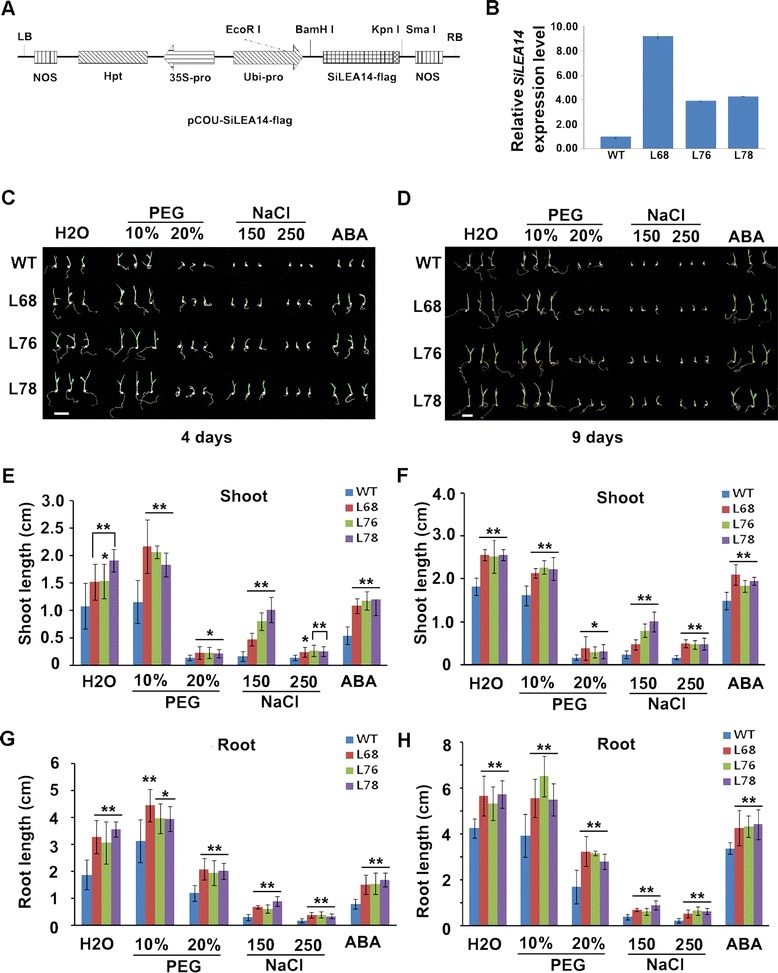
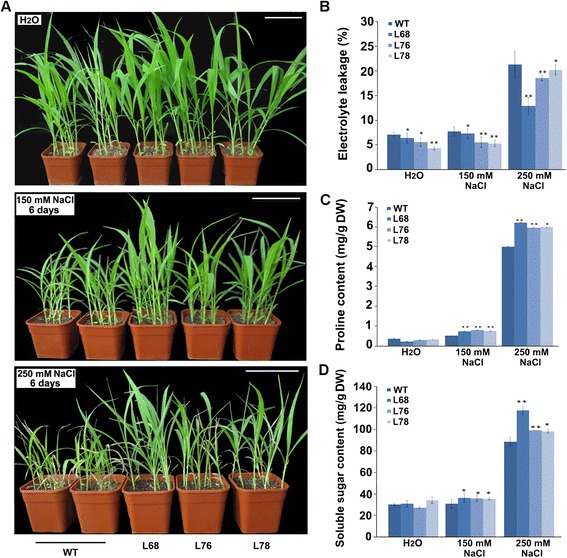
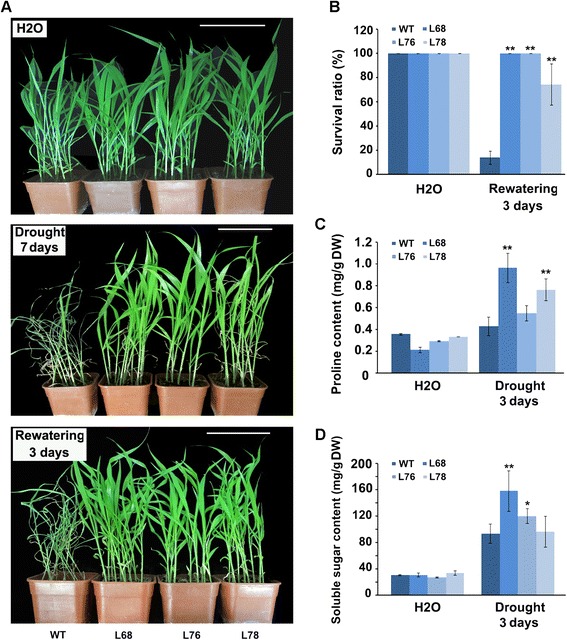
Here, we characterized a novel atypical LEA gene named SiLEA14 from foxtail millet. It contains two exons separated by one intron. SiLEA14 was expressed in roots, stems, leaves, inflorescences and seeds at different levels under normal growth conditions. In addition, SiLEA14 was dramatically induced by osmotic stress, NaCl and exogenous abscisic acid. The SiLEA14 protein was localized in the nucleus and the cytoplasm. Overexpression of SiLEA14 improved Escherichia coli growth performance compared with the control under salt stress. To further assess the function of SiLEA14 in plants, transgenic Arabidopsis and foxtail millet plants that overexpressed SiLEA14 were obtained. The transgenic Arabidopsis seedlings showed higher tolerance to salt and osmotic stress than the wild type (WT). Similarly, the transgenic foxtail millet showed improved growth under salt and drought stresses compared with the WT. Taken together, our results indicated that SiLEA14 is a novel atypical LEA protein and plays important roles in resistance to abiotic stresses in plants.
We characterized a novel atypical LEA gene SiLEA14 from foxtail millet, which plays important roles in plant abiotic stress resistance. Modification of SiLEA14 expression may improve abiotic stress resistance in agricultural crops.
胚胎后期丰富(LEA)蛋白参与保护高等植物免受环境胁迫造成的损害。谷子(Setaria italica)是半干旱地区重要的粮食和饲料谷类作物。然而,其耐受这些条件的分子机制尚不清楚。
在此,我们从谷子中鉴定了一个名为SiLEA14的新型非典型LEA基因。它包含两个由一个内含子隔开的外显子。在正常生长条件下,SiLEA14在根、茎、叶、花序和种子中以不同水平表达。此外,SiLEA14受到渗透胁迫、NaCl和外源脱落酸的显著诱导。SiLEA14蛋白定位于细胞核和细胞质中。与对照相比,在盐胁迫下SiLEA14的过表达改善了大肠杆菌的生长性能。为了进一步评估SiLEA14在植物中的功能,获得了过表达SiLEA14的转基因拟南芥和谷子植株。转基因拟南芥幼苗对盐和渗透胁迫的耐受性高于野生型(WT)。同样,与WT相比,转基因谷子在盐和干旱胁迫下生长得到改善。综上所述,我们的结果表明SiLEA14是一种新型非典型LEA蛋白,在植物对非生物胁迫的抗性中起重要作用。
我们从谷子中鉴定了一个新型非典型LEA基因SiLEA14,其在植物非生物胁迫抗性中起重要作用。修饰SiLEA14的表达可能提高农作物的非生物胁迫抗性。