Chesarino Nicholas M, McMichael Temet M, Yount Jacob S
Department of Microbial Infection & Immunity, Center for Microbial Interface Biology, The Ohio State University, Columbus, OH 43210, USA.
Future Microbiol. 2014;9(10):1151-63. doi: 10.2217/fmb.14.65.
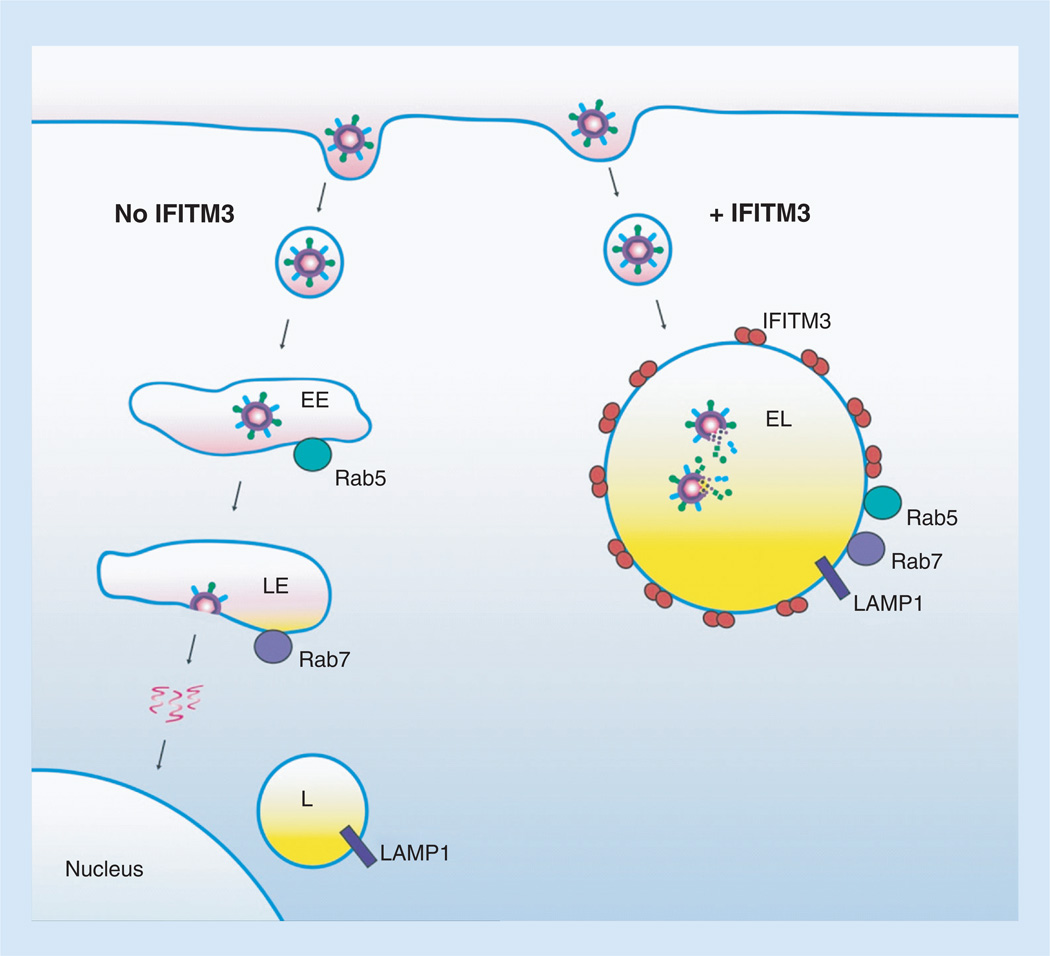
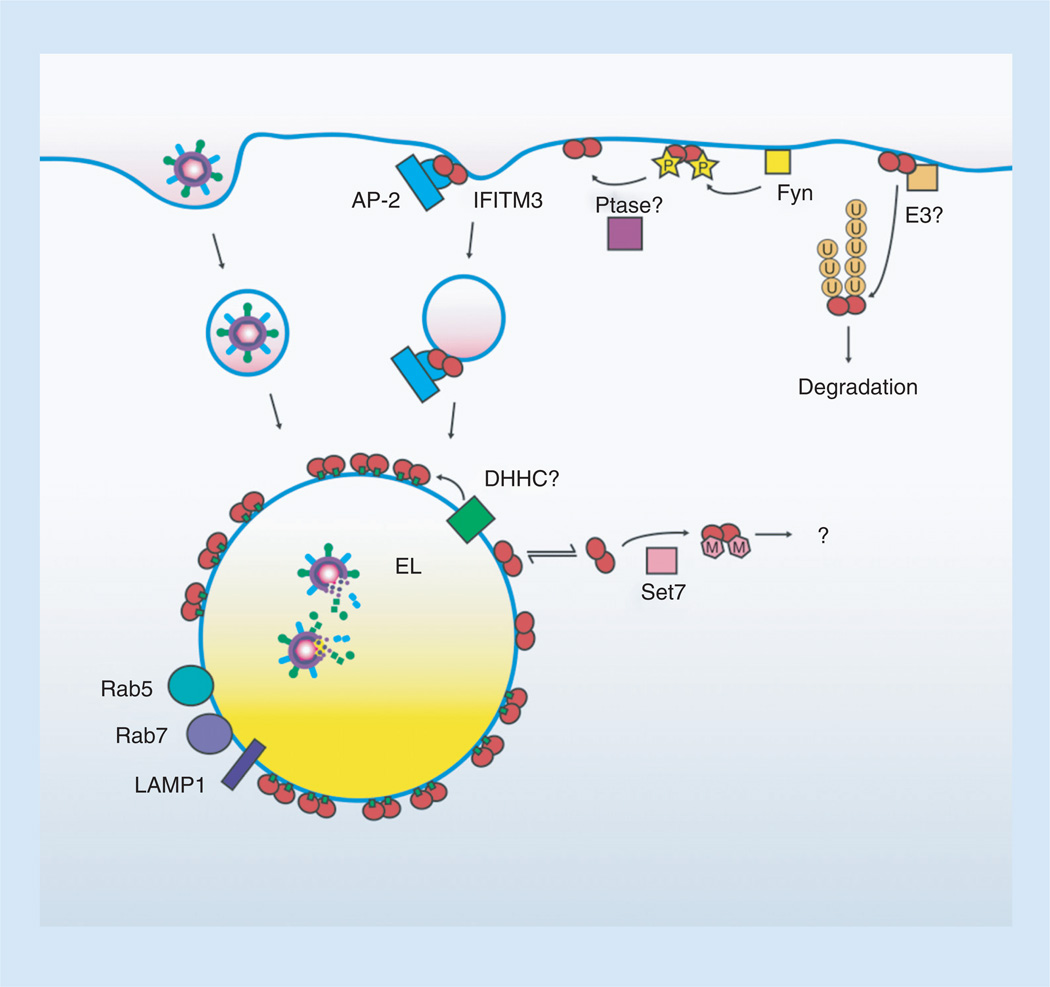
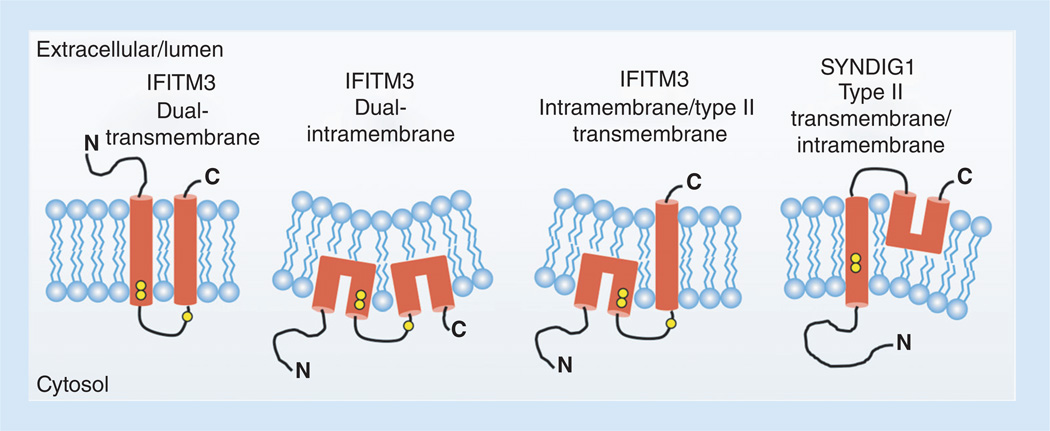
IFITM3 restricts cellular infection by multiple important viral pathogens, and is particularly critical for the innate immune response against influenza virus. Expression of IFITM3 expands acidic endolysosomal compartments and prevents fusion of endocytosed viruses, leading to their degradation. This small, 133 amino acid, antiviral protein is controlled by at least four distinct post-translational modifications. Positive regulation of IFITM3 antiviral activity is provided by S-palmitoylation, while negative regulatory mechanisms include lysine ubiquitination, lysine methylation and tyrosine phosphorylation. Herein, we describe specific insights into IFITM3 trafficking and activity that were provided by studies of IFITM3 post-translational modifications, and discuss evidence suggesting that IFITM3 adopts multiple membrane topologies involving at least one intramembrane domain in its antivirally active conformation.
IFITM3限制多种重要病毒病原体的细胞感染,对抵抗流感病毒的先天免疫反应尤为关键。IFITM3的表达扩大了酸性内溶酶体区室,并阻止内吞病毒的融合,导致其降解。这种由133个氨基酸组成的小抗病毒蛋白至少受四种不同的翻译后修饰调控。S-棕榈酰化对IFITM3抗病毒活性起正向调节作用,而负向调节机制包括赖氨酸泛素化、赖氨酸甲基化和酪氨酸磷酸化。在此,我们描述了对IFITM3翻译后修饰研究提供的关于IFITM3转运和活性的具体见解,并讨论了表明IFITM3在其抗病毒活性构象中采用涉及至少一个跨膜结构域的多种膜拓扑结构的证据。