Song Wenjun, Wang Pui, Mok Bobo Wing-Yee, Lau Siu-Ying, Huang Xiaofeng, Wu Wai-Lan, Zheng Min, Wen Xi, Yang Shigui, Chen Yu, Li Lanjuan, Yuen Kwok-Yung, Chen Honglin
1] State Key Laboratory for Emerging Infectious Diseases, Department of Microbiology, and the Research Center of Infection and Immunology, The University of Hong Kong, Hong Kong SAR, China [2] The Collaborative Innovation Center for Diagnosis and Treatment of Infectious Diseases, Zhejiang University, Hangzhou 310003, China.
State Key Laboratory for Emerging Infectious Diseases, Department of Microbiology, and the Research Center of Infection and Immunology, The University of Hong Kong, Hong Kong SAR, China.
Nat Commun. 2014 Nov 20;5:5509. doi: 10.1038/ncomms6509.
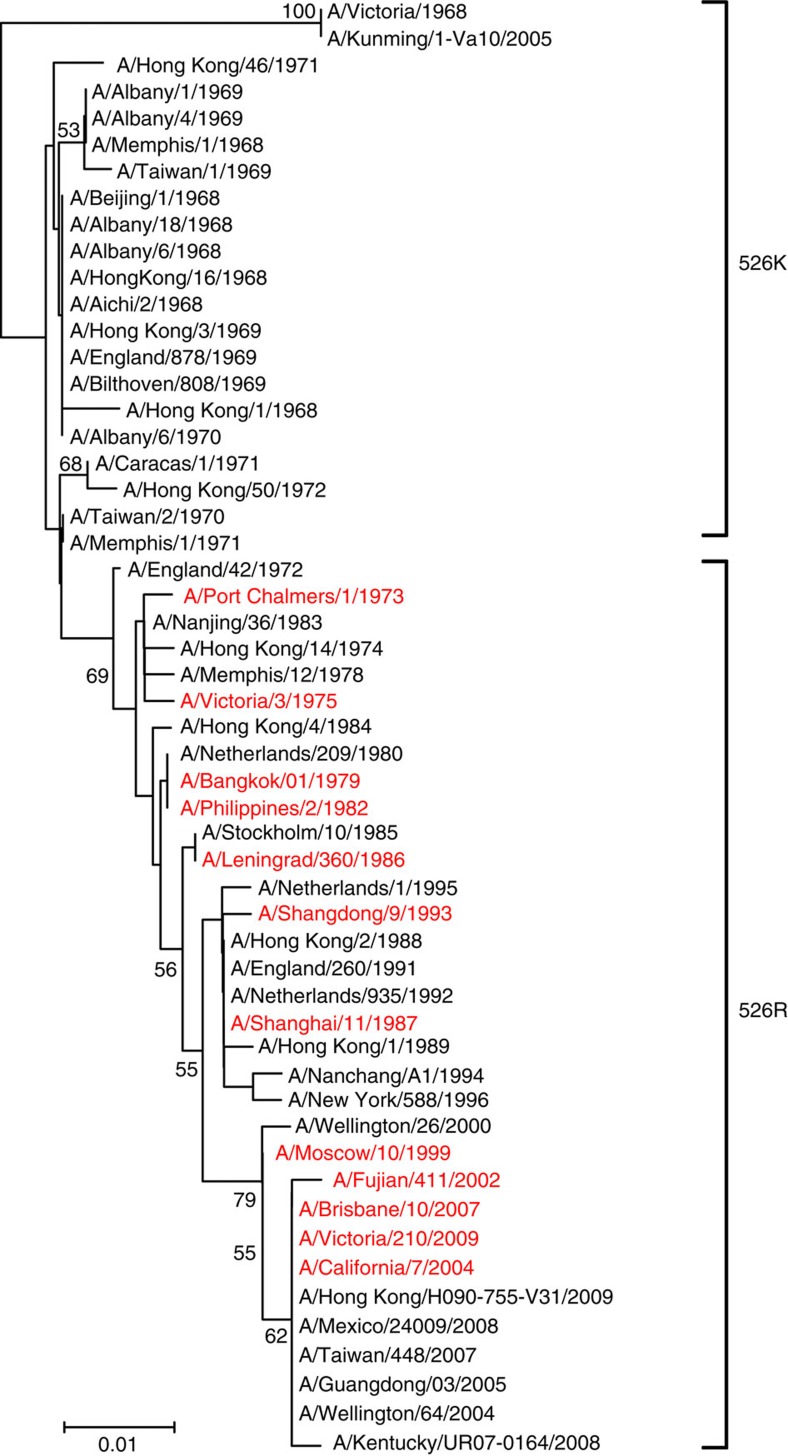
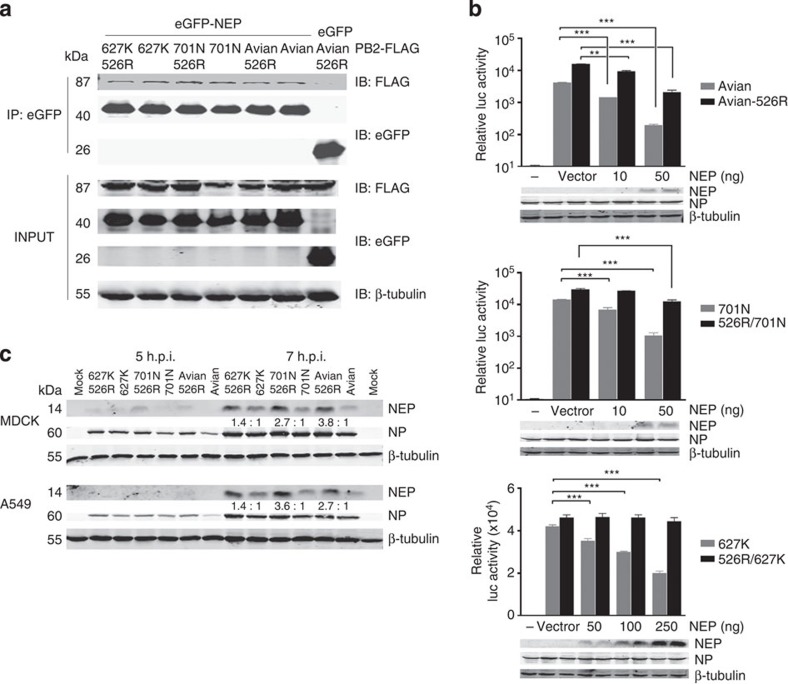
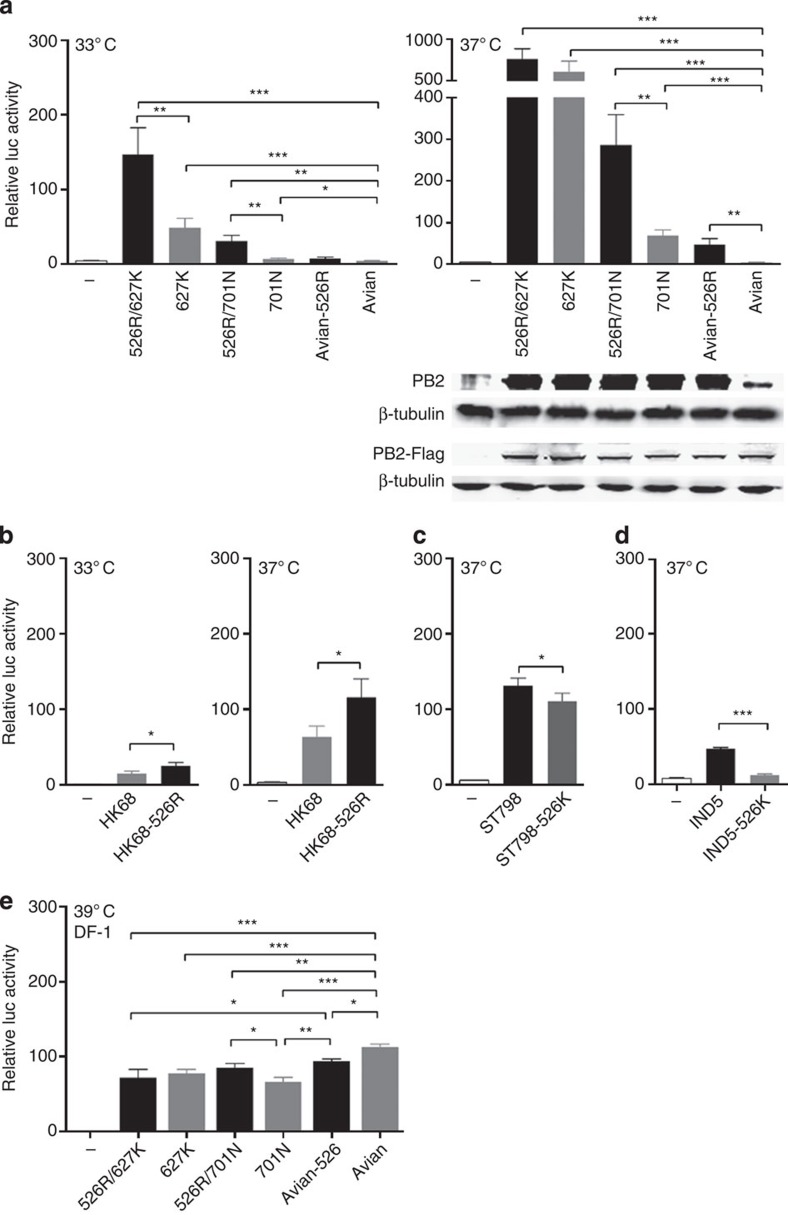
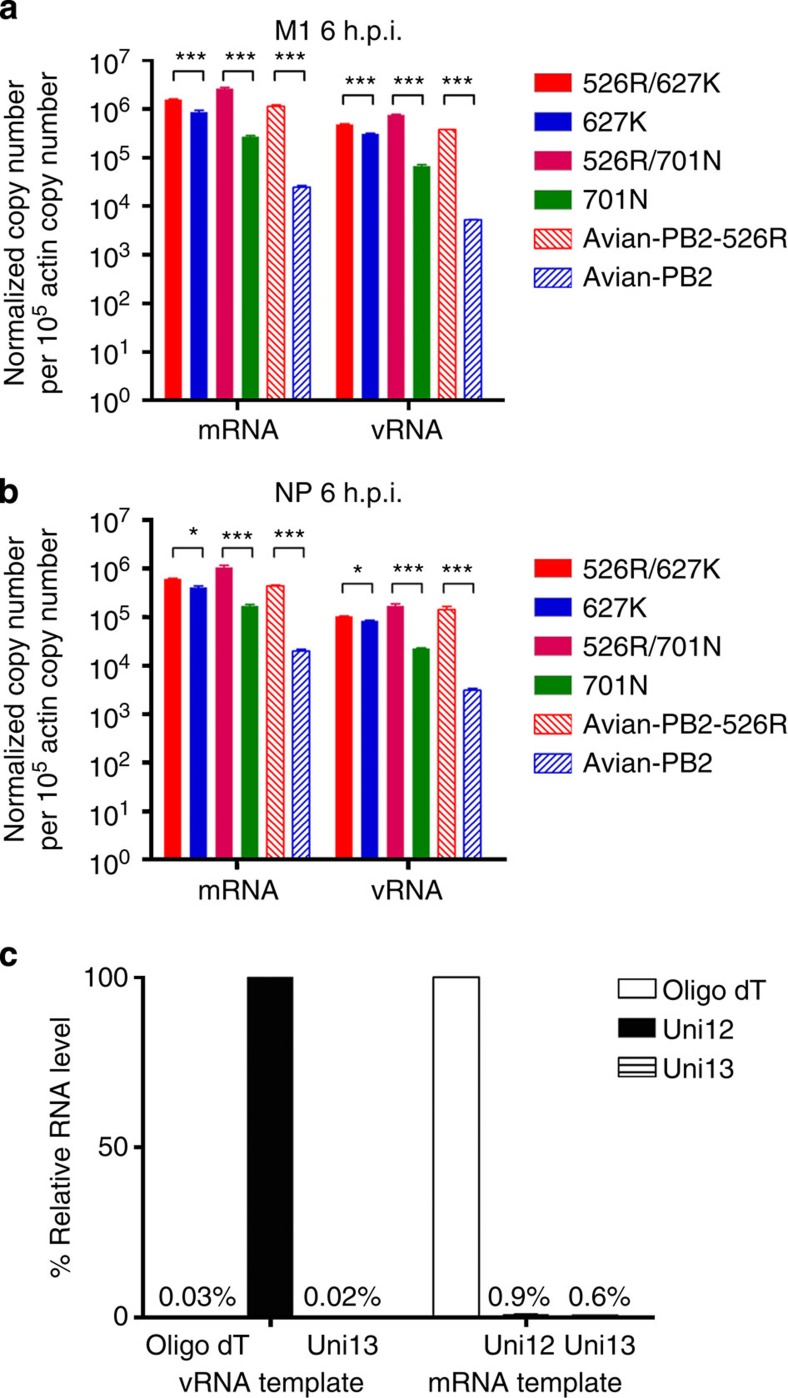
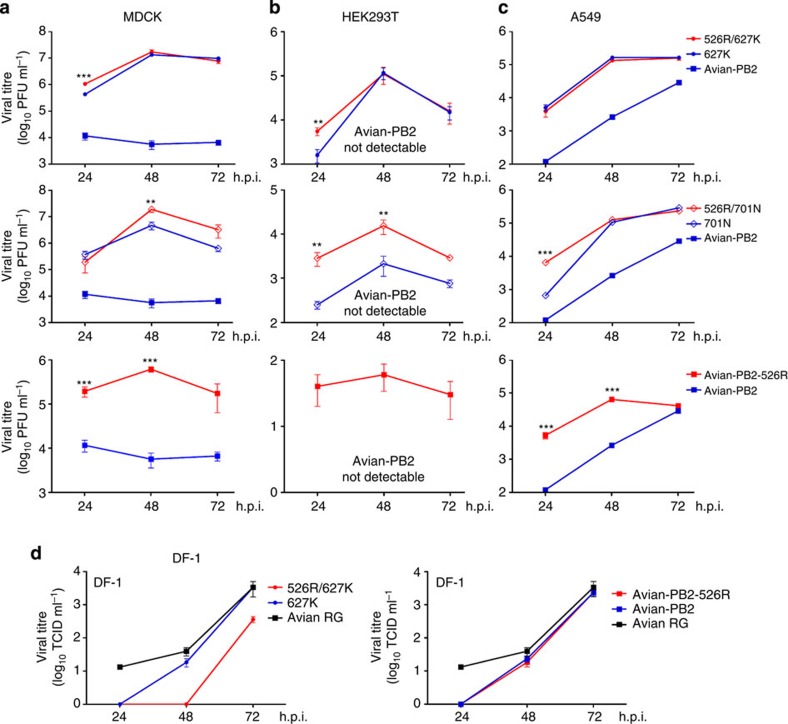
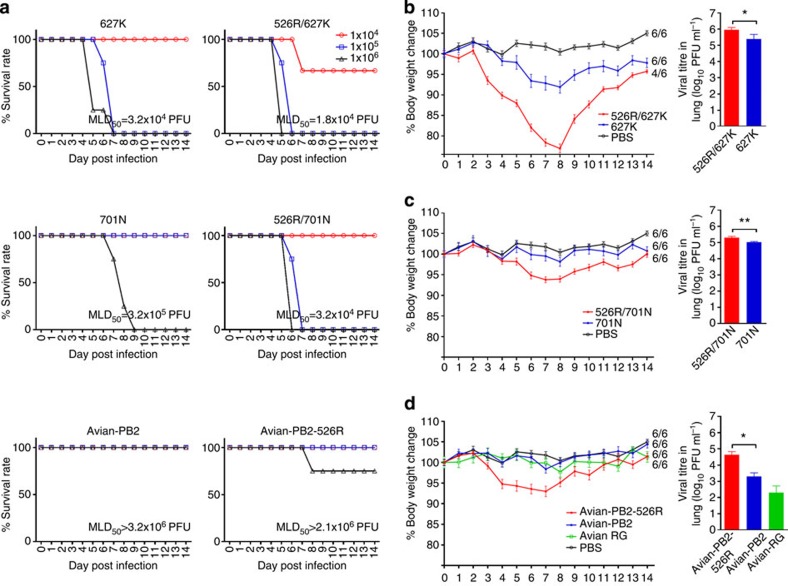
Host-adaptive strategies, such as the E627K substitution in the PB2 protein, are critical for replication of avian influenza A viruses in mammalian hosts. Here we show that mutation PB2-K526R is present in some human H7N9 influenza isolates, in nearly 80% of H5N1 human isolates from Indonesia and, in conjunction with E627K, in almost all seasonal H3N2 viruses since 1970. Polymerase complexes containing PB2-526R derived from H7N9, H5N1 or H3N2 viruses exhibit increased polymerase activity. PB2-526R also enhances viral transcription and replication in cells. In comparison with viruses carrying 627K, H7N9 viruses carrying both 526R and 627K replicate more efficiently in mammalian (but not avian) cells and in mouse lung tissues, and cause greater body weight loss and mortality in infected mice. PB2-K526R interacts with nuclear export protein and our results suggest that it contributes to enhance replication for certain influenza virus subtypes, particularly in combination with 627K.
宿主适应性策略,例如PB2蛋白中的E627K替换,对于甲型禽流感病毒在哺乳动物宿主中的复制至关重要。我们在此表明,PB2-K526R突变存在于一些人类H7N9流感分离株中,在来自印度尼西亚的近80%的人类H5N1分离株中存在,并且自1970年以来,在几乎所有季节性H3N2病毒中,与E627K一起存在。源自H7N9、H5N1或H3N2病毒的含有PB2-526R的聚合酶复合物表现出增强的聚合酶活性。PB2-526R还增强了病毒在细胞中的转录和复制。与携带627K的病毒相比,同时携带526R和627K的H7N9病毒在哺乳动物(而非禽类)细胞和小鼠肺组织中复制效率更高,并在感染小鼠中导致更大的体重减轻和死亡率。PB2-K526R与核输出蛋白相互作用,我们的结果表明它有助于增强某些流感病毒亚型的复制,特别是与627K结合时。