Bosque Gabriel, Folch-Fortuny Abel, Picó Jesús, Ferrer Alberto, Elena Santiago F
Institut Universitari d'Automàtica i Informàtica Industrial, Universitat Politècnica de València, Camí de Vera s/n, 46022, València, Spain.
Departamento de Estadística e Investigación Operativa Aplicadas y Calidad, Universitat Politècnica de València, Camí de Vera, s/n, Edificio 7A, 46022, València, Spain.
BMC Syst Biol. 2014 Nov 20;8:129. doi: 10.1186/s12918-014-0129-8.
One of the central interests of Virology is the identification of host factors that contribute to virus infection. Despite tremendous efforts, the list of factors identified remains limited. With omics techniques, the focus has changed from identifying and thoroughly characterizing individual host factors to the simultaneous analysis of thousands of interactions, framing them on the context of protein-protein interaction networks and of transcriptional regulatory networks. This new perspective is allowing the identification of direct and indirect viral targets. Such information is available for several members of the Potyviridae family, one of the largest and more important families of plant viruses.
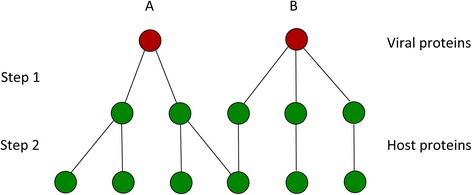
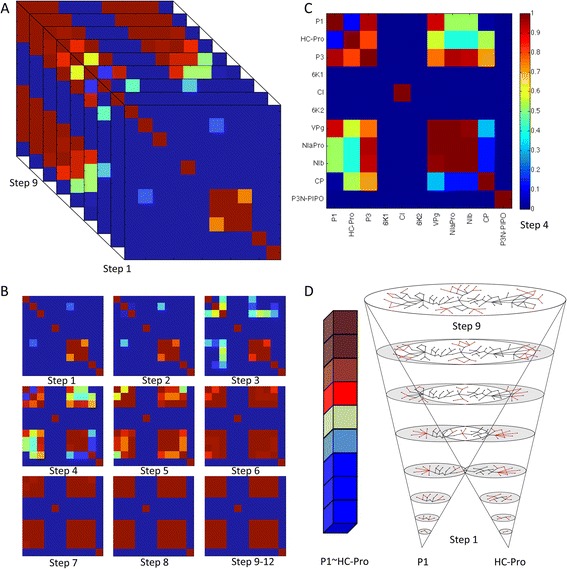
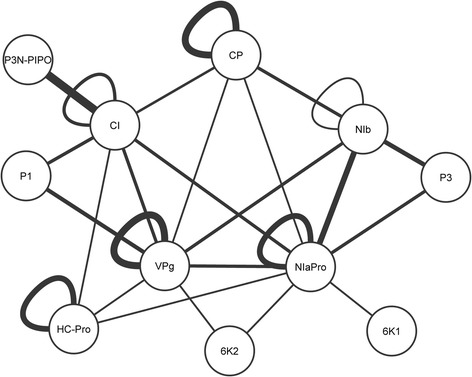
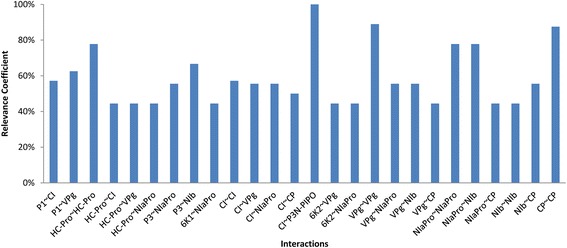
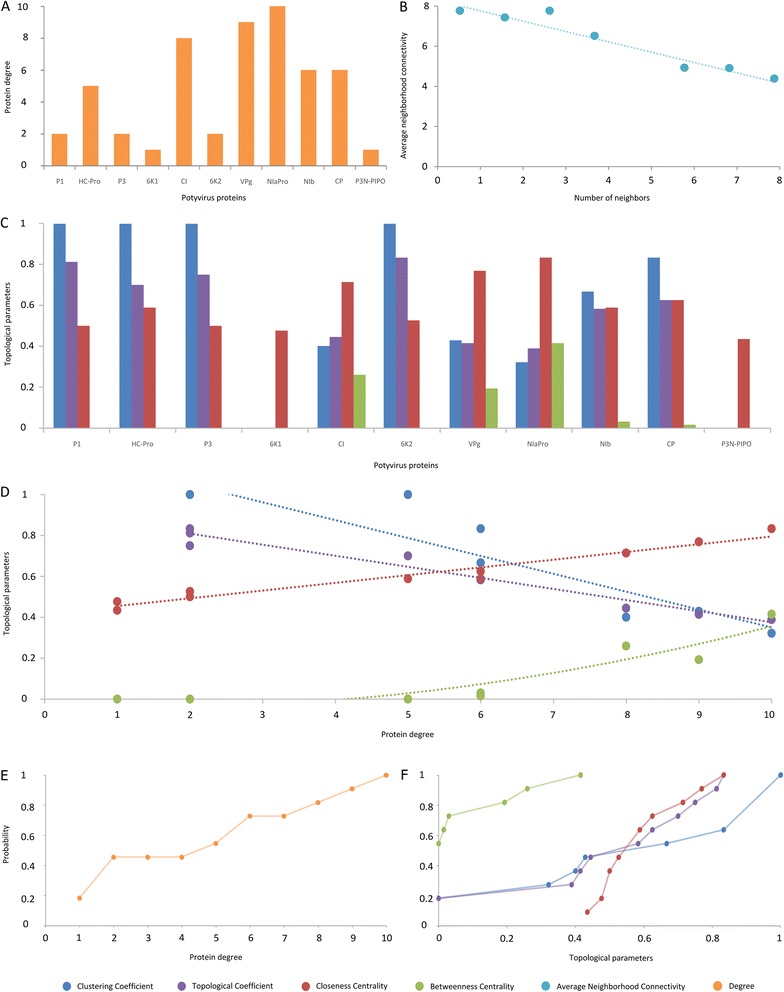
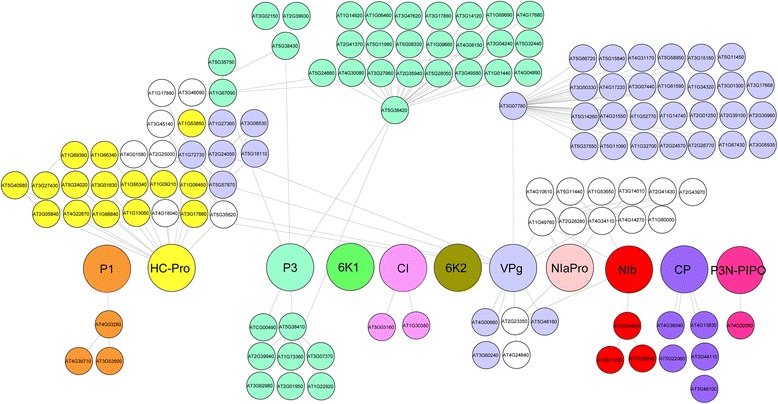
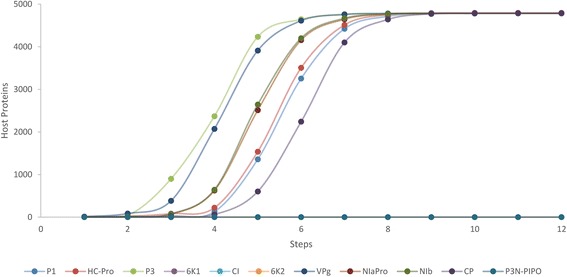
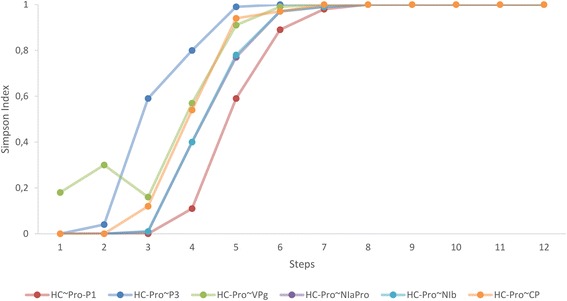
After collecting information on virus protein-protein interactions from different potyviruses, we have processed it and used it for inferring a protein-protein interaction network. All proteins are connected into a single network component. Some proteins show a high degree and are highly connected while others are much less connected, with the network showing a significant degree of dissortativeness. We have attempted to integrate this virus protein-protein interaction network into the largest protein-protein interaction network of Arabidopsis thaliana, a susceptible laboratory host. To make the interpretation of data and results easier, we have developed a new approach for visualizing and analyzing the dynamic spread on the host network of the local perturbations induced by viral proteins. We found that local perturbations can reach the entire host protein-protein interaction network, although the efficiency of this spread depends on the particular viral proteins. By comparing the spread dynamics among viral proteins, we found that some proteins spread their effects fast and efficiently by attacking hubs in the host network while other proteins exert more local effects.
Our findings confirm that potyvirus protein-protein interaction networks are highly connected, with some proteins playing the role of hubs. Several topological parameters depend linearly on the protein degree. Some viral proteins focus their effect in only host hubs while others diversify its effect among several proteins at the first step. Future new data will help to refine our model and to improve our predictions.
病毒学的核心关注点之一是鉴定有助于病毒感染的宿主因子。尽管付出了巨大努力,但已鉴定出的因子列表仍然有限。借助组学技术,研究重点已从鉴定和全面表征单个宿主因子转变为同时分析数千种相互作用,并将它们置于蛋白质 - 蛋白质相互作用网络和转录调控网络的背景下。这种新视角使得能够鉴定直接和间接的病毒靶标。对于植物病毒中最大且最重要的家族之一马铃薯Y病毒科的几个成员,此类信息是可用的。
在收集了来自不同马铃薯Y病毒的病毒蛋白质 - 蛋白质相互作用信息后,我们对其进行了处理并用于推断蛋白质 - 蛋白质相互作用网络。所有蛋白质都连接到一个单一的网络组件中。一些蛋白质具有较高的度且连接紧密,而其他蛋白质的连接则少得多,该网络显示出显著的异配性。我们试图将这个病毒蛋白质 - 蛋白质相互作用网络整合到拟南芥(一种易感的实验室宿主)最大的蛋白质 - 蛋白质相互作用网络中。为了使数据和结果的解释更轻松,我们开发了一种新方法,用于可视化和分析由病毒蛋白诱导的局部扰动在宿主网络上的动态传播。我们发现局部扰动可以传播到整个宿主蛋白质 - 蛋白质相互作用网络,尽管这种传播的效率取决于特定的病毒蛋白。通过比较病毒蛋白之间的传播动态,我们发现一些蛋白质通过攻击宿主网络中的枢纽蛋白快速有效地传播其影响,而其他蛋白质则产生更多局部影响。
我们的研究结果证实,马铃薯Y病毒蛋白质 - 蛋白质相互作用网络连接紧密,一些蛋白质起着枢纽的作用。几个拓扑参数与蛋白质的度呈线性相关。一些病毒蛋白仅将其作用集中在宿主枢纽蛋白上,而其他病毒蛋白在第一步会将其作用分散到几种蛋白质上。未来的新数据将有助于完善我们的模型并改进我们的预测。