Brito Veruska Nogueira de, Almeida Arleana do Bom Parto Ferreira de, Nakazato Luciano, Duarte Rosemere, Souza Cladson de Oliveira, Sousa Valéria Régia Franco
Secretaria Estadual de Saúde de Mato Grosso, Cuiabá, MT, Brasil.
Departamento de Clínica Médica Veterinária, Faculdade de Agronomia, Medicina Veterinária e Zootecnia, Universidade Federal de Mato Grosso, Cuiabá, MT, Brasil.
Mem Inst Oswaldo Cruz. 2014 Nov;109(7):899-904. doi: 10.1590/0074-0276140112. Epub 2014 Oct 14.
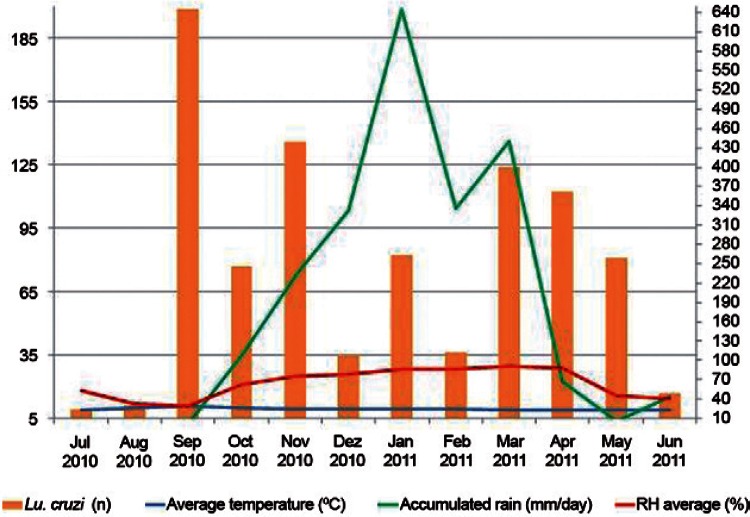
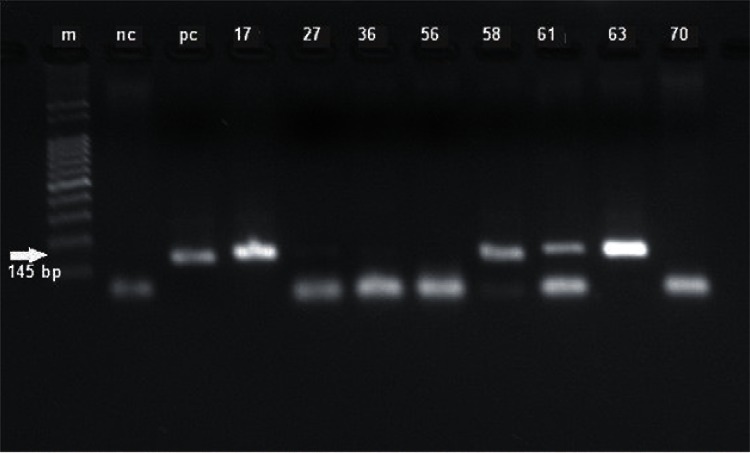
Visceral leishmaniasis (VL) in Brazil is transmitted by the phlebotomine Lutzomyia longipalpis and in some midwestern regions by Lutzomyia cruzi. Studies of the phlebotomine fauna, feeding habits and natural infection rate by Leishmania contribute to increased understanding of the epidemiological chain of leishmaniases and their vectorial capacity. Collections were performed in Jaciara, state of Mato Grosso from 2010-2013, during which time 2,011 phlebotomines (23 species) were captured (68.70% Lu. cruzi and 20.52% Lutzomyia whitmani). Lu. cruzi females were identified by observing the shapes of the cibarium (a portion of the mouthpart) and spermatheca, from which samples were obtained for polymerase chain reaction to determine the rates of natural infection. Engorged phlebotomines were assessed to identify the blood-meal host by ELISA. A moderate correlation was discovered between the number of Lu. cruzi and the temperature and the minimum rate of infection was 6.10%. Twenty-two females were reactive to the antisera of bird (28%), dog (3.30%) and skunk (1.60%). We conclude that Lu. cruzi and Lu. whitmani have adapted to the urban environment in this region and that Lu. cruzi is the most likely vector of VL in Jaciara. Moreover, maintenance of Leishmania in the environment is likely aided by the presence of birds and domestic and synanthropic animals.
在巴西,内脏利什曼病(VL)由白蛉属的长须罗蛉传播,在一些中西部地区则由克鲁兹罗蛉传播。对白蛉类群、摄食习性以及利什曼原虫自然感染率的研究,有助于加深对利什曼病流行病学链条及其媒介能力的理解。2010年至2013年期间,在马托格罗索州的贾西亚拉进行了采集工作,在此期间捕获了2011只白蛉(23个物种)(其中克鲁兹罗蛉占68.70%,惠特曼罗蛉占20.52%)。通过观察下咽(口器的一部分)和受精囊的形状来鉴定克鲁兹罗蛉雌虫,并从中获取样本进行聚合酶链反应,以确定自然感染率。通过酶联免疫吸附测定法评估饱腹白蛉,以鉴定血餐宿主。发现克鲁兹罗蛉数量与温度之间存在适度相关性,最低感染率为6.10%。22只雌虫对鸟类(28%)、犬类(3.30%)和臭鼬(1.60%)的抗血清呈阳性反应。我们得出结论,克鲁兹罗蛉和惠特曼罗蛉已适应该地区的城市环境,并且克鲁兹罗蛉是贾西亚拉最有可能传播内脏利什曼病的媒介。此外,鸟类以及家养动物和共生动物的存在可能有助于利什曼原虫在环境中的维持。