Seinige Diana, von Köckritz-Blickwede Maren, Krischek Carsten, Klein Günter, Kehrenberg Corinna
Institute of Food Quality and Food Safety, University of Veterinary Medicine Hannover, Foundation, Hannover, Germany.
Institute for Physiological Chemistry, University of Veterinary Medicine Hannover, Foundation, Hannover, Germany.
PLoS One. 2014 Nov 20;9(11):e113812. doi: 10.1371/journal.pone.0113812. eCollection 2014.
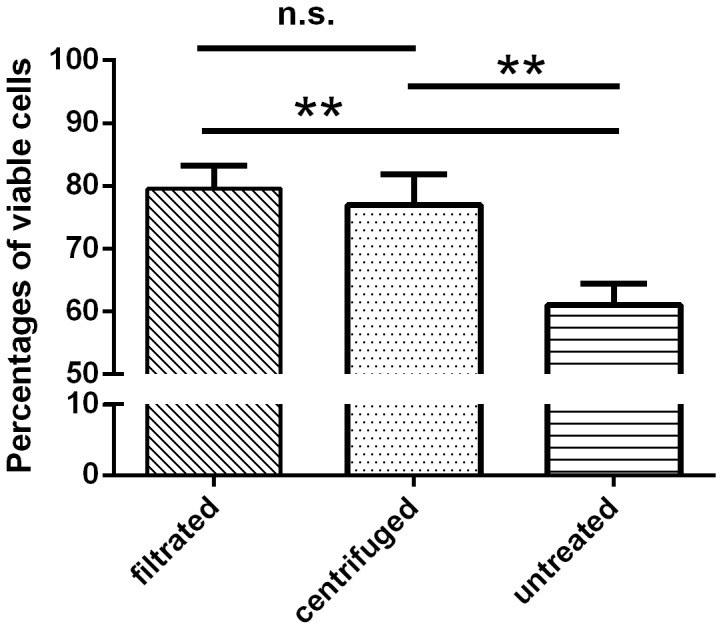
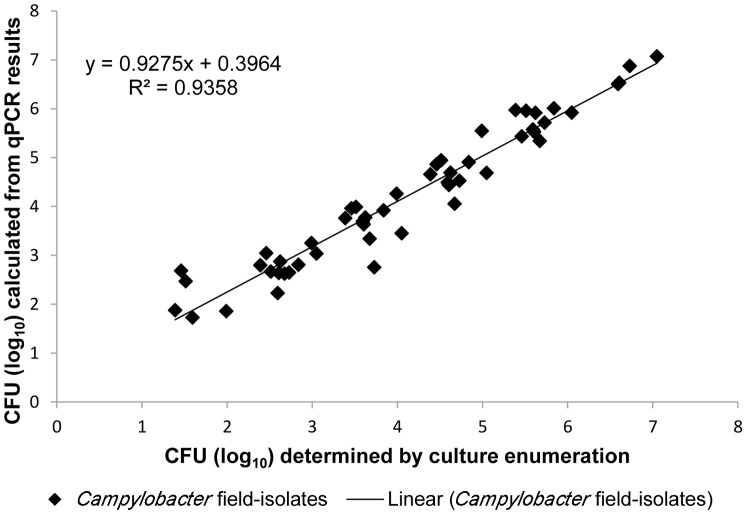
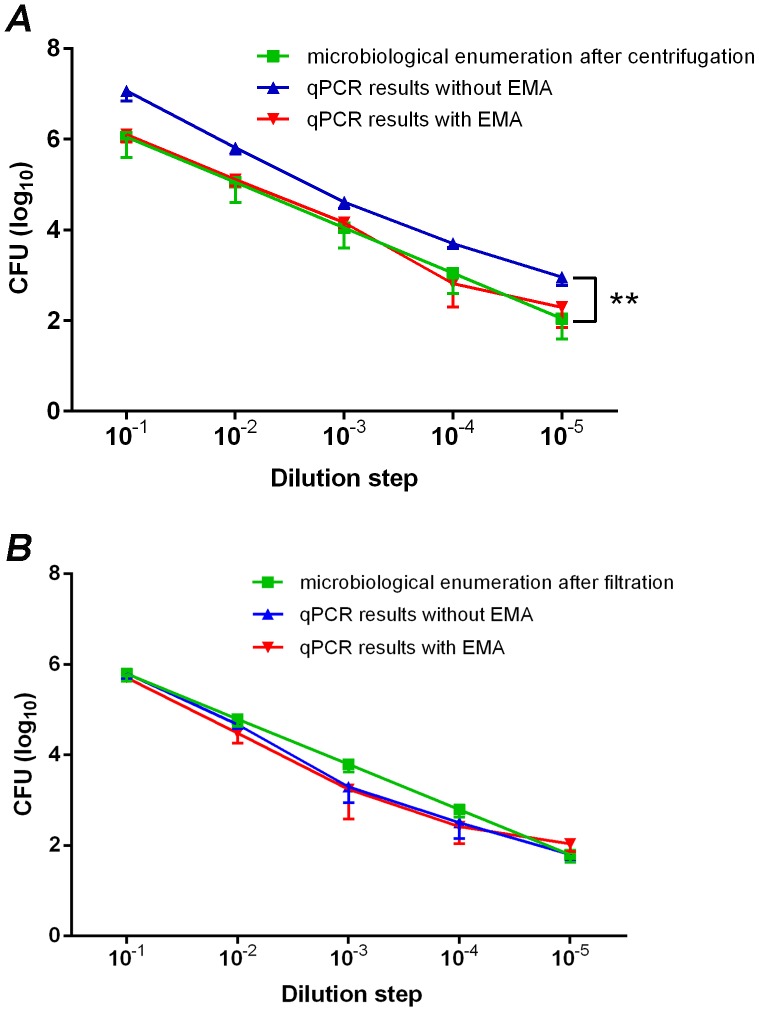
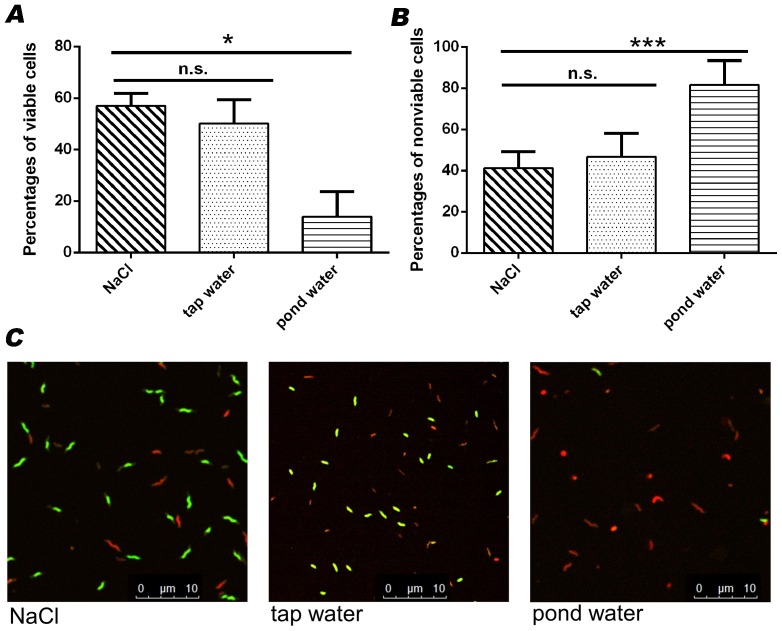
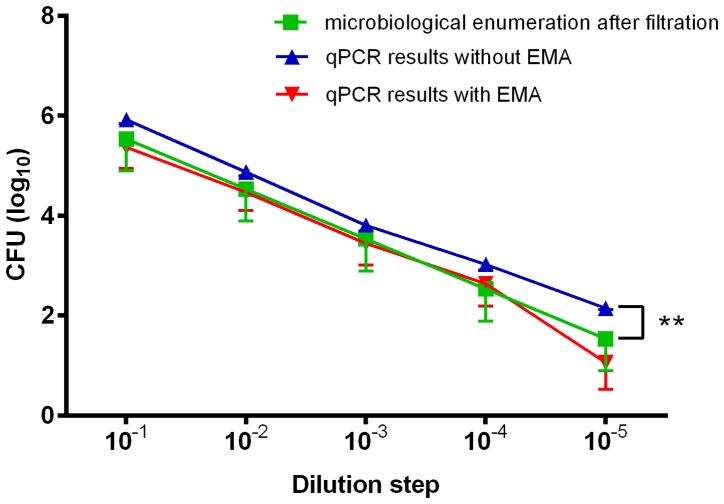
In recent years, increasing numbers of human campylobacteriosis cases caused by contaminated water have been reported. As the culture-based detection of Campylobacter is time consuming and can yield false-negative results, the suitability of a quantitative real-time PCR method in combination with an ethidium monoazide pretreatment of samples (EMA-qPCR) for the rapid, quantitative detection of viable Campylobacter cells from water samples was investigated. EMA-qPCR has been shown to be a promising rapid method for the detection of viable Campylobacter spp. from food samples. Application of membrane filtration and centrifugation, two methods frequently used for the isolation of bacteria from water, revealed a mean loss of up to 1.08 log10 cells/ml from spiked samples. Both methods used alone lead to a loss of dead bacteria and accumulation of viable bacteria in the sample as shown by fluorescence microscopy. After filtration of samples, no significant differences could be detected in subsequent qPCR experiments with and without EMA pretreatment compared to culture-based enumeration. High correlations (R(2)= 0.942 without EMA, R(2) = 0.893 with EMA) were obtained. After centrifugation of samples, qPCR results overestimated Campylobacter counts, whereas results from both EMA-qPCR and the reference method were comparable. As up to 81.59% of nonviable cells were detected in pond water, EMA-qPCR failed to detect correct quantities of viable cells. However, analyses of spiked tap water samples revealed a high correlation (R(2) = 0.863) between results from EMA-qPCR and the reference method. After membrane filtration, EMA-qPCR was successfully applied to Campylobacter field isolates, and results indicated an advantage over qPCR by analysing defined mixtures of viable and nonviable cells. In conclusion, EMA-qPCR is a suitable method to detect viable Campylobacter from water samples, but the isolation technique and the type/quality of the water sample impact the results.
近年来,由受污染水导致的人类弯曲菌病病例报告数量不断增加。由于基于培养的弯曲菌检测方法耗时且可能产生假阴性结果,因此研究了一种定量实时PCR方法结合样品的单叠氮乙锭预处理(EMA-qPCR)用于从水样中快速、定量检测活的弯曲菌细胞的适用性。EMA-qPCR已被证明是一种用于从食品样品中检测活的弯曲菌属的有前景的快速方法。膜过滤和离心这两种常用于从水中分离细菌的方法显示,加标样品中平均损失高达1.08 log10个细胞/毫升。如荧光显微镜所示,单独使用这两种方法都会导致死菌损失和样品中活菌积累。样品过滤后,与基于培养的计数相比,在后续有无EMA预处理的qPCR实验中未检测到显著差异。获得了高度相关性(无EMA时R(2)=0.942,有EMA时R(2)=0.893)。样品离心后,qPCR结果高估了弯曲菌数量,而EMA-qPCR和参考方法的结果具有可比性。由于在池塘水中检测到高达81.59%的非活细胞,EMA-qPCR未能检测到正确数量的活细胞。然而,对加标自来水样品的分析显示,EMA-qPCR结果与参考方法之间具有高度相关性(R(2)=0.863)。膜过滤后,EMA-qPCR成功应用于弯曲菌现场分离株,结果表明通过分析活细胞和非活细胞的特定混合物,其优于qPCR。总之,EMA-qPCR是一种从水样中检测活弯曲菌的合适方法,但分离技术和水样的类型/质量会影响结果。