Institute of Bioinformatics, University of Georgia Athens, GA, USA.
Institute of Bioinformatics, University of Georgia Athens, GA, USA ; Warnell School of Forestry and Natural Resources, University of Georgia Athens, GA, USA ; Department of Genetics, University of Georgia Athens, GA, USA.
Front Plant Sci. 2014 Nov 12;5:615. doi: 10.3389/fpls.2014.00615. eCollection 2014.
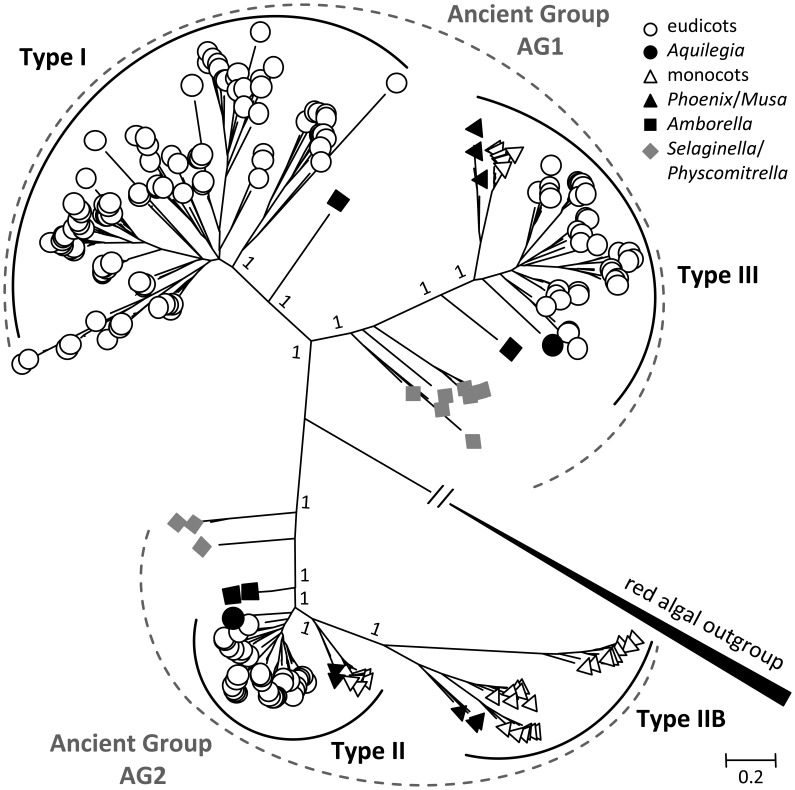
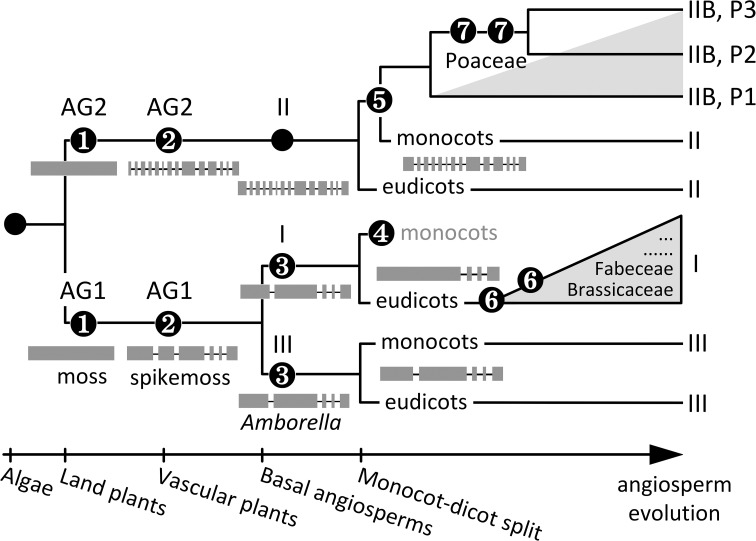
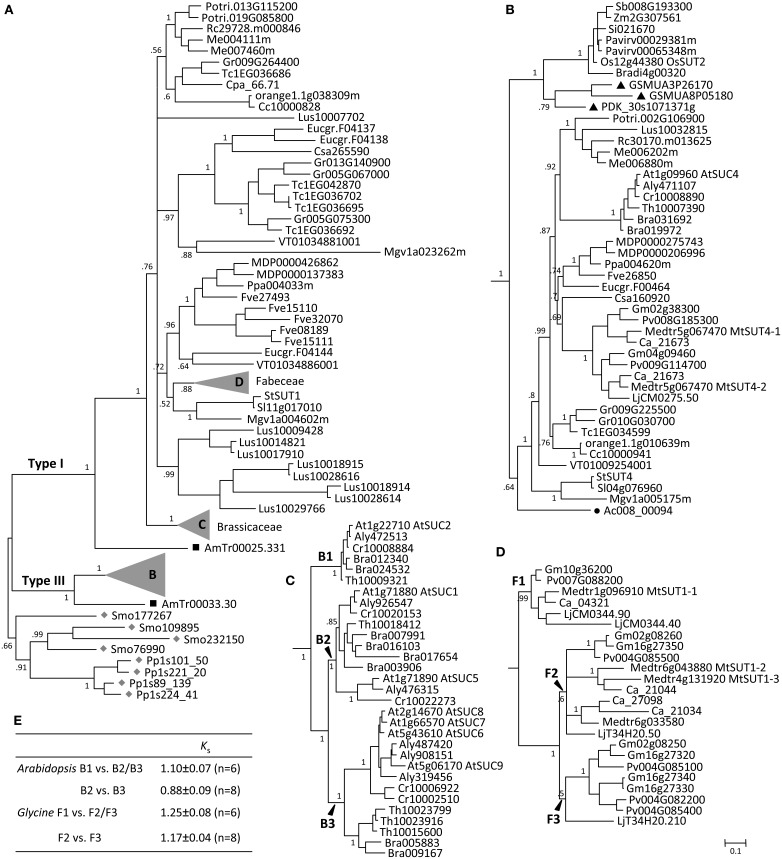
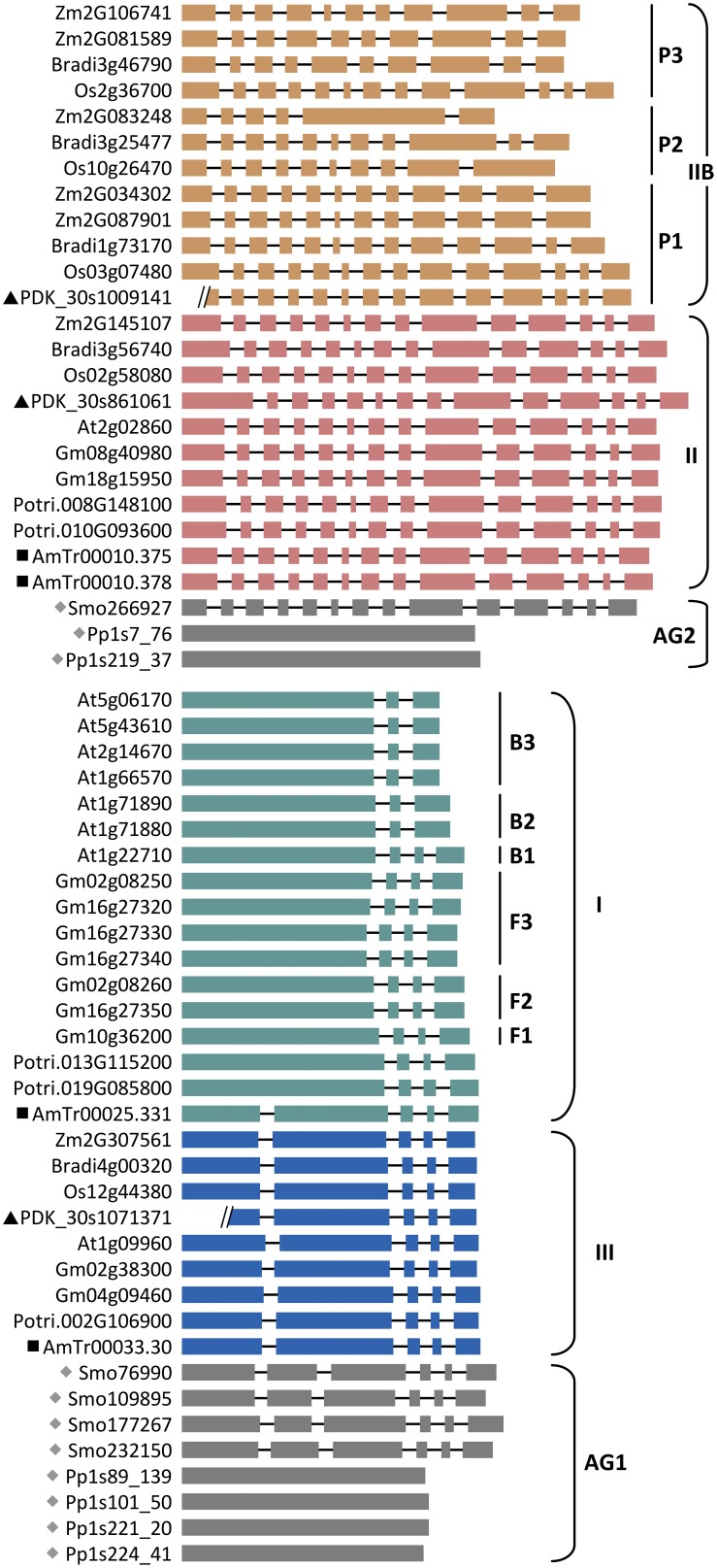
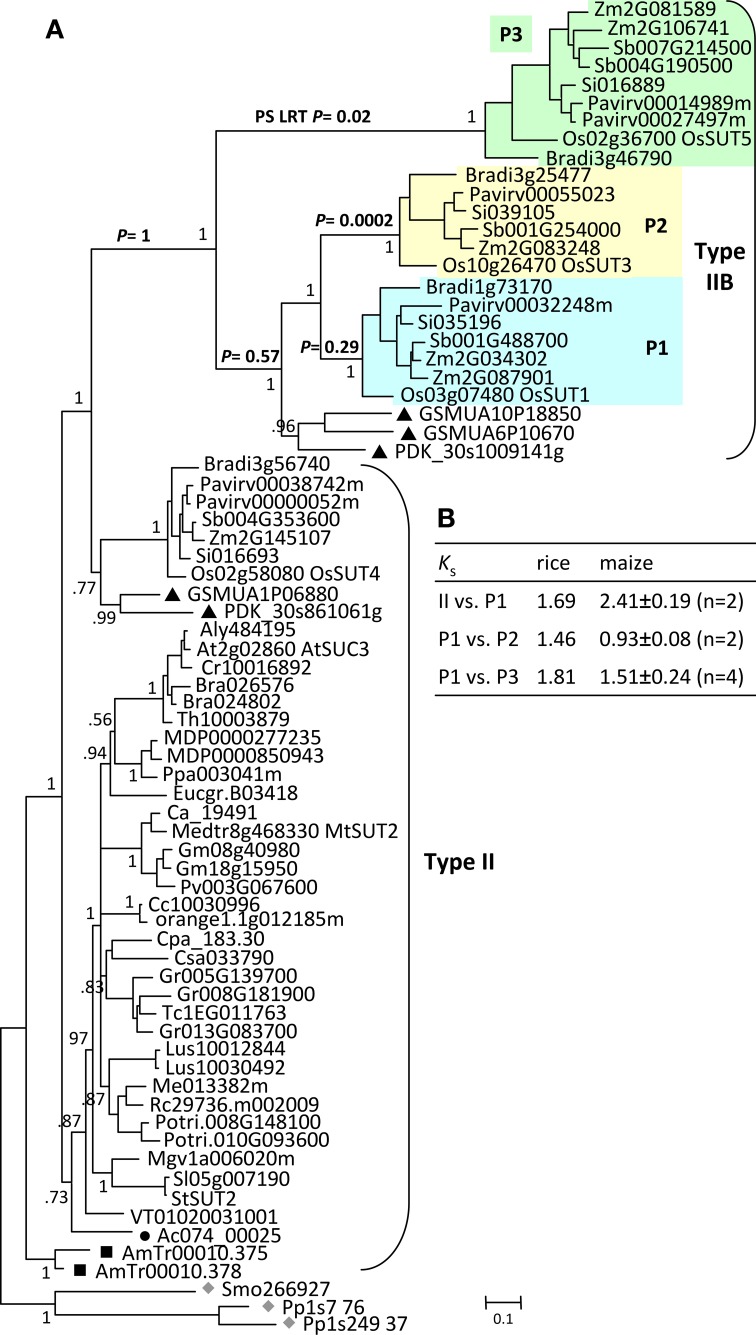
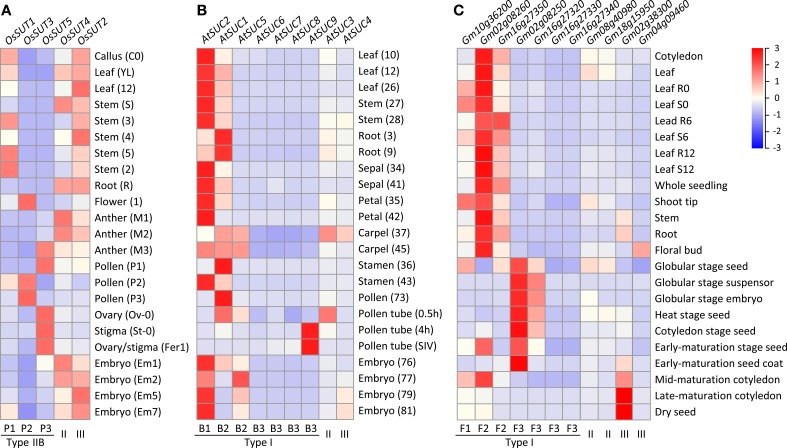
Sucrose transporters (SUTs) are essential for the export and efficient movement of sucrose from source leaves to sink organs in plants. The angiosperm SUT family was previously classified into three or four distinct groups, Types I, II (subgroup IIB), and III, with dicot-specific Type I and monocot-specific Type IIB functioning in phloem loading. To shed light on the underlying drivers of SUT evolution, Bayesian phylogenetic inference was undertaken using 41 sequenced plant genomes, including seven basal lineages at key evolutionary junctures. Our analysis supports four phylogenetically and structurally distinct SUT subfamilies, originating from two ancient groups (AG1 and AG2) that diverged early during terrestrial colonization. In both AG1 and AG2, multiple intron acquisition events in the progenitor vascular plant established the gene structures of modern SUTs. Tonoplastic Type III and plasmalemmal Type II represent evolutionarily conserved descendants of AG1 and AG2, respectively. Type I and Type IIB were previously thought to evolve after the dicot-monocot split. We show, however, that divergence of Type I from Type III SUT predated basal angiosperms, likely associated with evolution of vascular cambium and phloem transport. Type I SUT was subsequently lost in monocots along with vascular cambium, and independent evolution of Type IIB coincided with modified monocot vasculature. Both Type I and Type IIB underwent lineage-specific expansion. In multiple unrelated taxa, the newly-derived SUTs exhibit biased expression in reproductive tissues, suggesting a functional link between phloem loading and reproductive fitness. Convergent evolution of Type I and Type IIB for SUT function in phloem loading and reproductive organs supports the idea that differential vascular development in dicots and monocots is a strong driver for SUT family evolution in angiosperms.
蔗糖转运蛋白(SUTs)对于蔗糖从源叶向植物的汇器官的输出和有效运输至关重要。先前将被子植物 SUT 家族分为三个或四个不同的组,即 I 型、II 型(IIB 亚组)和 III 型,其中双子叶植物特异性的 I 型和单子叶植物特异性的 IIB 型在韧皮部装载中起作用。为了阐明 SUT 进化的潜在驱动因素,使用包括七个关键进化节点的七个基础谱系在内的 41 个测序植物基因组进行了贝叶斯系统发育推断。我们的分析支持四个在系统发育和结构上截然不同的 SUT 亚家族,它们起源于两个古老的组(AG1 和 AG2),在陆地殖民化早期就已经分化。在 AG1 和 AG2 中,在祖代维管植物中发生的多次内含子获得事件建立了现代 SUT 的基因结构。液泡膜 III 型和质膜 II 型分别是 AG1 和 AG2 的进化保守后裔。I 型和 IIB 型先前被认为是在双子叶植物-单子叶植物分化之后进化的。然而,我们表明,I 型与 III 型 SUT 的分化先于基生被子植物,可能与维管形成层和韧皮部运输的进化有关。I 型 SUT 随后在单子叶植物中与维管形成层一起丢失,而 IIB 型的独立进化与改良的单子叶植物脉管系统同时发生。I 型和 IIB 型都经历了谱系特异性扩张。在多个不相关的分类群中,新衍生的 SUT 表现出在生殖组织中的偏表达,这表明韧皮部装载和生殖适应性之间存在功能联系。I 型和 IIB 型在韧皮部装载和生殖器官中的 SUT 功能的趋同进化支持这样一种观点,即双子叶植物和单子叶植物中不同的血管发育是被子植物 SUT 家族进化的一个强大驱动力。