Multiple Sclerosis Research Center-Neuroscience Institute, Sina Hospital, Tehran University of Medical Sciences, Tehran, Iran ; Shefa Neuroscience Research Center, Tehran, Iran.
Department of Nutrition and Health, Tabriz University of Medical Sciences.
Iran J Basic Med Sci. 2014 Jul;17(7):509-15.
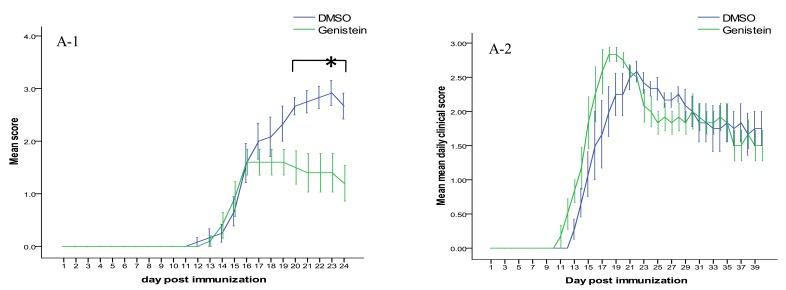
Experimental allergic encephalomyelitis (EAE) is an autoimmune disease validated as animal model of multiple sclerosis (MS). Administration of genistein, a phytoestrogenic component of soy, to mice at the onset of EAE is known to attenuate the clinical signs of the disease. The potential effects of genistein on established EAE is less studied. In the current study, we aimed to compare the effects of genistein administration on EAE severity in early and late phases of the disease.
The C57BL/6 mice were induced with EAE, using MOG 35-55 and gavaged with genistein (300 mg/kg) either after the appearance of the first clinical sign or 30 days post disease induction for ten days. 24 hr after the last gavage, mice were sacrificed. Brains and spleens were removed for assessing lymphocyte proliferation, cell cytotoxicity, and cytokine profile. Spinal cords were dissected to assess the amount of demyelination using Luxol fast blue/cresyl violet staining.
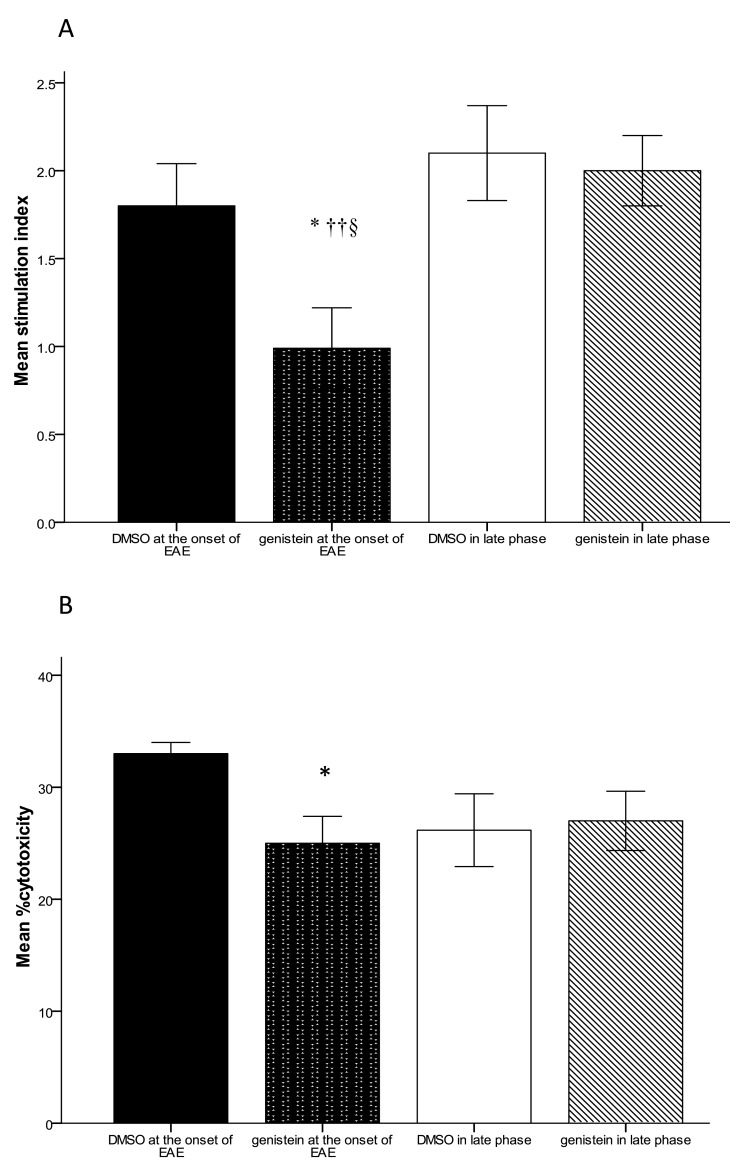
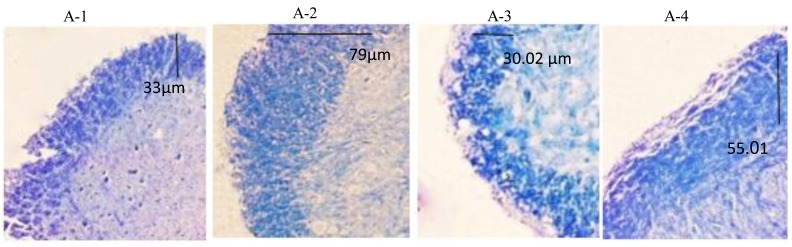
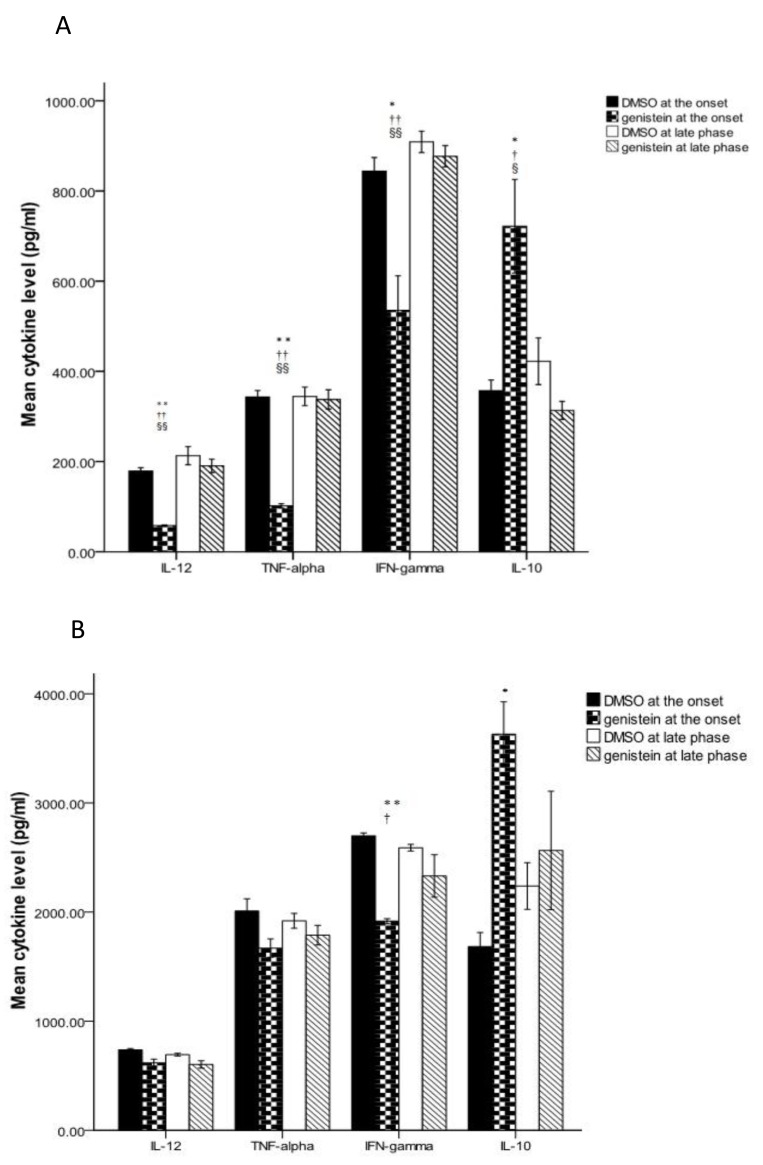
Administering mice with genistein, after the establishment of EAE, did not reverse the clinical signs of disease. However, treating with genistein at the onset of disease alleviated the clinical signs by reducing neuronal demyelination. Genistein suppressed the production of IFN-γ and enhanced IL-10 secretion in splenocyte and brain. Genistein also reduced IL-12 and TNF-α secretion in splenocytes, suppressed the proliferation of T-cells, and reduced the cell cytotoxicity.
Genistein oral therapy might only reduce EAE severity if started in early phases of the disease.
实验性自身免疫性脑脊髓炎(EAE)是一种已被验证为多发性硬化症(MS)动物模型的自身免疫性疾病。在 EAE 发病时给小鼠施用大豆植物雌激素成分染料木黄酮已知可减轻疾病的临床症状。染料木黄酮对已建立的 EAE 的潜在影响研究较少。在本研究中,我们旨在比较染料木黄酮给药对疾病早期和晚期 EAE 严重程度的影响。
使用 MOG 35-55 诱导 C57BL/6 小鼠发生 EAE,并在出现第一个临床症状后或疾病诱导后 30 天开始用染料木黄酮(300mg/kg)灌胃,持续 10 天。最后一次灌胃后 24 小时,处死小鼠。取出大脑和脾脏,用于评估淋巴细胞增殖、细胞细胞毒性和细胞因子谱。解剖脊髓以使用卢索快速蓝/甲苯胺蓝染色评估脱髓鞘程度。
在 EAE 确立后给小鼠施用染料木黄酮不能逆转疾病的临床症状。然而,在疾病发病时用染料木黄酮治疗通过减少神经元脱髓鞘减轻了临床症状。染料木黄酮抑制了脾细胞和脑中 IFN-γ的产生,并增强了 IL-10 的分泌。染料木黄酮还减少了脾细胞中 IL-12 和 TNF-α的分泌,抑制了 T 细胞的增殖,并降低了细胞毒性。
如果在疾病早期开始,染料木黄酮口服治疗可能仅会减轻 EAE 的严重程度。