Park Eun Young, Choi Yoo Im
Department of Secondary Special Education, College of Education, Jeonju University, Republic of Korea.
Department of Occupational Therapy, School of Medicine, Wonkwang University, Republic of Korea.
J Phys Ther Sci. 2014 Nov;26(11):1775-7. doi: 10.1589/jpts.26.1775. Epub 2014 Nov 13.
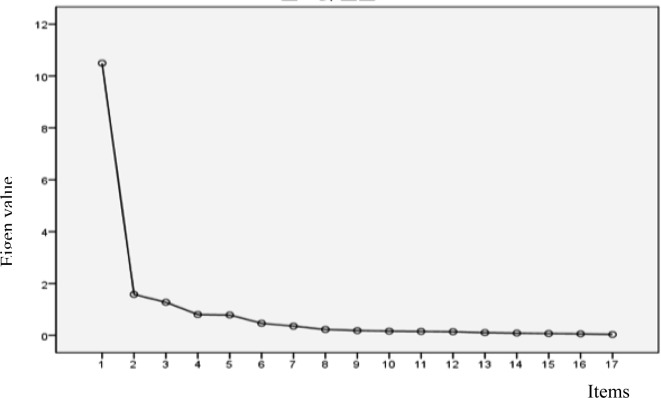
[Purpose] The purpose of this study was to investigate the psychometric properties of the lower extremity subscale of the Fugl-Meyer Assessment lower extremity (FMA-LE) for community-dwelling hemiplegic stroke patients. [Subjects] The participants were 140 community-dwelling hemiplegic stroke patients. [Methods] To determine the psychometric properties of the FMA-LE, we examined construct validity, response characteristics, item discrimination, and internal consistency. [Results] Factor analysis of the FMA-LE revealed that the first factor explained 61.73% of the variance and provided evidence of unidimensionality. The FMA-LE did not show ceiling or floor effects; Cronbach's α was 0.935 (95% CI: 0.919-0.950). [Conclusion] Because the FMA-LE seems to be both valid and reliable, we conclude that it is appropriate for the measurement of the lower extremity motor impairment of community-dwelling hemiplegic stroke patients.
[目的] 本研究旨在探讨Fugl-Meyer评估下肢量表(FMA-LE)下肢分量表用于社区居住的偏瘫中风患者时的心理测量学特性。[对象] 参与者为140名社区居住的偏瘫中风患者。[方法] 为确定FMA-LE的心理测量学特性,我们检验了结构效度、反应特征、项目区分度和内部一致性。[结果] FMA-LE的因子分析显示,第一个因子解释了61.73%的方差,并提供了单维度性的证据。FMA-LE未显示天花板效应或地板效应;Cronbach's α为0.935(95% CI:0.919 - 0.950)。[结论] 由于FMA-LE似乎既有效又可靠,我们得出结论,它适用于测量社区居住的偏瘫中风患者的下肢运动障碍。