Yeka Adoke, Lameyre Valerie, Afizi Kibuuka, Fredrick Mudangha, Lukwago Robinson, Kamya Moses R, Talisuna Ambrose O
School of Public Health, College of Health Sciences, Makerere University, Kampala, Uganda; Uganda Malaria Surveillance Program, Kampala, Uganda.
Sanofi Access to Medicines, Gentilly, France.
PLoS One. 2014 Dec 1;9(12):e113311. doi: 10.1371/journal.pone.0113311. eCollection 2014.
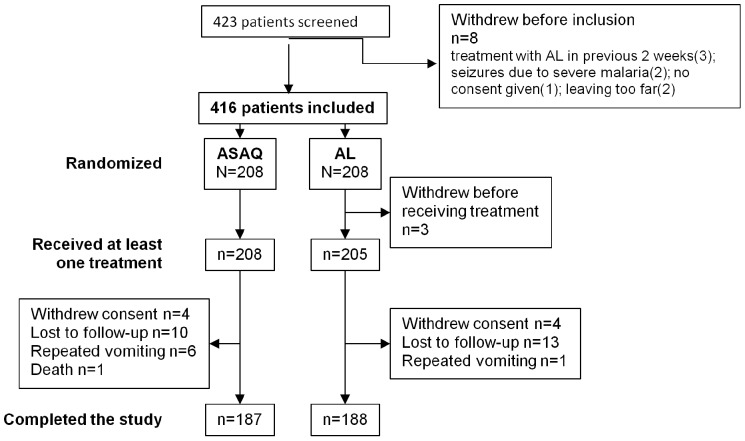
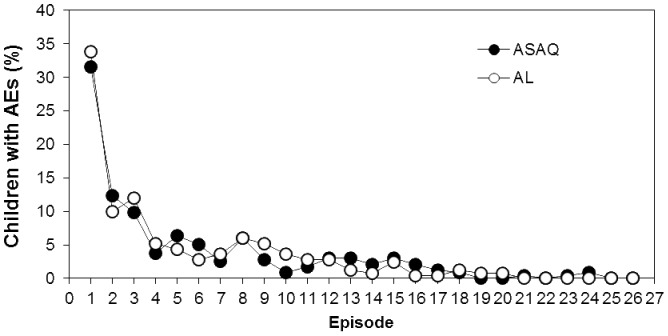
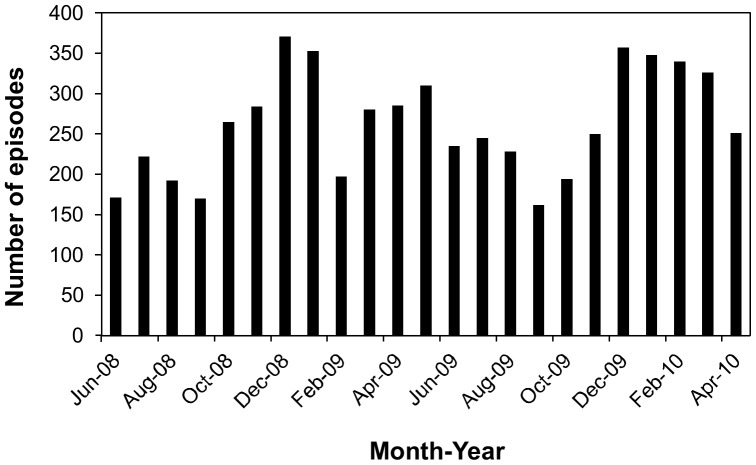
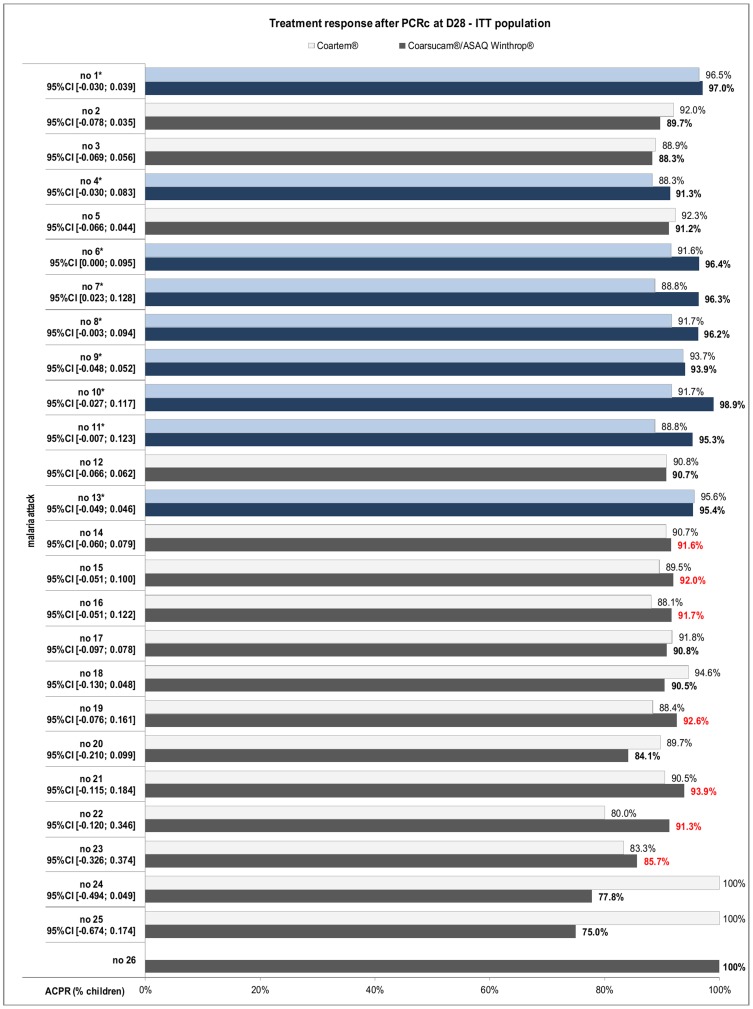
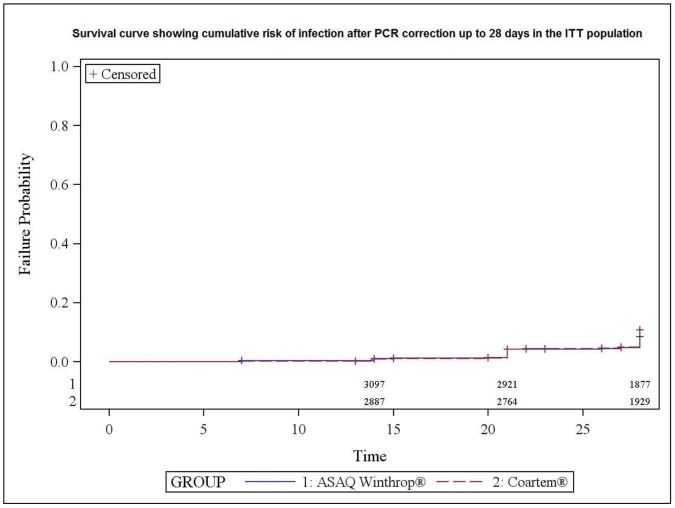
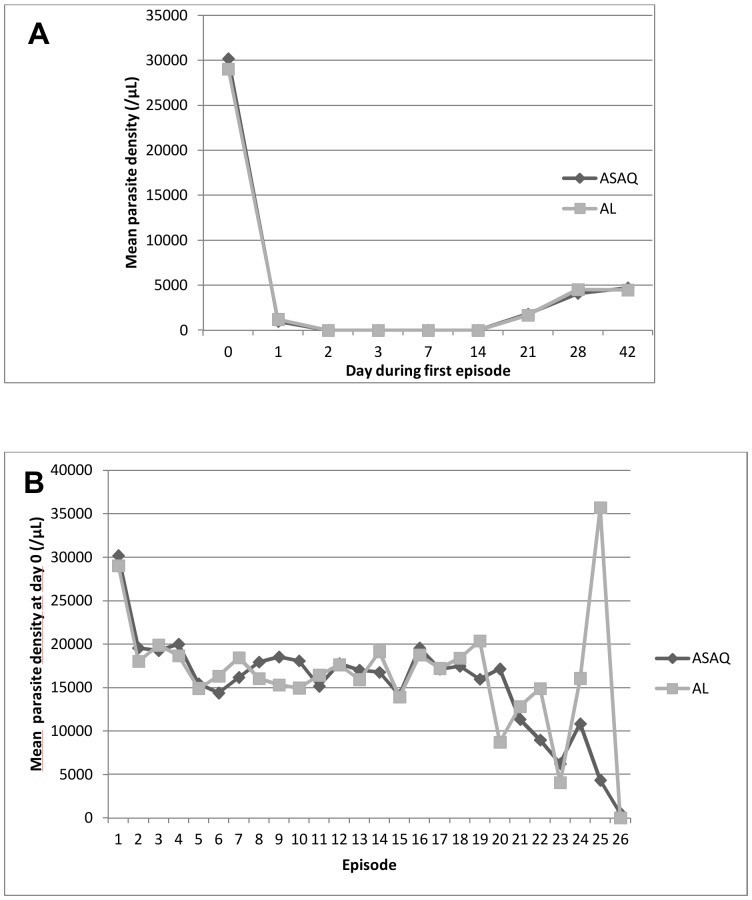
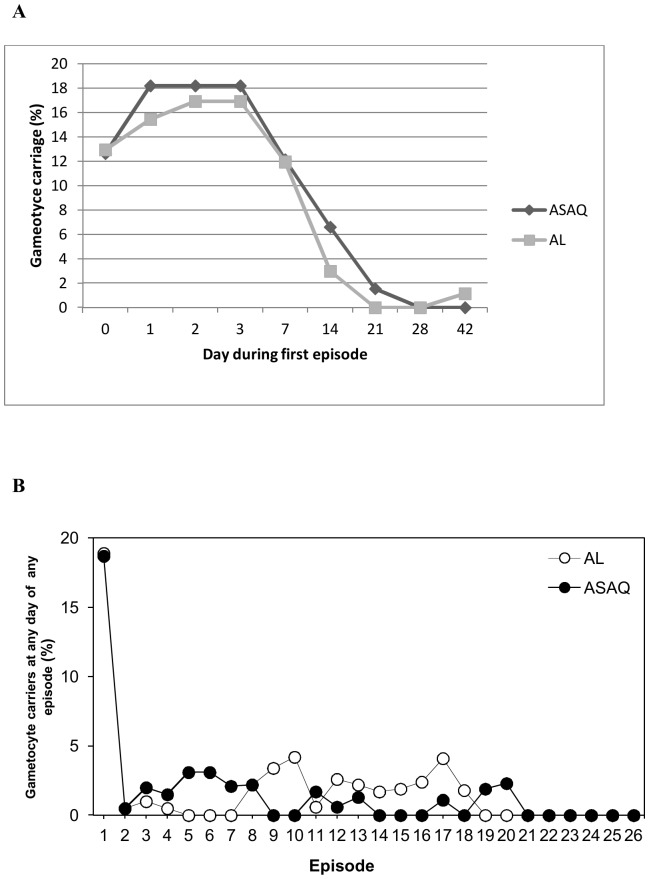
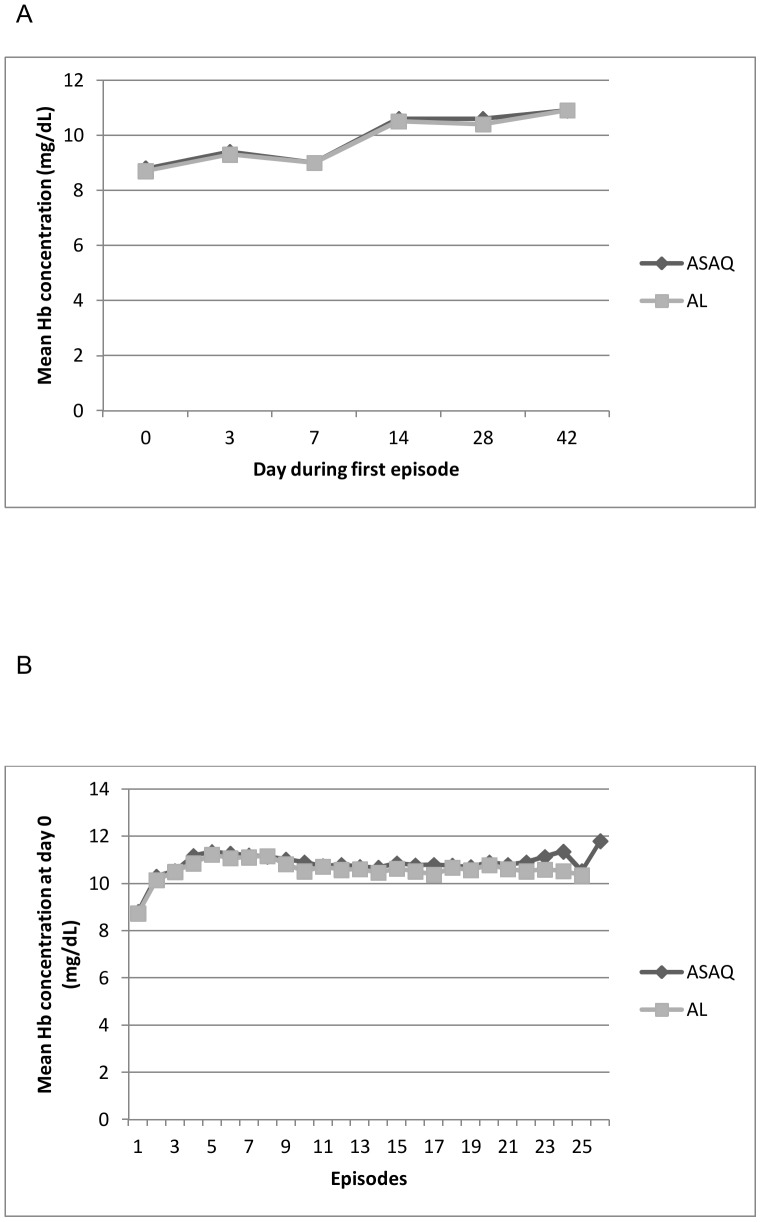
The safety and efficacy of the two most widely used fixed-dose artemisinin-based combination therapies (ACT), artesunate-amodiaquine (ASAQ) and artemether-lumefantrine (AL) are well established for single episodes of uncomplicated Plasmodium falciparum malaria, but the effects of repeated, long-term use are not well documented. We conducted a 2-year randomized, open-label, longitudinal, phase IV clinical trial comparing the efficacy and safety of fixed-dose ASAQ and AL for repeated treatment of uncomplicated malaria in children under 5 years at Nagongera Health Centre, Uganda. Participants were randomized to ASAQ or AL and all subsequent malaria episodes were treated with the same regimen. 413 children were enrolled and experienced a total of 6027 malaria episodes (mean 15; range, 1-26). For the first malaria episode, the PCR-corrected-cure rate for ASAQ (97.5%) was non-inferior to that for AL (97.0%; 95% CI [-0.028; 0.037]). PCR-corrected cure rates for subsequent malaria episodes that had over 100 cases (episodes 2-18), ranged from 88.1% to 98.9% per episode, with no clear difference between the treatment arms. Parasites were completely cleared by day 3 for all malaria episodes and gametocyte carriage was less than 1% by day 21. Fever clearance was faster in the ASAQ group for the first episode. Treatment compliance for subsequent episodes (only first dose administration observed) was close to 100%. Adverse events though common were similar between treatment arms and mostly related to the disease. Serious adverse events were uncommon, comparable between treatment arms and resolved spontaneously. Anemia and neutropenia occurred in <0.5% of cases per episode, abnormal liver function tests occurred in 0.3% to 1.4% of cases. Both regimens were safe and effective for repeated treatment of malaria.
Current Controlled Trials NCT00699920.
两种最广泛使用的固定剂量青蒿素联合疗法(ACT),即青蒿琥酯-阿莫地喹(ASAQ)和蒿甲醚-本芴醇(AL),在治疗单纯性恶性疟原虫疟疾的单发病例时,其安全性和有效性已得到充分证实,但重复、长期使用的效果尚无充分记录。我们在乌干达纳贡埃拉健康中心开展了一项为期2年的随机、开放标签、纵向IV期临床试验,比较固定剂量ASAQ和AL重复治疗5岁以下儿童单纯性疟疾的疗效和安全性。参与者被随机分为接受ASAQ或AL治疗,所有后续疟疾发作均采用相同方案治疗。共纳入413名儿童,经历了6027次疟疾发作(平均15次;范围为1 - 26次)。对于首次疟疾发作,ASAQ经PCR校正的治愈率(97.5%)不低于AL(97.0%;95%CI[-0.028;0.037])。后续超过100例的疟疾发作(第2 - 18次发作)经PCR校正的治愈率每发作期为88.1%至98.9%,各治疗组之间无明显差异。所有疟疾发作在第3天寄生虫完全清除,到第21天配子体携带率低于1%。首次发作时,ASAQ组发热清除更快。后续发作的治疗依从性(仅观察首次给药)接近100%。不良事件虽然常见,但各治疗组之间相似,且大多与疾病相关。严重不良事件不常见,各治疗组之间相当,且可自发缓解。每发作期贫血和中性粒细胞减少症发生率<0.5%,肝功能检查异常发生率为0.3%至1.4%。两种方案在重复治疗疟疾时均安全有效。
当前对照试验NCT00699920。