Garcia-Ceja Enrique, Brena Ramon F, Carrasco-Jimenez Jose C, Garrido Leonardo
Tecnológico de Monterrey, Campus Monterrey, Av. Eugenio Garza Sada 2501 Sur, Monterrey 64849, Mexico.
Sensors (Basel). 2014 Nov 27;14(12):22500-24. doi: 10.3390/s141222500.
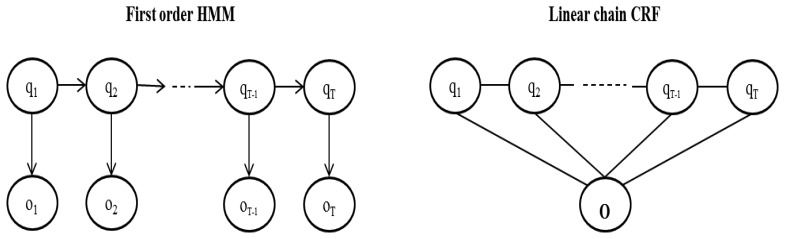
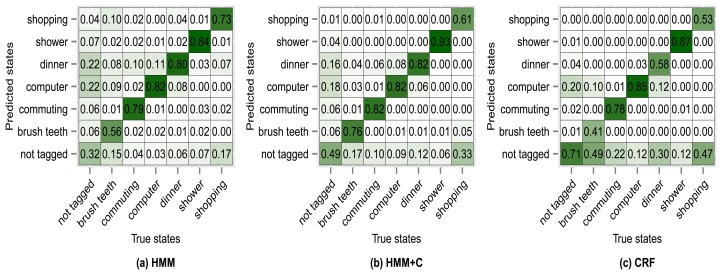
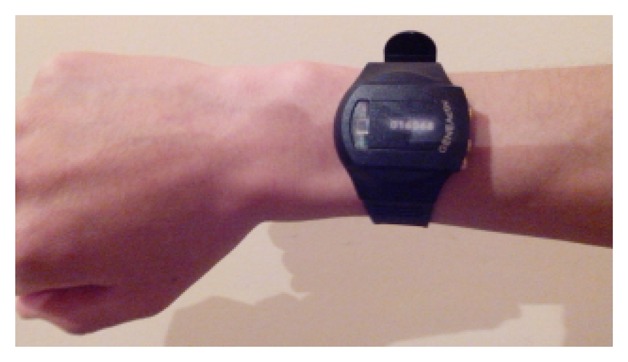
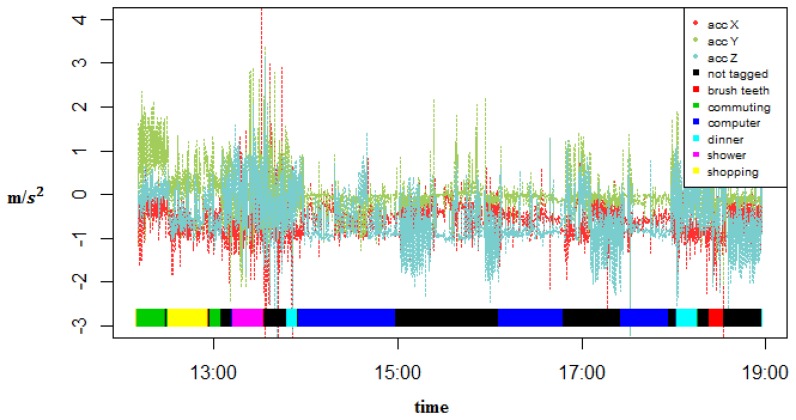
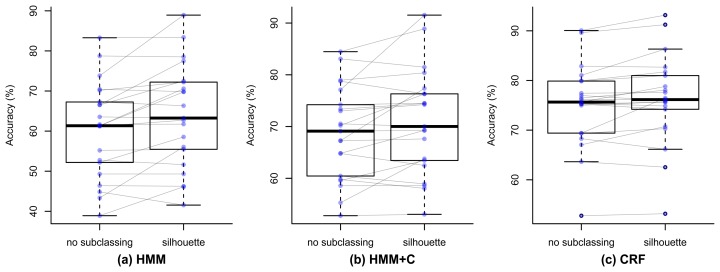
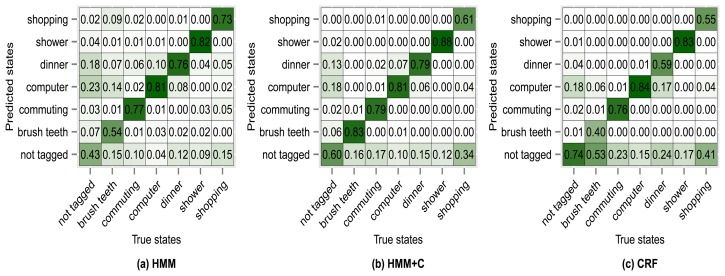
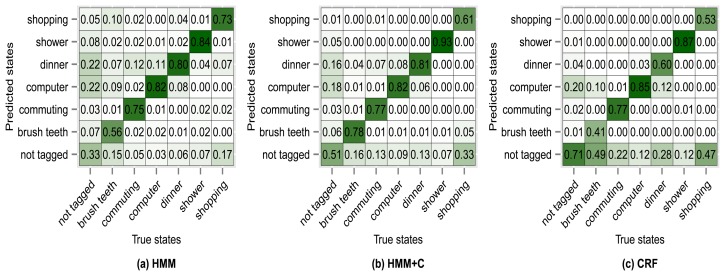
With the development of wearable devices that have several embedded sensors, it is possible to collect data that can be analyzed in order to understand the user's needs and provide personalized services. Examples of these types of devices are smartphones, fitness-bracelets, smartwatches, just to mention a few. In the last years, several works have used these devices to recognize simple activities like running, walking, sleeping, and other physical activities. There has also been research on recognizing complex activities like cooking, sporting, and taking medication, but these generally require the installation of external sensors that may become obtrusive to the user. In this work we used acceleration data from a wristwatch in order to identify long-term activities. We compare the use of Hidden Markov Models and Conditional Random Fields for the segmentation task. We also added prior knowledge into the models regarding the duration of the activities by coding them as constraints and sequence patterns were added in the form of feature functions. We also performed subclassing in order to deal with the problem of intra-class fragmentation, which arises when the same label is applied to activities that are conceptually the same but very different from the acceleration point of view.
随着具备多个嵌入式传感器的可穿戴设备的发展,收集能够进行分析的数据以了解用户需求并提供个性化服务成为可能。这类设备的例子有智能手机、健身手环、智能手表等等。在过去几年里,有几项研究利用这些设备来识别诸如跑步、行走、睡眠等简单活动以及其他体育活动。也有关于识别诸如烹饪、运动和服药等复杂活动的研究,但这些通常需要安装可能会给用户带来不便的外部传感器。在这项工作中,我们使用来自手表的加速度数据来识别长期活动。我们比较了隐马尔可夫模型和条件随机场在分割任务中的应用。我们还通过将活动持续时间编码为约束条件,将先验知识添加到模型中,并以特征函数的形式添加序列模式。我们还进行了子类划分,以处理类内碎片化问题,当相同标签应用于概念上相同但从加速度角度来看差异很大的活动时就会出现这种问题。