Pearson Erika, Moore Claire
Department of Developmental, Molecular and Chemical Biology, Tufts University School of Medicine, Boston, MA 02111, USA.
Department of Developmental, Molecular and Chemical Biology, Tufts University School of Medicine, Boston, MA 02111, USA.
Cell Rep. 2014 Nov 6;9(3):821-8. doi: 10.1016/j.celrep.2014.10.007. Epub 2014 Oct 30.
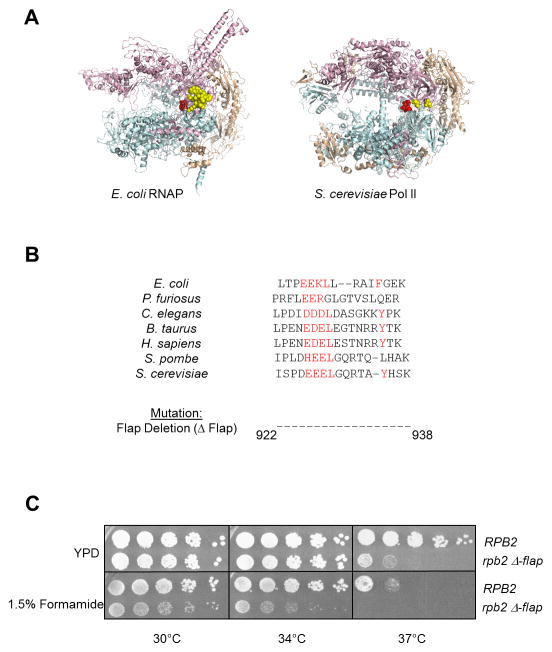
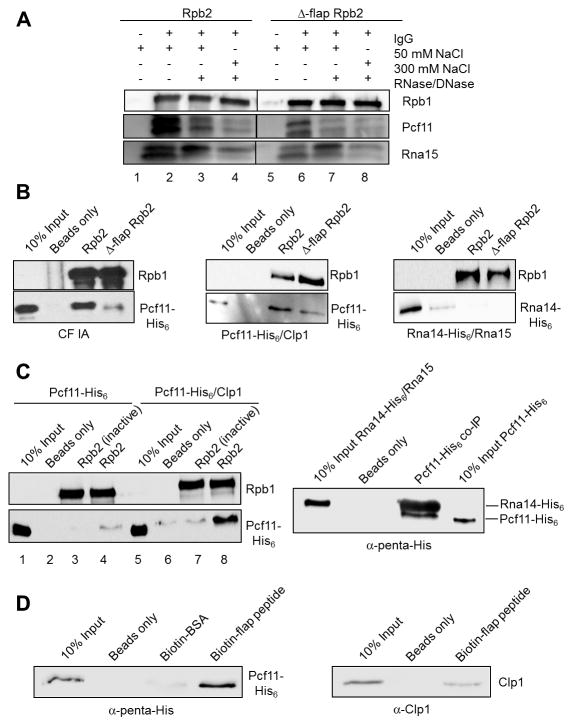
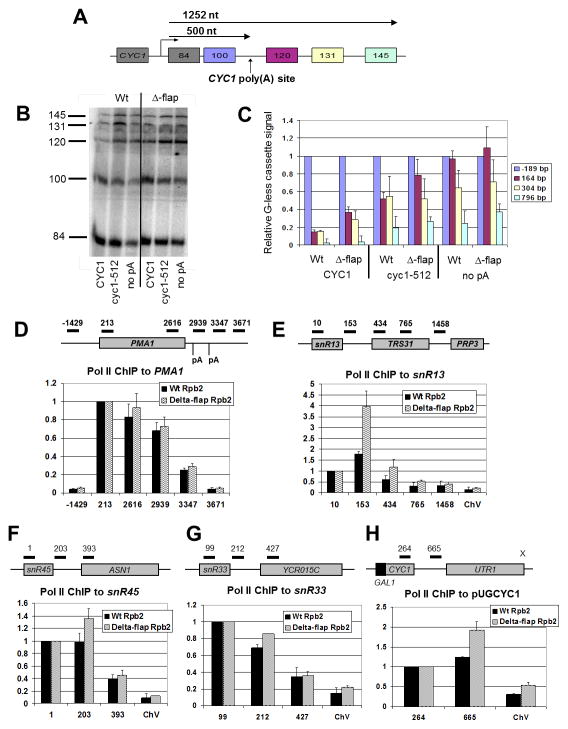
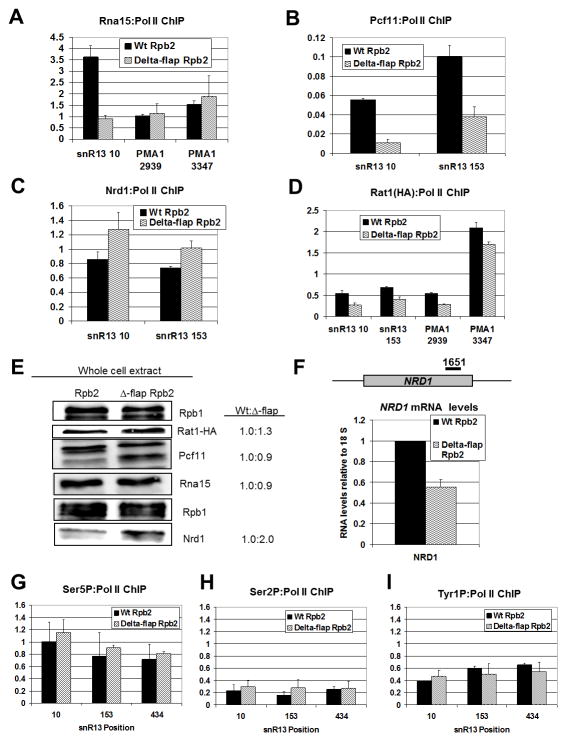
Current models of transcription termination factor recruitment to the RNA polymerase II (Pol II) transcription complex rely exclusively on the direct interaction between the termination factor and phosphorylated isoforms of the Pol II C-terminal domain (CTD). Here, we report that the Pol II flap loop is needed for physical interaction of Pol II with the Pcf11/Clp1 subcomplex of cleavage factor IA (CF IA), which functions in both 3? end processing and Pol II termination, and for proper termination of short RNAs in vitro and in vivo. Deletion of the flap loop reduces the in vivo interaction of Pol II with CF IA but increases the association of Nrd1 during stages of the transcription cycle when the CTD is predominantly Ser5 phosphorylated. We propose a model in which the flap loop coordinates a binding equilibrium between the competing termination factors Pcf11 and Nrd1 to Pol II during termination of short RNA synthesis.
目前关于转录终止因子募集到RNA聚合酶II(Pol II)转录复合物的模型完全依赖于终止因子与Pol II C末端结构域(CTD)的磷酸化异构体之间的直接相互作用。在此,我们报道,Pol II瓣环对于Pol II与切割因子IA(CF IA)的Pcf11/Clp1亚复合物进行物理相互作用是必需的,CF IA在3'端加工和Pol II终止过程中均发挥作用,并且对于体外和体内短RNA的正确终止也是必需的。瓣环的缺失减少了Pol II与CF IA在体内的相互作用,但在转录周期中CTD主要为Ser5磷酸化的阶段增加了Nrd1的结合。我们提出了一个模型,即在短RNA合成终止过程中,瓣环协调竞争终止因子Pcf11和Nrd1与Pol II之间的结合平衡。