Cuthbertson Leah, Rogers Geraint B, Walker Alan W, Oliver Anna, Hoffman Lucas R, Carroll Mary P, Parkhill Julian, Bruce Kenneth D, van der Gast Christopher J
NERC Centre for Ecology & Hydrology, Wallingford, OX10 8BB, UK; Institute of Pharmaceutical Science, Molecular Microbiology Research Laboratory, King's College London, London SE1 9NH, UK.
SAHMRI Infection and Immunity Theme, Flinders University, Adelaide, Australia.
J Cyst Fibros. 2015 Jul;14(4):464-7. doi: 10.1016/j.jcf.2014.10.004. Epub 2014 Oct 24.
Best practice when performing culture-independent microbiological analysis of sputum samples involves their rapid freezing and storage at -80°C. However, accessing biobanked collections can mean that material has been passed through repeated freeze-thaw cycles. The aim of this study was to determine the impact of these cycles on microbial community profiles.
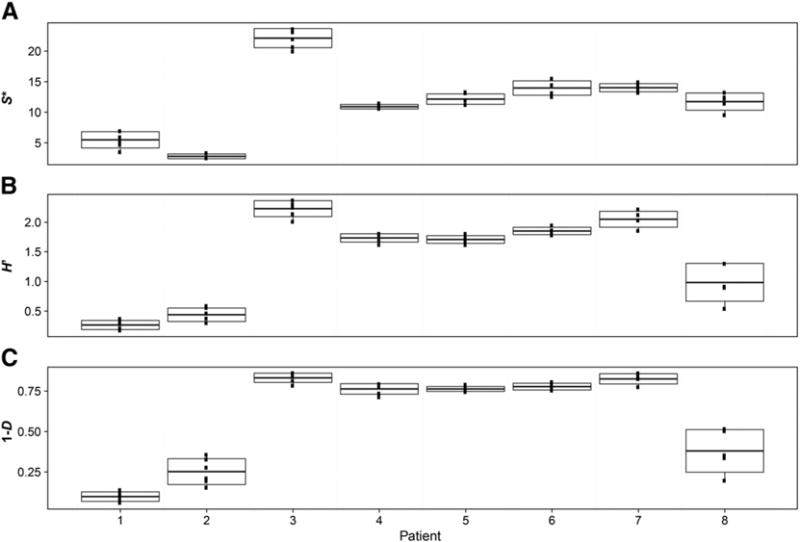
Sputum was collected from eight adults with cystic fibrosis, and each sample was subjected to six freeze-thaw cycles. Following each cycle, an aliquot was removed and treated with propidium monoazide (PMA) prior to DNA extraction and 16S rRNA gene pyrosequencing.
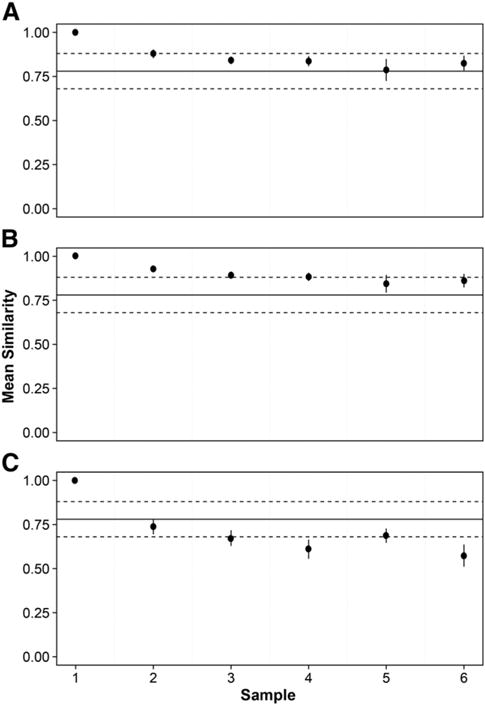
The impact of freeze-thaw cycles was greatest on rare members of the microbiota, with variation beyond that detected with within-sample repeat analysis observed after three cycles.
Four or more freeze thaw cycles result in a significant distortion of microbiota profiles from CF sputum.
对痰液样本进行非培养微生物分析的最佳做法是将其快速冷冻并储存在-80°C。然而,使用生物样本库中的样本可能意味着材料已经经历了反复的冻融循环。本研究的目的是确定这些循环对微生物群落谱的影响。
从8名患有囊性纤维化的成年人中收集痰液,每个样本进行6次冻融循环。在每个循环之后,取出一份等分试样,在DNA提取和16S rRNA基因焦磷酸测序之前用单叠氮化丙锭(PMA)处理。
冻融循环对微生物群中稀有成员的影响最大,在三个循环后观察到的变化超出了样本内重复分析所检测到的范围。
四个或更多的冻融循环会导致囊性纤维化痰液的微生物群谱出现显著扭曲。