Sun Yong, Yi Xiaoping, Peng Ming, Zeng Huicai, Wang Dan, Li Bo, Tong Zheng, Chang Lili, Jin Xiang, Wang Xuchu
Key Laboratory of Tropical Crop Biotechnology, Ministry of Agriculture, Institute of Tropical Biosciences and Biotechnology, Chinese Academy of Tropical Agricultural Sciences, Haikou City, Hainan Province, China.
PLoS One. 2014 Dec 2;9(12):e113818. doi: 10.1371/journal.pone.0113818. eCollection 2014.
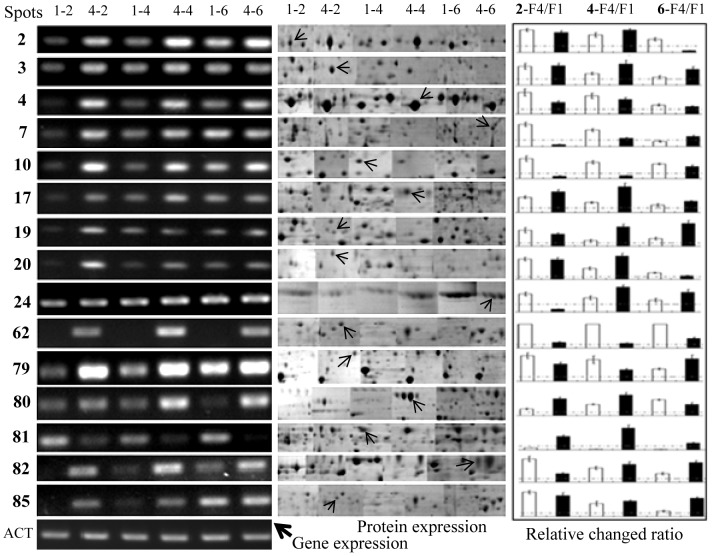
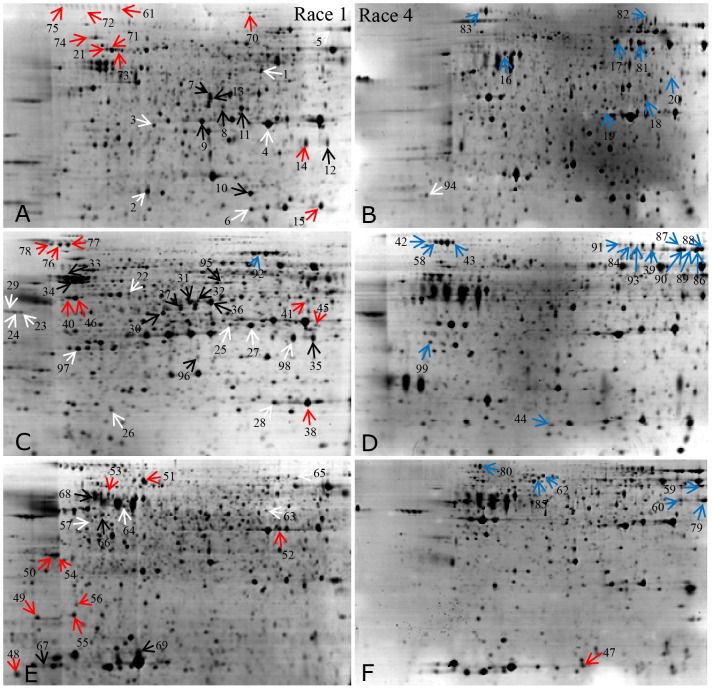
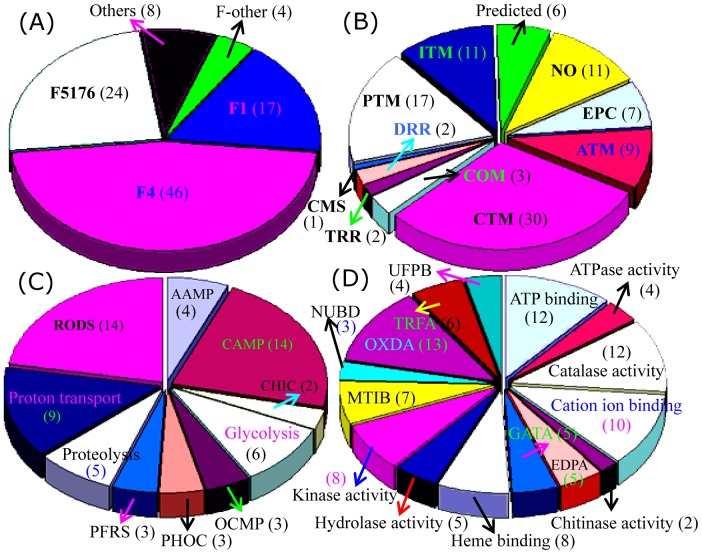
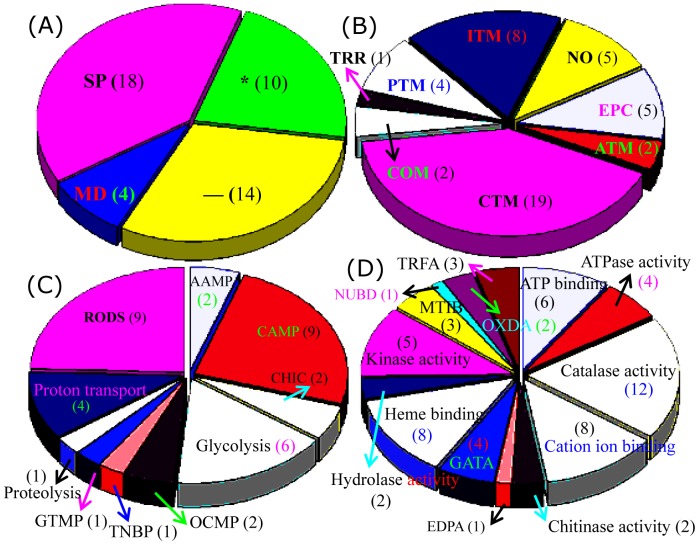
Banana Fusarium wilt is a soil-spread fungal disease caused by Fusarium oxysporum. In China, the main virulence fungi in banana are F. oxysporum race 1 (F1, weak virulence) and race 4 (F4, strong virulence). To date, no proteomic analyses have compared the two races, but the difference in virulence between F1 and F4 might result from their differentially expressed proteins. Here we report the first comparative proteomics of F1 and F4 cultured under various conditions, and finally identify 99 protein species, which represent 59 unique proteins. These proteins are mainly involved in carbohydrate metabolism, post-translational modification, energy production, and inorganic ion transport. Bioinformatics analysis indicated that among the 46 proteins identified from F4 were several enzymes that might be important for virulence. Reverse transcription PCR analysis of the genes for 15 of the 56 proteins revealed that their transcriptional patterns were similar to their protein expression patterns. Taken together, these data suggest that proteins involved in carbohydrate metabolism and ion transport may be important in the pathogenesis of banana Fusarium wilt. Some enzymes such as catalase-peroxidase, galactosidase and chitinase might contribute to the strong virulence of F4. Overexpression or knockout of the genes for the F4-specific proteins will help us to further understand the molecular mechanism of Fusarium-induced banana wilt.
香蕉枯萎病是一种由尖孢镰刀菌引起的土传真菌病害。在中国,香蕉中的主要致病真菌是尖孢镰刀菌1号生理小种(F1,弱毒力)和4号生理小种(F4,强毒力)。迄今为止,尚无蛋白质组学分析对这两个生理小种进行比较,但F1和F4之间毒力的差异可能源于它们差异表达的蛋白质。在此,我们报道了在各种条件下培养的F1和F4的首次比较蛋白质组学研究,最终鉴定出99种蛋白质,代表59种独特蛋白质。这些蛋白质主要参与碳水化合物代谢、翻译后修饰、能量产生和无机离子运输。生物信息学分析表明,从F4中鉴定出的46种蛋白质中有几种酶可能对毒力很重要。对56种蛋白质中的15种蛋白质的基因进行逆转录PCR分析表明,它们的转录模式与其蛋白质表达模式相似。综上所述,这些数据表明参与碳水化合物代谢和离子运输的蛋白质可能在香蕉枯萎病的发病机制中起重要作用。一些酶,如过氧化氢酶-过氧化物酶、半乳糖苷酶和几丁质酶,可能有助于F4的强毒力。F4特异性蛋白质基因的过表达或敲除将有助于我们进一步了解镰刀菌诱导的香蕉枯萎病的分子机制。