Slagle Tracy, Ben Youssef Mehdi, Calonge Golda, Ben Amor Yanis
The Earth Institute, Columbia University, New York, NY, USA.
The School of Social Work, Columbia University, New York, NY, USA.
BMC Int Health Hum Rights. 2014 Dec 3;14:34. doi: 10.1186/s12914-014-0034-7.
Tuberculosis is a highly contagious disease, and there has been a rise in recent years of drug-resistant cases no longer responding to standard treatment. In order to address this threat and contain possible transmission of drug-resistant cases, some countries have taken strong action, including the compulsory detention of non-adherent drug-resistant patients. These measures have been strongly criticized by human rights advocates, and they raise the question of how to legally protect both citizens and the community.
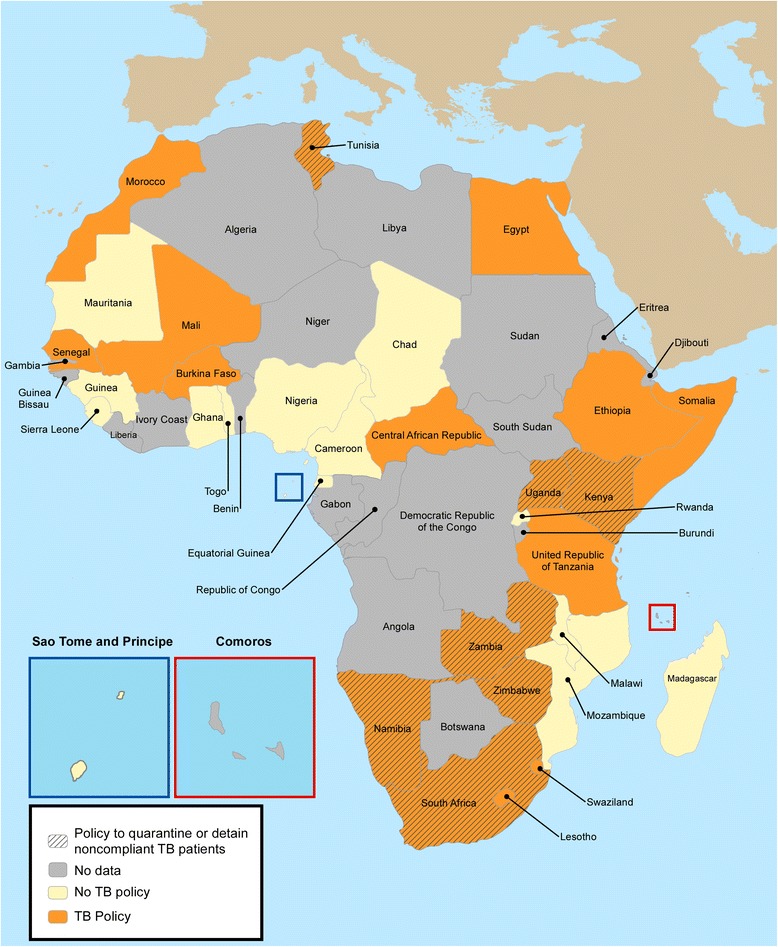
Following discussions with National Tuberculosis Programs in Africa (the continent with the highest incidence rates of tuberculosis worldwide), we show that of all the countries surveyed, all but one (Swaziland) had either no specific policy addressing tuberculosis, or only general policies regarding public health applicable to tuberculosis. Six countries also reported having policies that address non-adherence to treatment with containment (isolation in health facilities or incarceration), but laws are not adequately enforced. If the international community wants to effectively respond to the threat of tuberculosis transmission, there is a need to go beyond national tuberculosis policies and to implement an international framework for tuberculosis control, inspired by the Framework Convention on Tobacco Control, a key model for future public health treaties that address global burdens of disease. The framework, for which we clarify the conditions and procedures in this piece, would define the rights and responsibilities of the different stakeholders involved: patients, doctors, pharmaceutical firms and public authorities. To facilitate the governance of the national obligations under the Convention, a coordinating body should be set up, under the leadership of the World Health Organization and the Stop TB Partnership. Successfully implementing policies for tuberculosis that simultaneously address patients' rights and communities' wellbeing will have positive implications for those affected by the disease and serve as a basis for other global health conventions to truly ensure the global right to health.
结核病是一种高度传染性疾病,近年来耐药病例不断增加,对标准治疗不再有反应。为应对这一威胁并遏制耐药病例的可能传播,一些国家已采取强硬行动,包括强制拘留不坚持治疗的耐药患者。这些措施遭到了人权倡导者的强烈批评,也引发了如何在法律上保护公民和社区的问题。
在与非洲各国国家结核病规划(非洲是全球结核病发病率最高的大陆)进行讨论后,我们发现,在所有接受调查的国家中,除一个国家(斯威士兰)外,其他国家要么没有针对结核病的具体政策,要么只有适用于结核病的一般公共卫生政策。六个国家还报告称有应对不坚持治疗情况的政策(在医疗机构隔离或监禁),但法律执行不力。如果国际社会想要有效应对结核病传播的威胁,就需要超越国家结核病政策,实施一个受《烟草控制框架公约》启发的国际结核病控制框架,《烟草控制框架公约》是应对全球疾病负担的未来公共卫生条约的关键模式。我们在本文中阐明了该框架的条件和程序,它将界定不同利益相关方(患者、医生、制药公司和公共当局)的权利和责任。为便于管理《公约》规定的国家义务,应在世界卫生组织和遏制结核病伙伴关系的领导下设立一个协调机构。成功实施兼顾患者权利和社区福祉的结核病政策,将对受该疾病影响的人产生积极影响,并为其他全球卫生公约真正确保全球健康权奠定基础。