Bjerknes Tale L, Langston Rosamund F, Kruge Ingvild U, Moser Edvard I, Moser May-Britt
Kavli Institute for Systems Neuroscience, Norwegian University of Science and Technology, 7489 Trondheim, Norway.
Division of Neuroscience, Medical Research Institute, University of Dundee, Ninewells Hospital and Medical School, Dundee DD1 9SY, Scotland, UK.
Curr Biol. 2015 Jan 5;25(1):103-8. doi: 10.1016/j.cub.2014.11.009. Epub 2014 Nov 26.
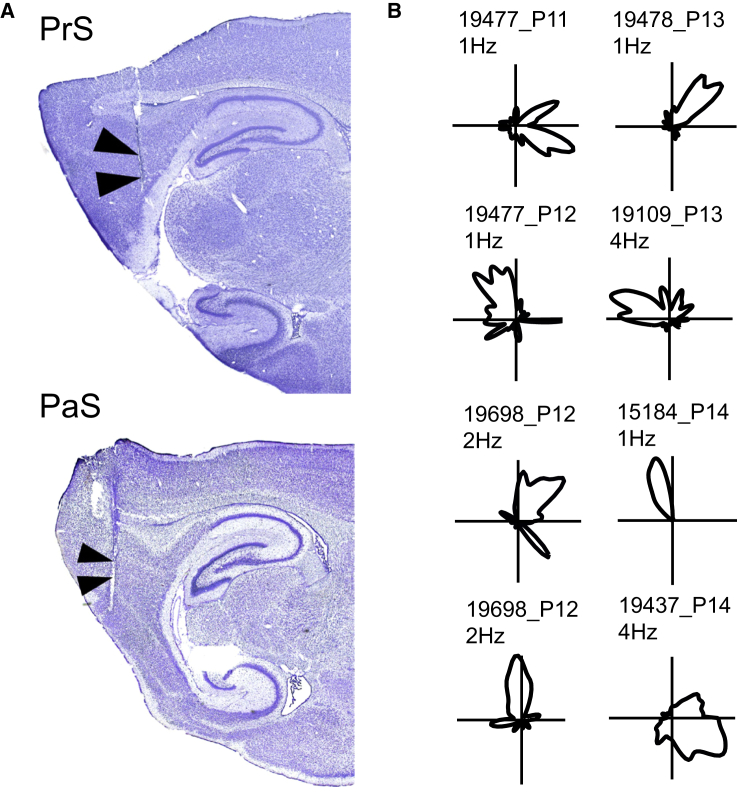
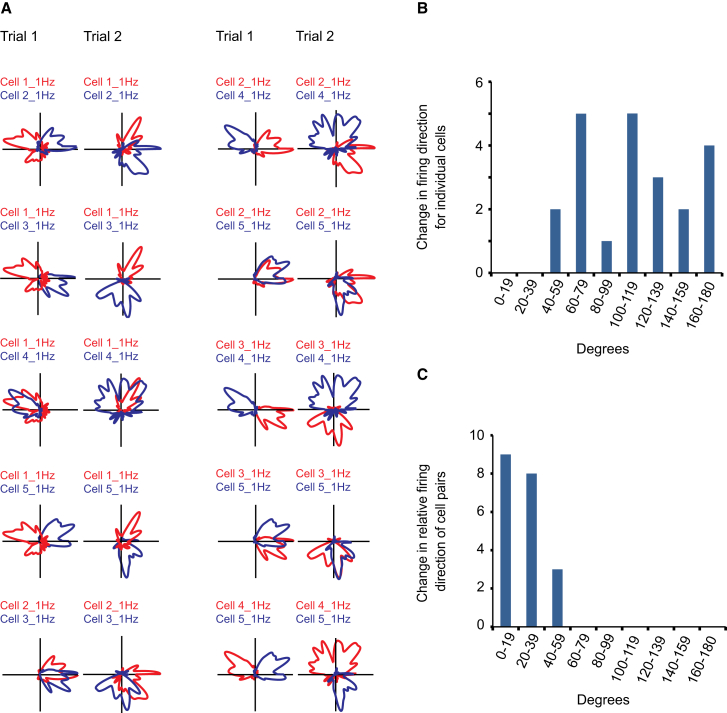
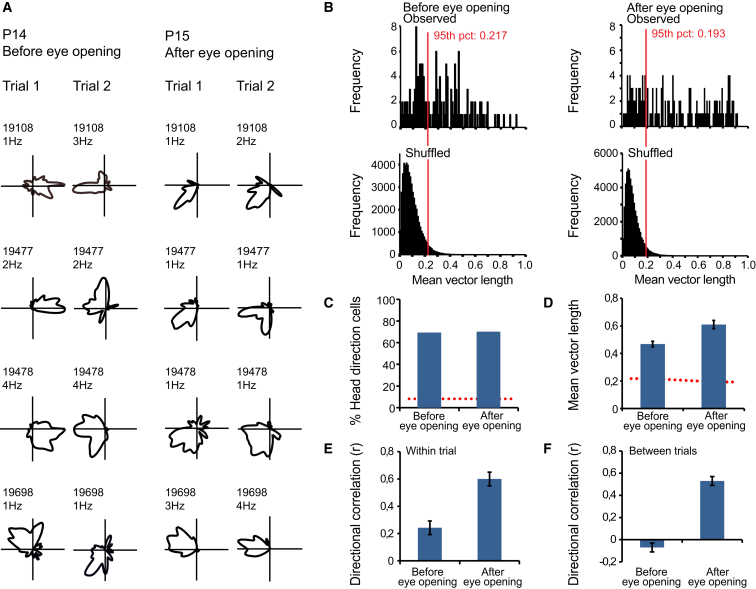
Mammalian navigation is thought to depend on an internal map of space consisting of functionally specialized cells in the hippocampus and the surrounding parahippocampal cortices. Basic properties of this map are present when rat pups explore the world outside of their nest for the first time, around postnatal day 16-18 (P16-P18). One of the first functions to be expressed in navigating animals is the directional tuning of the head direction cells. To determine whether head direction tuning is expressed at even earlier ages, before the start of exploration, and to establish whether vision is necessary for the development of directional tuning, we recorded neural activity in pre- and parasubiculum, or medial entorhinal cortex, from P11 onward, 3-4 days before the eyelids unseal. Head direction cells were present from the first day of recording. Firing rates were lower than in adults, and preferred firing directions were less stable, drifting within trials and changing completely between trials. Yet the cells drifted coherently, i.e., relative firing directions were maintained from one trial to the next. Directional tuning stabilized shortly after eye opening. The data point to a hardwired attractor network for representation of head direction in which directional tuning develops before vision and visual input serves primarily to anchor firing direction to the external world.
哺乳动物的导航被认为依赖于一个由海马体及周围海马旁皮质中功能特化的细胞组成的内部空间地图。当幼鼠在出生后第16 - 18天(P16 - P18)左右首次探索巢穴外的世界时,这个地图的基本特性就已存在。在进行导航的动物中最早表达的功能之一是头部方向细胞的方向调谐。为了确定头部方向调谐是否在更早的年龄,即在探索开始之前就已表达,以及确定视觉对于方向调谐的发展是否必要,我们从出生后第11天起,即在眼睑睁开前3 - 4天,记录了前下托和副下托或内嗅皮质内侧的神经活动。从记录的第一天起就发现了头部方向细胞。其放电频率低于成年动物,且偏好的放电方向不太稳定,在试验过程中会漂移,并且在不同试验之间会完全改变。然而,这些细胞会连贯地漂移,也就是说,相对放电方向在一次试验到下一次试验之间保持不变。方向调谐在睁眼后不久就稳定下来。这些数据表明存在一个用于表征头部方向的硬连线吸引子网络,其中方向调谐在视觉出现之前就已发展,而视觉输入主要用于将放电方向锚定到外部世界。