Correard Florian, Maximova Ksenia, Estève Marie-Anne, Villard Claude, Roy Myriam, Al-Kattan Ahmed, Sentis Marc, Gingras Marc, Kabashin Andrei V, Braguer Diane
Aix Marseille Université, INSERM, CR02 UMR_S911, Marseille, France ; APHM, Hôpital Timone, Marseille, France.
Aix Marseille Université, CNRS, LP3 UMR 7341, Marseille, France.
Int J Nanomedicine. 2014 Nov 21;9:5415-30. doi: 10.2147/IJN.S65817. eCollection 2014.
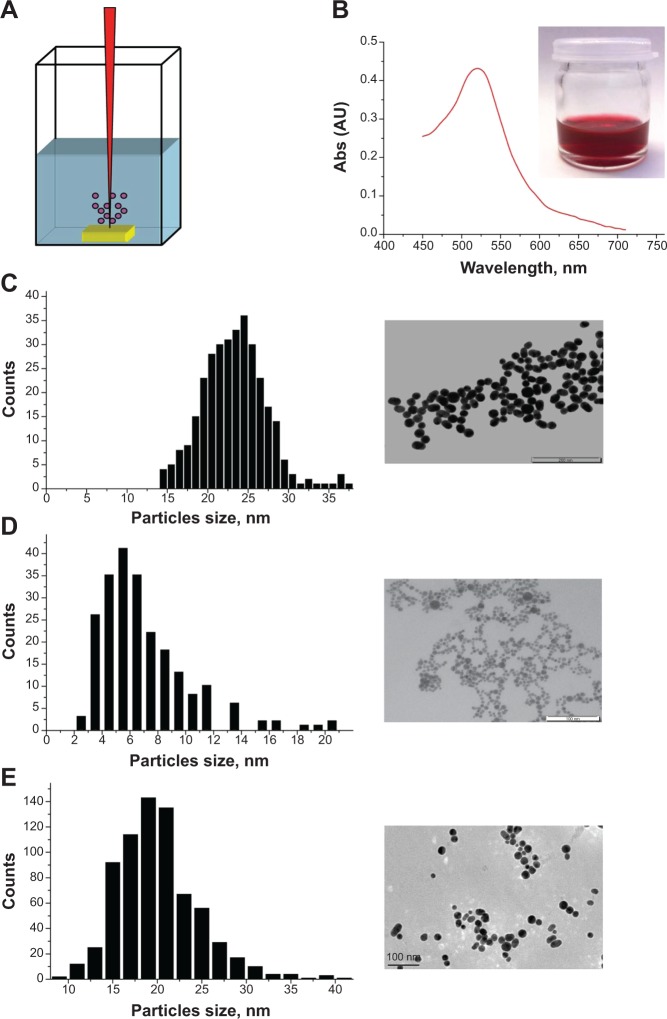
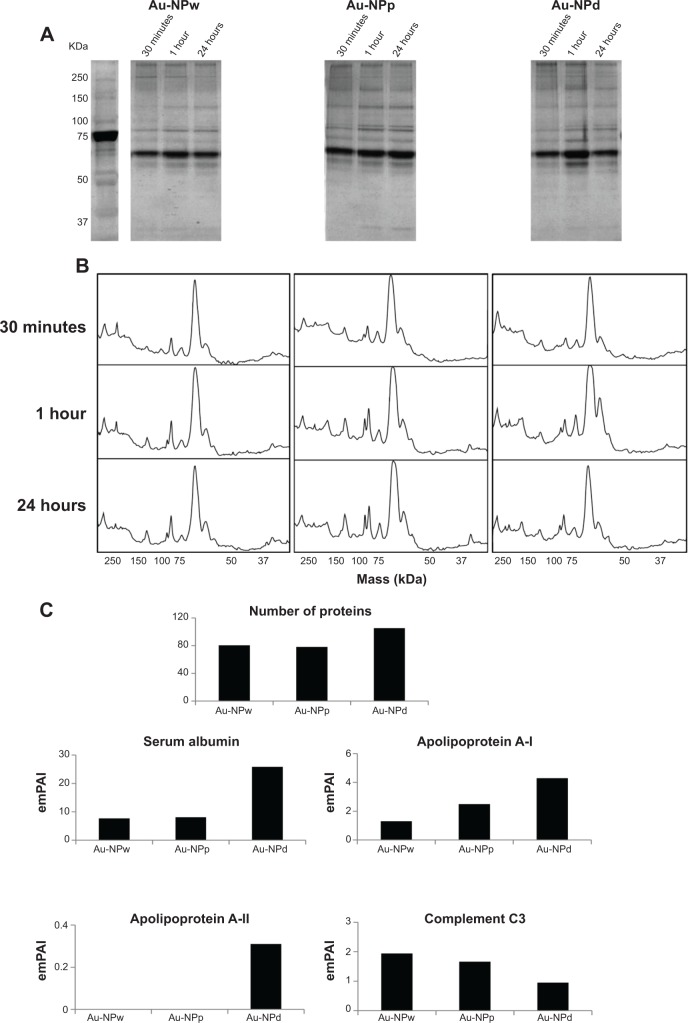
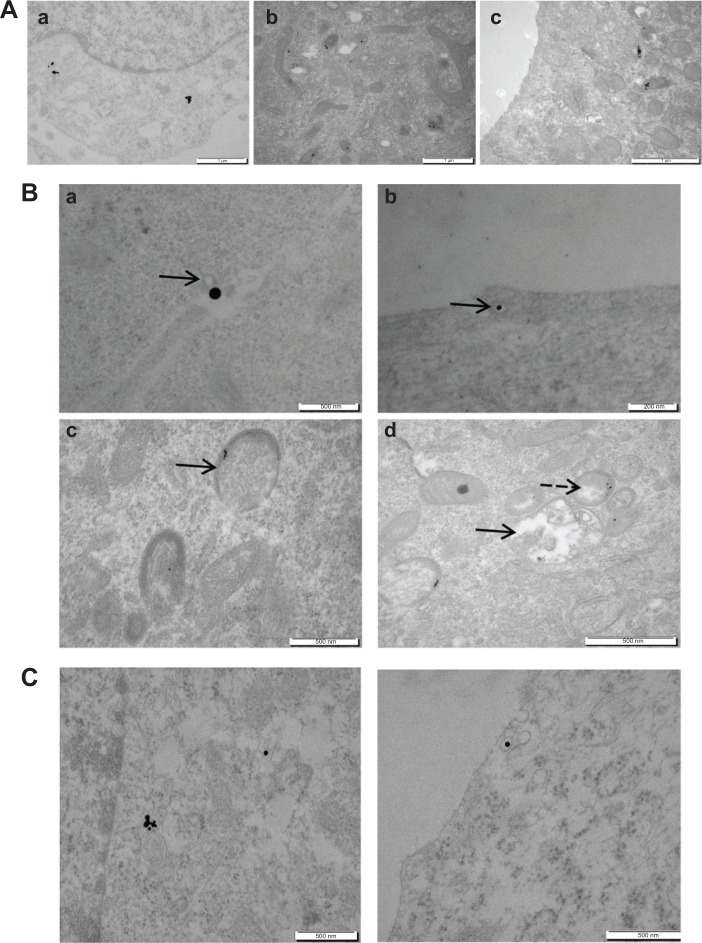
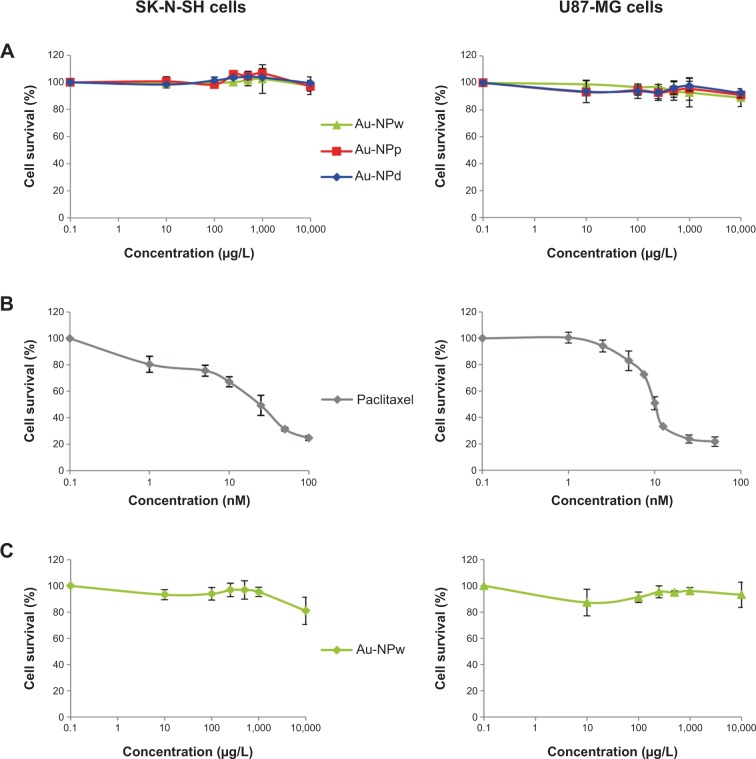
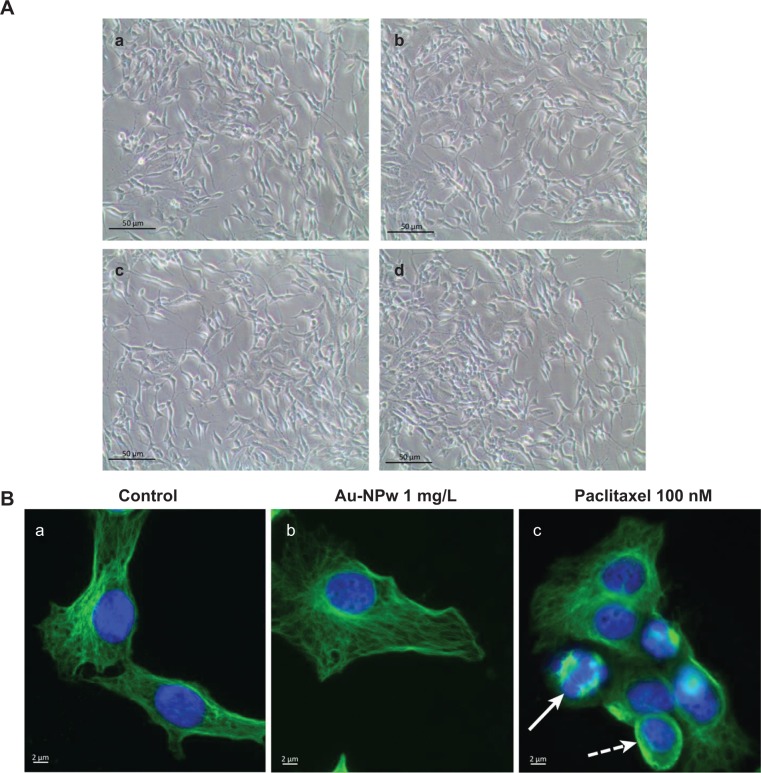
Due to excellent biocompatibility, chemical stability, and promising optical properties, gold nanoparticles (Au-NPs) are the focus of research and applications in nanomedicine. Au-NPs prepared by laser ablation in aqueous biocompatible solutions present an essentially novel object that is unique in avoiding any residual toxic contaminant. This paper is conceived as the next step in development of laser-ablated Au-NPs for future in vivo applications. The aim of the study was to assess the safety, uptake, and biological behavior of laser-synthesized Au-NPs prepared in water or polymer solutions in human cell lines. Our results showed that laser ablation allows the obtaining of stable and monodisperse Au-NPs in water, polyethylene glycol, and dextran solutions. The three types of Au-NPs were internalized in human cell lines, as shown by transmission electron microscopy. Biocompatibility and safety of Au-NPs were demonstrated by analyzing cell survival and cell morphology. Furthermore, incubation of the three Au-NPs in serum-containing culture medium modified their physicochemical characteristics, such as the size and the charge. The composition of the protein corona adsorbed on Au-NPs was investigated by mass spectrometry. Regarding composition of complement C3 proteins and apolipoproteins, Au-NPs prepared in dextran solution appeared as a promising drug carrier. Altogether, our results revealed the safety of laser-ablated Au-NPs in human cell lines and support their use for theranostic applications.
由于具有出色的生物相容性、化学稳定性和良好的光学性质,金纳米颗粒(Au-NPs)成为纳米医学研究和应用的焦点。通过在生物相容性水溶液中进行激光烧蚀制备的Au-NPs呈现出一种本质上新颖的物体,其独特之处在于避免了任何残留的有毒污染物。本文被视为开发用于未来体内应用的激光烧蚀Au-NPs的下一步。该研究的目的是评估在水或聚合物溶液中制备的激光合成Au-NPs在人类细胞系中的安全性、摄取情况和生物学行为。我们的结果表明,激光烧蚀能够在水、聚乙二醇和葡聚糖溶液中获得稳定且单分散的Au-NPs。如透射电子显微镜所示,这三种类型的Au-NPs均被人类细胞系内化。通过分析细胞存活率和细胞形态证明了Au-NPs的生物相容性和安全性。此外,将这三种Au-NPs在含血清的培养基中孵育会改变它们的物理化学特性,如尺寸和电荷。通过质谱法研究了吸附在Au-NPs上的蛋白质冠的组成。关于补体C3蛋白和载脂蛋白的组成,在葡聚糖溶液中制备的Au-NPs似乎是一种有前景的药物载体。总之,我们的结果揭示了激光烧蚀Au-NPs在人类细胞系中的安全性,并支持它们用于治疗诊断应用。