Saralegui Ibone, Ontañón José M, Fernandez-Ruanova Begoña, Garcia-Zapirain Begonya, Basterra Alejandro, Sanz-Arigita Ernesto J
Department of Neuroradiology, Osatek, Galdakao-Usansolo Hospital Galdakao, Spain.
Research Department, Osatek Bilbao, Spain.
Front Hum Neurosci. 2014 Nov 19;8:936. doi: 10.3389/fnhum.2014.00936. eCollection 2014.
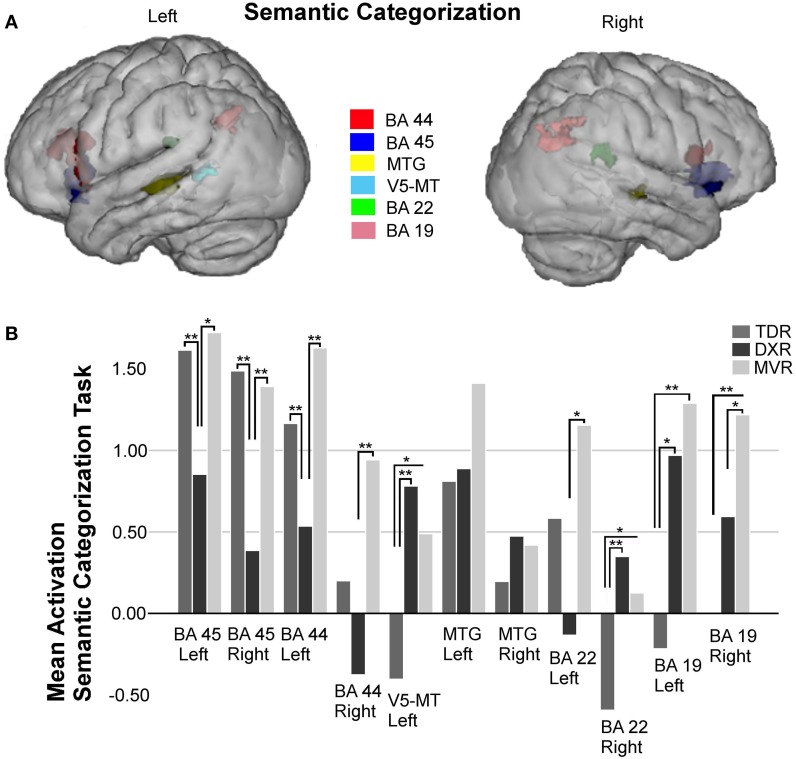
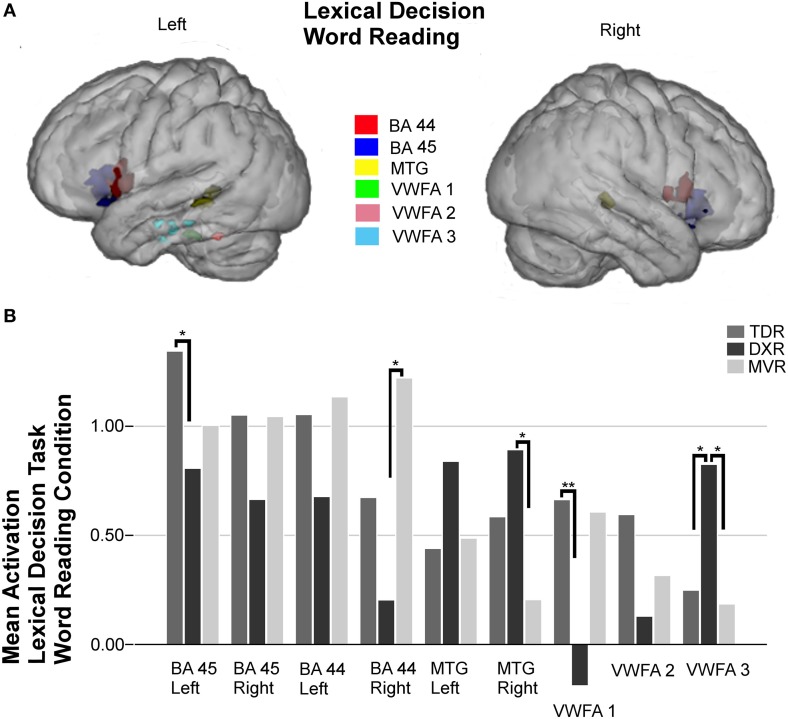
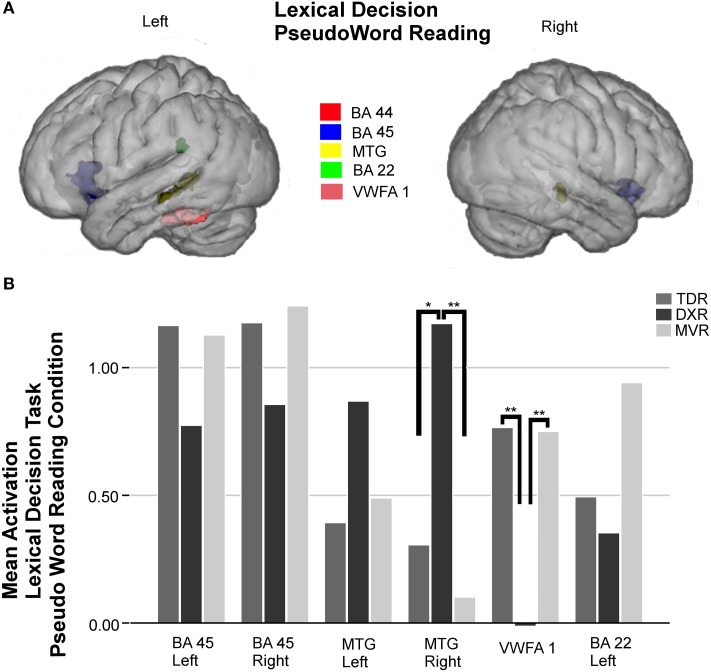
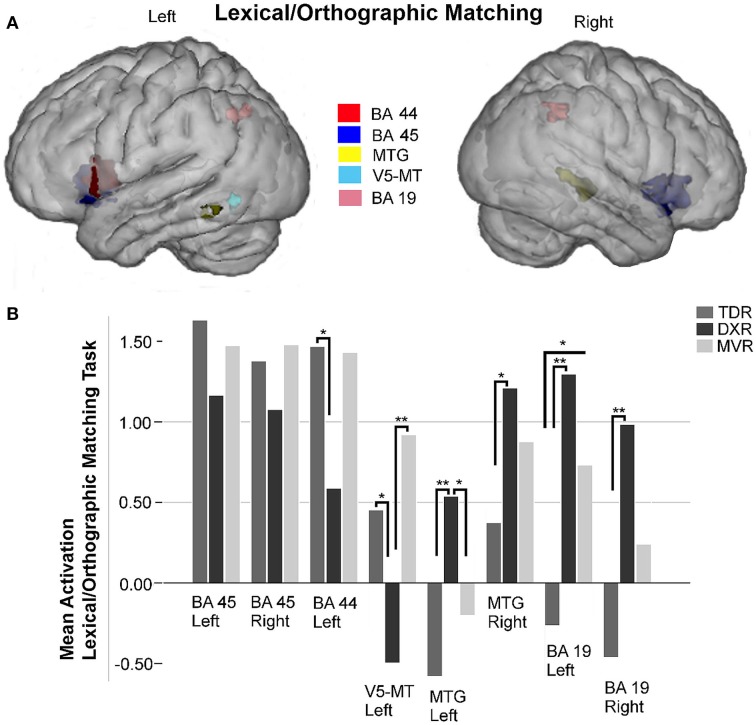
Key PointsDyslexia is a neurological disorder with a genetic origin, but the underlying biological and cognitive causes are still being investigated.This study compares the brain activation pattern while reading in Spanish, a semitransparent language, in three groups of children: typically developing readers, dyslexic readers and readers with functional monocular vision.Based on our results Dyslexia would be a neurological disorder not related to vision impairments and would require a multidisciplinary treatment based on improving phonological awareness and language development. Developmental dyslexia is a neurological disorder the underlying biological and cognitive causes of which are still being investigated, a key point, because the findings will determine the best therapeutic approach to use. Using functional magnetic resonance imaging, we studied the brain activation pattern while reading in the language-related cortical areas from the two reading routes, phonological and orthographic, and the strength of their association with reading scores in 66 Spanish-speaking children aged 9-12 years divided into three groups: typically developing readers (controls), dyslexic readers and readers with monocular vision due to ocular motility disorders but with normal reading development, to assess whether (or not) the neuronal network for reading in children with dyslexia has similarities with that in children with impaired binocular vision due to ocular motility disorders. We found that Spanish-speaking children with dyslexia have a brain circuit for reading that differs from that in children with monocular vision. Individuals with dyslexia tend to hypoactivate some of the language-related areas in the left hemisphere engaged by the phonological route, especially the visual word form area and left Wernicke's area, and try to compensate this deficit by activating language-related areas related to the orthographic route, such as the anterior part of the visual word form area and the posterior part of both middle temporal gyri. That is, they seem to compensate for impairment in the phonological route through orthographic routes of both hemispheres. Our results suggest that ocular motility disturbances do not play a causal role in dyslexia. Dyslexia seems to be a neurological disorder that is unrelated to vision impairments and requires early recognition and multidisciplinary treatment, based on improving phonological awareness and language development, to achieve the best possible outcome.
关键点
诵读困难是一种具有遗传起源的神经障碍,但潜在的生物学和认知原因仍在研究中。
本研究比较了三组儿童在阅读西班牙语(一种半透明语言)时的大脑激活模式,这三组儿童分别是:发育正常的读者、诵读困难的读者和患有功能性单眼视力的读者。
根据我们的研究结果,诵读困难是一种与视力障碍无关的神经障碍,需要基于提高语音意识和语言发展的多学科治疗。发育性诵读困难是一种神经障碍,其潜在的生物学和认知原因仍在研究中,这是一个关键点,因为研究结果将决定最佳的治疗方法。我们使用功能磁共振成像,研究了66名9至12岁的西班牙语儿童在通过语音和正字法这两条阅读途径阅读时,语言相关皮层区域的大脑激活模式,以及它们与阅读分数的关联强度。这些儿童被分为三组:发育正常的读者(对照组)、诵读困难的读者和因眼球运动障碍而患有单眼视力但阅读发育正常的读者,以评估诵读困难儿童的阅读神经网络是否与因眼球运动障碍而双眼视力受损的儿童的阅读神经网络相似。我们发现,说西班牙语的诵读困难儿童的阅读脑回路与单眼视力儿童的不同。诵读困难的个体往往会使语音途径所涉及的左半球一些与语言相关的区域激活不足,尤其是视觉词形区和左韦尼克区,并试图通过激活与正字法途径相关的语言相关区域来弥补这一缺陷,比如视觉词形区的前部和两个颞中回的后部。也就是说,他们似乎通过两个半球的正字法途径来弥补语音途径的损伤。我们的研究结果表明,眼球运动障碍在诵读困难中不起因果作用。诵读困难似乎是一种与视力障碍无关的神经障碍,需要早期识别和基于提高语音意识和语言发展的多学科治疗,以取得尽可能好的结果。