Maresca Giuseppa, Leonardi Simona, De Cola Maria Cristina, Giliberto Silvia, Di Cara Marcella, Corallo Francesco, Quartarone Angelo, Pidalà Alessandra
IRCCS Centro Neurolesi Bonino Pulejo, 98123 Messina, Italy.
Children (Basel). 2022 Oct 25;9(11):1621. doi: 10.3390/children9111621.
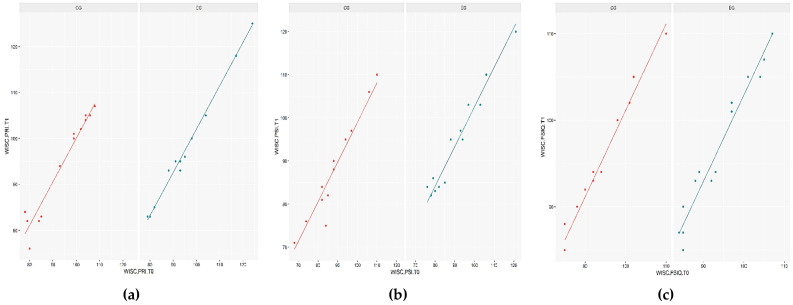
In recent years, the study of dyslexia has seen rapid progress in definition and classification, neuropsychological correlates, neurobiological factors, and intervention. However, there are few studies on how virtual reality can affect improving cognitive domains and cross-cutting pedagogical skills. We, therefore, tested intervention through the use of a virtual reality rehabilitation system (VRRS) in children with dyslexia. Twenty-eight patients diagnosed with dyslexia were enrolled in this study. One-half underwent conventional neuropsychological treatment, and the other half performed VR neurorehabilitation training using the VRRS. All patients were evaluated by neuropsychological assessment at baseline (T0) and at the end of the protocol (T1). The assessment included the administration of the Wechsler Intelligence Scale for Children-IV and the Italian Battery for the Assessment of Dyslexia and Dysorthography. Our results showed a significant difference in word-reading test scores as well as in homophonic writing. In addition, treatment type was found to affect some domains of the WISC. We believe that the VRRS led to improved outcomes through the use of VR, which encourages active exploration, improves engagement, and provides motivation and enjoyment, allowing longer training sessions and improving treatment adherence.
近年来,诵读困难症的研究在定义与分类、神经心理学关联、神经生物学因素以及干预方面取得了迅速进展。然而,关于虚拟现实如何影响改善认知领域和跨领域教学技能的研究却很少。因此,我们通过使用虚拟现实康复系统(VRRS)对诵读困难儿童进行了干预测试。本研究纳入了28名被诊断为诵读困难症的患者。其中一半接受传统神经心理学治疗,另一半使用VRRS进行VR神经康复训练。所有患者在基线(T0)和方案结束时(T1)均接受神经心理学评估。评估包括施测韦氏儿童智力量表第四版以及意大利诵读困难与拼写障碍评估量表。我们的结果显示,在单词阅读测试分数以及同音书写方面存在显著差异。此外,发现治疗类型会影响韦氏儿童智力量表的某些领域。我们认为,VRRS通过使用VR带来了更好的结果,VR鼓励积极探索、提高参与度,并提供动力和乐趣,从而能够进行更长时间的训练并提高治疗依从性。