Ramsay S E, Arianayagam D S, Whincup P H, Lennon L T, Cryer J, Papacosta A O, Iliffe S, Wannamethee S G
Department of Primary Care & Population Health, UCL, London, UK.
Population Health Research Institute, St George's University of London, London, UK.
Heart. 2015 Apr;101(8):616-22. doi: 10.1136/heartjnl-2014-306472. Epub 2014 Dec 5.
Frailty in older age is known to be associated with cardiovascular disease (CVD) risk. However, the extent to which frailty is associated with the CVD risk profile has been little studied. Our aim was to examine the associations of a range of cardiovascular risk factors with frailty and to assess whether these are independent of established CVD.
Cross-sectional study of a socially representative sample of 1622 surviving men aged 71-92 examined in 2010-2012 across 24 British towns, from a prospective study initiated in 1978-1980. Frailty was defined using the Fried phenotype, including weight loss, grip strength, exhaustion, slowness and low physical activity.
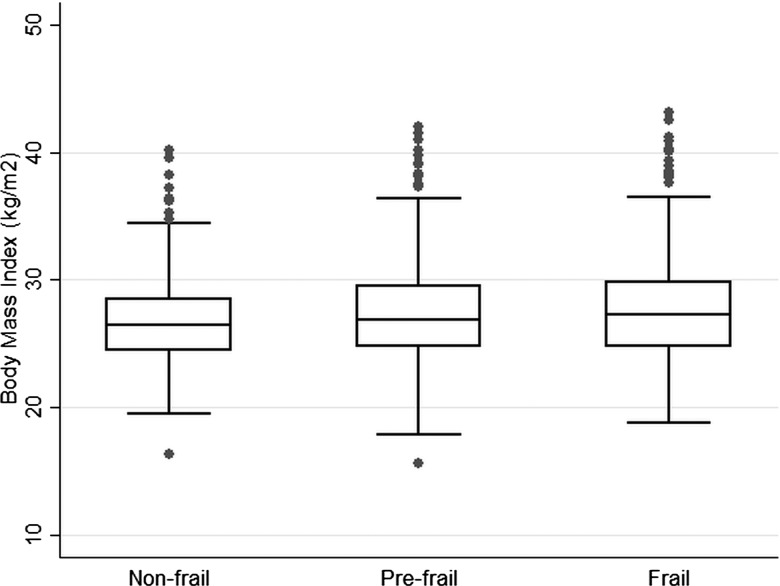
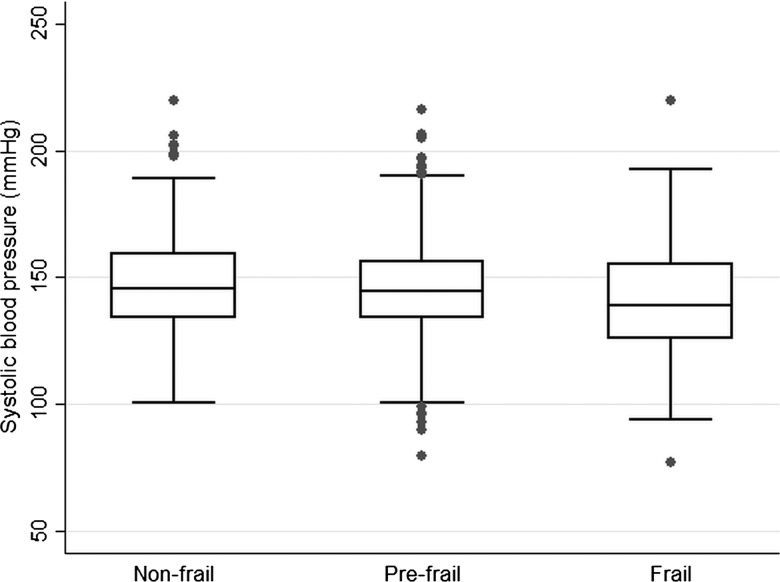
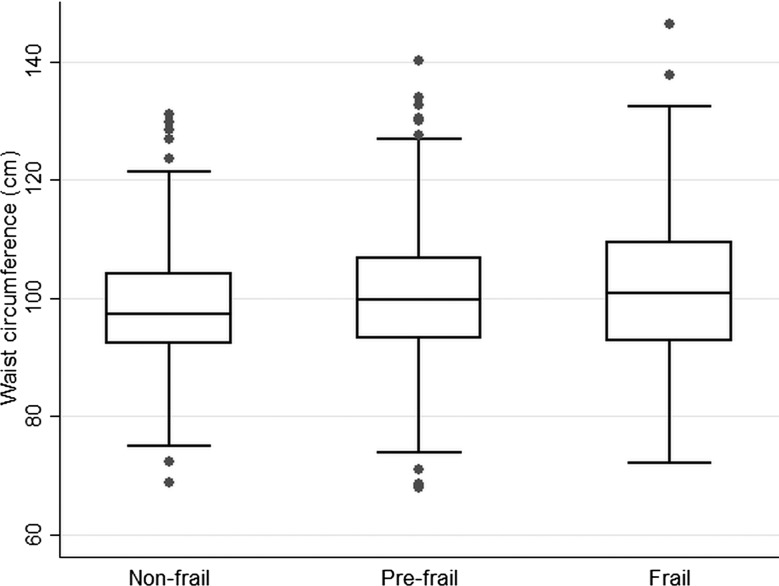
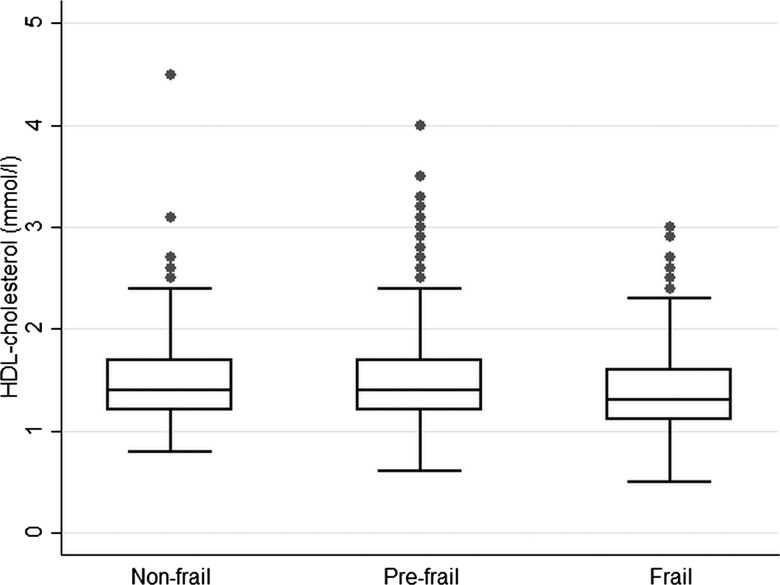
Among 1622 men, 303 (19%) were frail and 876 (54%) were pre-frail. Compared with non-frail, those with frailty had a higher odds of obesity (OR 2.03, 95% CI 1.38 to 2.99), high waist circumference (OR 2.30, 95% CI 1.67 to 3.17), low high-density lipoprotein-cholesterol (HDL-C) (OR 2.28, 95% CI 1.47 to 3.54) and hypertension (OR 1.79, 95% CI 1.27 to 2.54). Prevalence of these factors was also higher in those with frailty (prevalence in frail vs non-frail groups was 46% vs 31% for high waist circumference, 20% vs 11% for low HDL and 78% vs 65% for hypertension). Frail individuals had a worse cardiovascular risk profile with an increased risk of high heart rate, poor lung function (forced expiratory volume in 1 s (FEV1)), raised white cell count (WCC), poor renal function (low estimated glomerular filtration rate), low alanine transaminase and low serum sodium. Some risk factors (HDL-C, hypertension, WCC, FEV1, renal function and albumin) were also associated with being pre-frail. These associations remained when men with prevalent CVD were excluded.
Frailty was associated with increased risk of a range of cardiovascular factors (including obesity, HDL-C, hypertension, heart rate, lung function, renal function) in older people; these associations were independent of established CVD.
已知老年衰弱与心血管疾病(CVD)风险相关。然而,衰弱与CVD风险谱的关联程度鲜有研究。我们的目的是研究一系列心血管危险因素与衰弱的关联,并评估这些关联是否独立于已确诊的CVD。
对1622名年龄在71 - 92岁的存活男性进行横断面研究,这些男性来自1978 - 1980年启动的一项前瞻性研究,于2010 - 2012年在英国24个城镇进行抽样,该样本具有社会代表性。使用Fried衰弱表型定义衰弱,包括体重减轻、握力、疲惫、行动迟缓及身体活动量低。
在1622名男性中,303人(19%)为衰弱,876人(54%)为衰弱前期。与非衰弱者相比,衰弱者肥胖(比值比[OR] 2.03,95%置信区间[CI] 1.38至2.99)、腰围高(OR 2.30,95% CI 1.67至3.17)、高密度脂蛋白胆固醇(HDL - C)低(OR 2.28,95% CI 1.47至3.54)及高血压(OR 1.79,95% CI 1.27至2.54)的几率更高。这些因素在衰弱者中的患病率也更高(腰围高在衰弱组与非衰弱组中的患病率分别为46%对31%,HDL低分别为20%对11%,高血压分别为78%对65%)。衰弱个体的心血管风险谱更差,心率高、肺功能差(第1秒用力呼气量[FEV1])、白细胞计数(WCC)升高、肾功能差(估算肾小球滤过率低)、丙氨酸转氨酶低及血清钠低的风险增加。一些危险因素(HDL - C、高血压、WCC、FEV1、肾功能及白蛋白)也与衰弱前期相关。排除已患CVD的男性后,这些关联依然存在。
衰弱与老年人一系列心血管因素(包括肥胖、HDL - C、高血压、心率、肺功能、肾功能)风险增加相关;这些关联独立于已确诊的CVD。