Hou Qian, He Wen-Jun, Hao Hao-Jie, Han Qing-Wang, Chen Li, Dong Liang, Liu Jie-Jie, Li Xiang, Zhang Ya-Jing, Ma Ying-Zhi, Han Wei-Dong, Fu Xiao-Bing
Institute of Basic Medicine, Chinese PLA General Hospital, Beijing, P. R. China; Department of Internal Medicine, Chinese PLA 148th Hospital, Zibo, P. R. China.
Institute of Basic Medicine, Chinese PLA General Hospital, Beijing, P. R. China; Wound Healing and Cell Biology Laboratory, the First Affiliated Hospital, Chinese PLA General Hospital, Beijing, P. R. China.
PLoS One. 2014 Dec 9;9(12):e112274. doi: 10.1371/journal.pone.0112274. eCollection 2014.
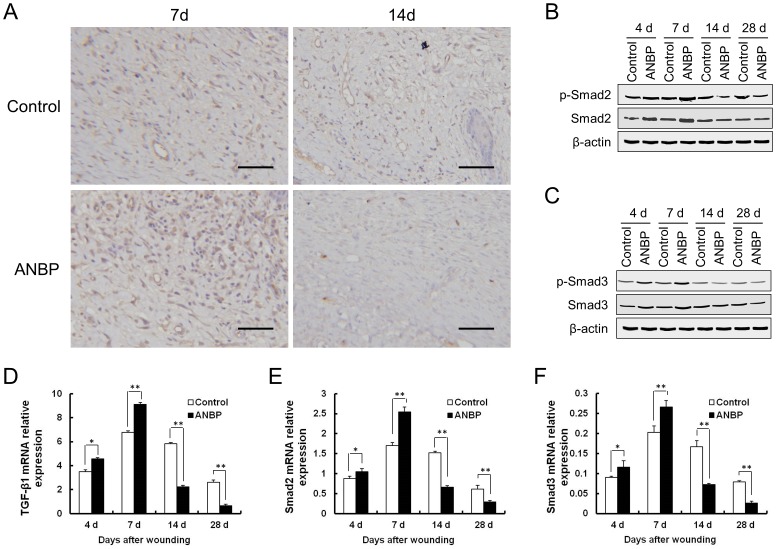
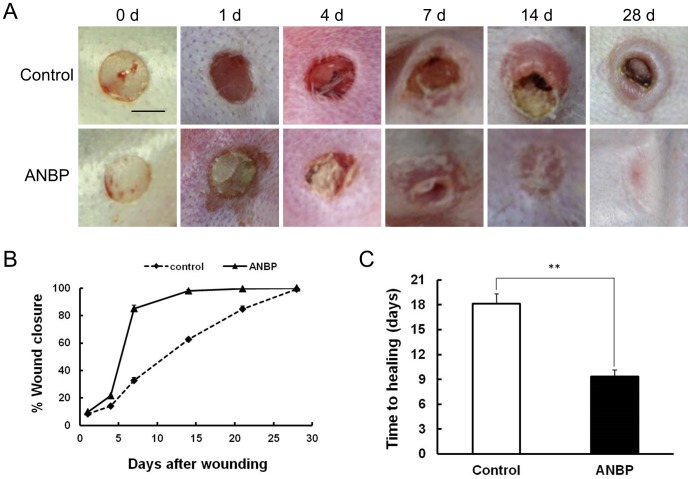
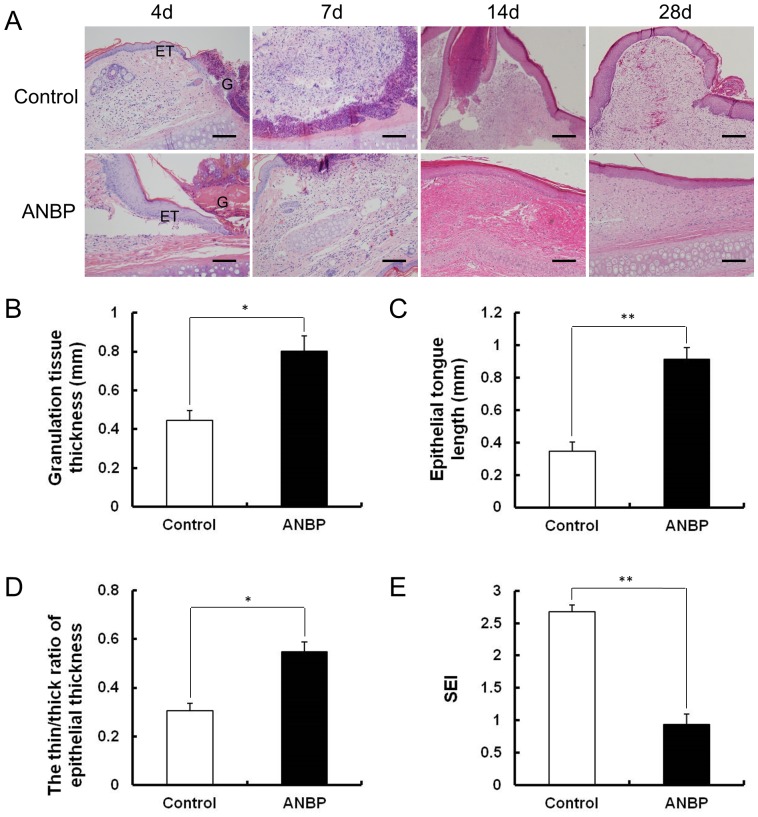
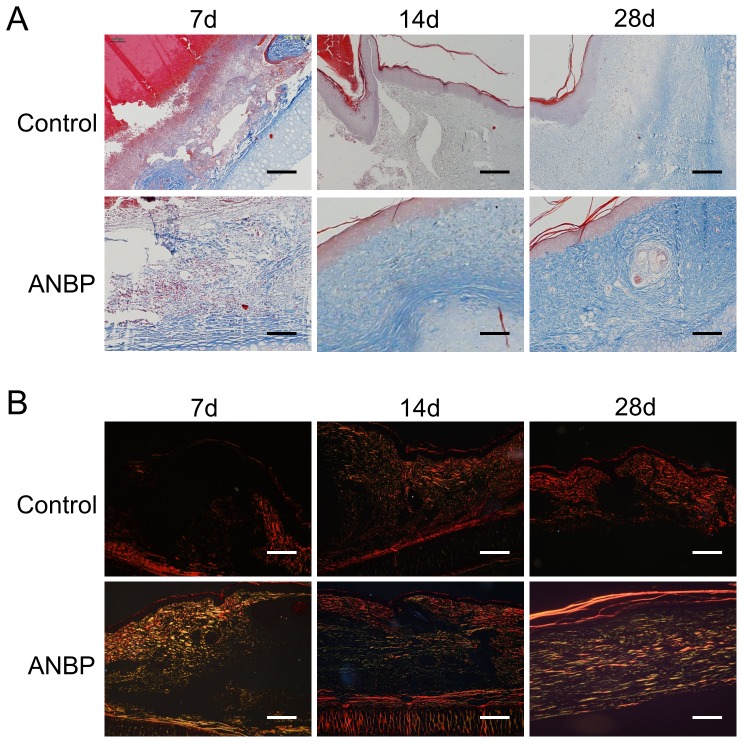
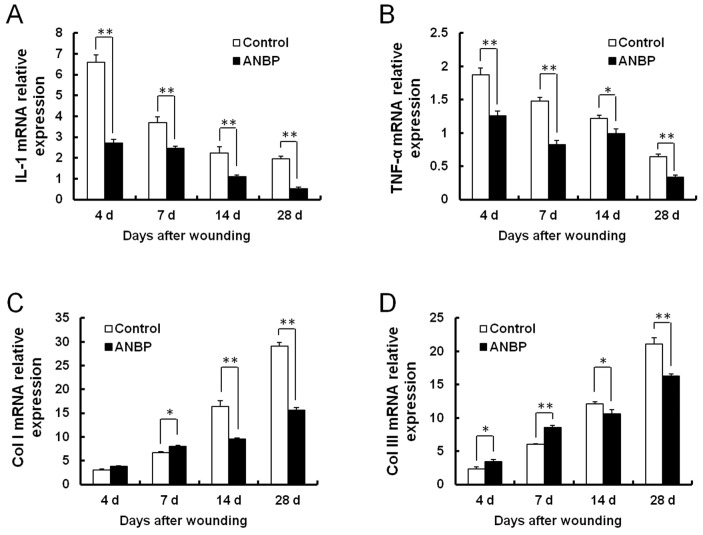
The four-herb Chinese medicine ANBP is a pulverized mixture of four herbs including Agrimonia Eupatoria (A), Nelumbo Nucifera Gaertn (N), Boswellia Carteri (B) and Pollen Typhae Angustifoliae (P). The combination of the four herbs was first described in Chinese canonical medicine about 2000 years ago for treatment of various trauma disorders, such as hemostasis, antiinflammatory, analgesia, and wound healing, etc. However, the precise mechanisms of ANBP are still unclear. In our study, using rabbit ear hypertrophic scar models of full-thickness skin defect, we showed that local ANBP treatment not only significantly enhanced wound healing by relieving inflammation, increasing formation of granulation tissue and accelerating re-epithelialization, but also reduced scar formation by decreasing collagen production, protuberant height and volume of scars, and increasing collagen maturity. We demonstrated that these effects of ANBP are associated with transforming growth factor (TGF)-β1-mediated signalling pathways through Smad-dependent pathways. ANBP treatment significantly increased expression of TGF-β1 and Smad2/3 mRNA at the early stage of wound healing, and led to markedly decrease expression of TGF-β1 and Smad2/3 compared with the control group after 14 days post-wounding. Taken together, our results defined a bidirectional regulation role of ANBP for TGF-β1/Smad pathway in promoting wound healing and alleviating scar formation, which may be an effective therapy for human wounds at the earliest stage.
四味中药复方ANBP是由仙鹤草(A)、莲子(N)、乳香(B)和蒲黄(P)四味中药组成的混合粉剂。大约2000年前,这四味中药的组合首次在中国传统医学中被描述用于治疗各种创伤性疾病,如止血、抗炎、镇痛和伤口愈合等。然而,ANBP的确切作用机制仍不清楚。在我们的研究中,使用兔耳全层皮肤缺损的肥厚性瘢痕模型,我们发现局部应用ANBP不仅通过减轻炎症、增加肉芽组织形成和加速再上皮化显著促进伤口愈合,还通过减少胶原蛋白产生、瘢痕的突出高度和体积以及增加胶原蛋白成熟度来减少瘢痕形成。我们证明ANBP的这些作用与通过Smad依赖途径的转化生长因子(TGF)-β1介导的信号通路有关。ANBP治疗在伤口愈合早期显著增加TGF-β1和Smad2/3 mRNA的表达,而在伤口受伤后14天与对照组相比导致TGF-β1和Smad2/3的表达明显降低。综上所述,我们的结果确定了ANBP对TGF-β1/Smad通路在促进伤口愈合和减轻瘢痕形成方面的双向调节作用,这可能是人类伤口早期的一种有效治疗方法。