Woodard Geoffrey E, Ji Youngmi, Christopherson Gregory T, Wolcott Karen M, Hall David J, Jackson Wesley M, Nesti Leon J
Department of Surgery, Uniformed Services University of Health Sciences, Bethesda, MD, United States of America.
Clinical and Experimental Orthopaedics, National Institute of Arthritis and Musculoskeletal and Skin Diseases, National Institutes of Health, Bethesda, MD, United States of America.
PLoS One. 2014 Dec 9;9(12):e114318. doi: 10.1371/journal.pone.0114318. eCollection 2014.
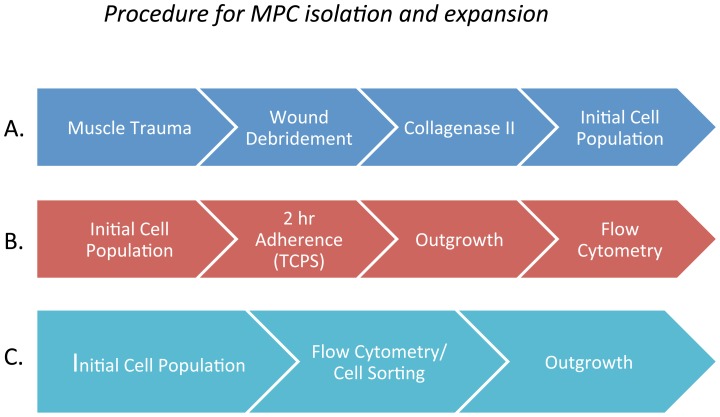
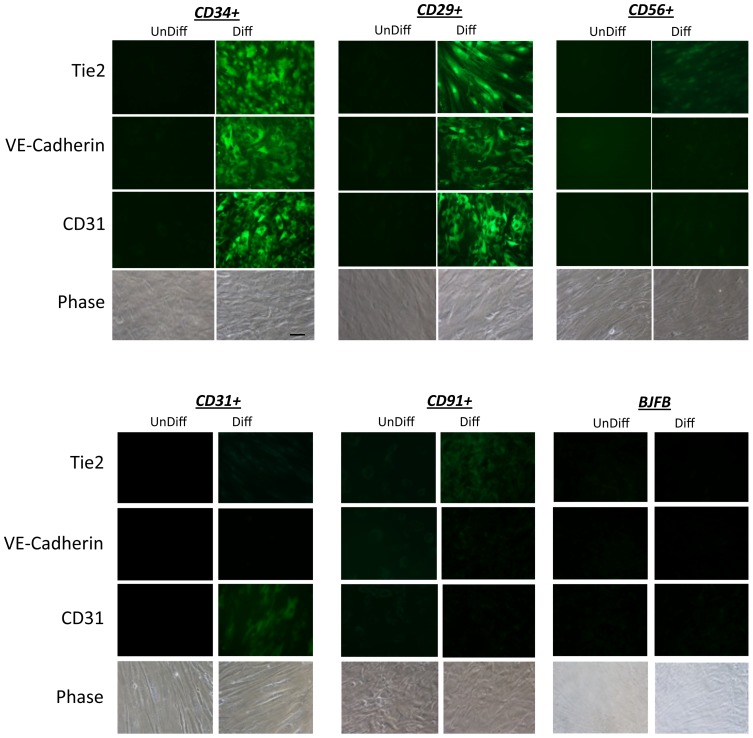
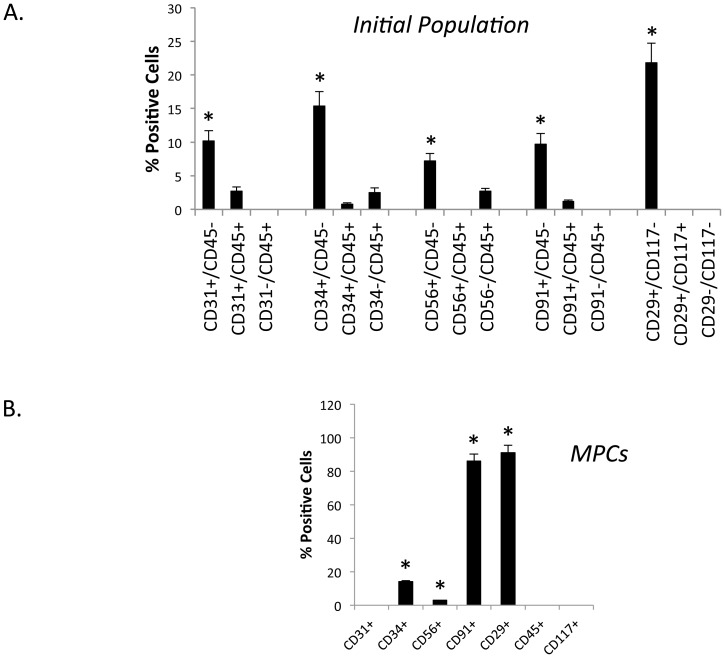
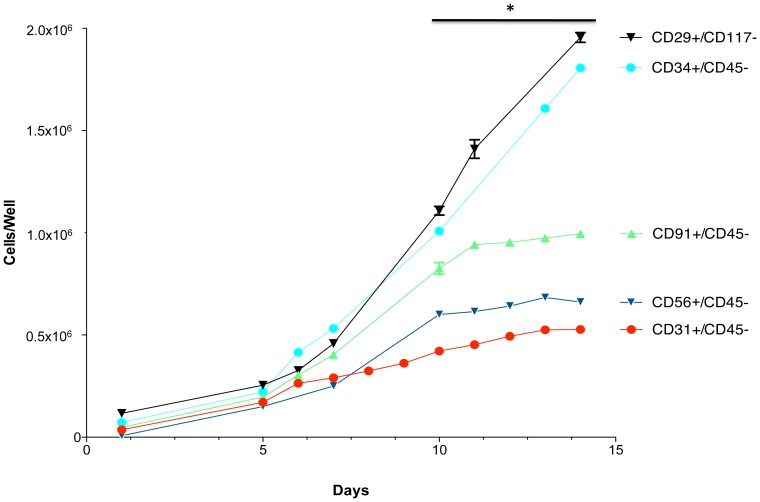
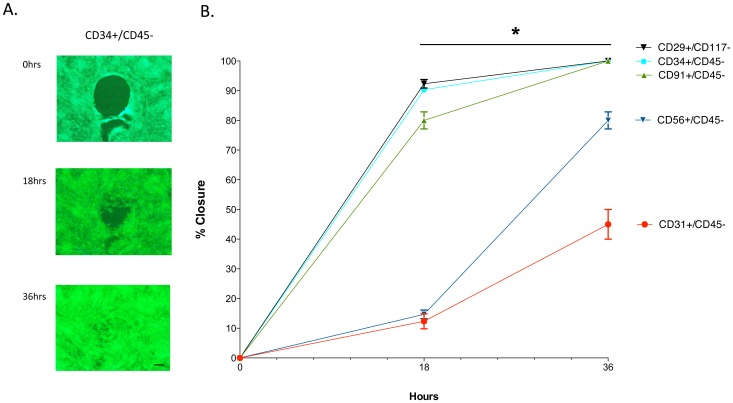
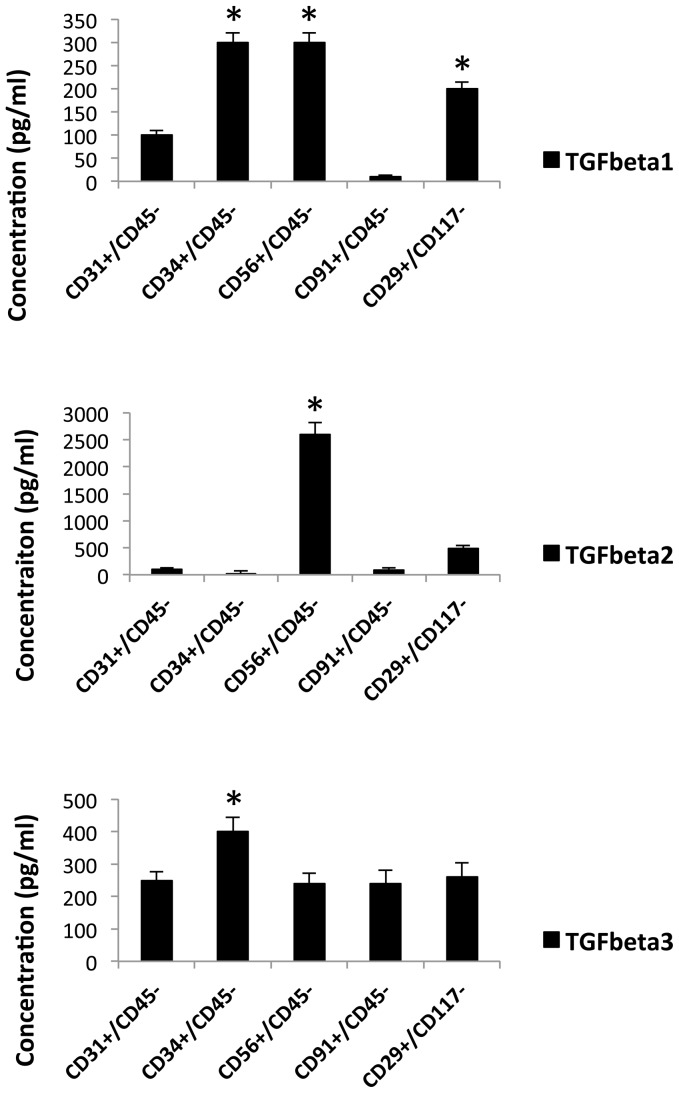
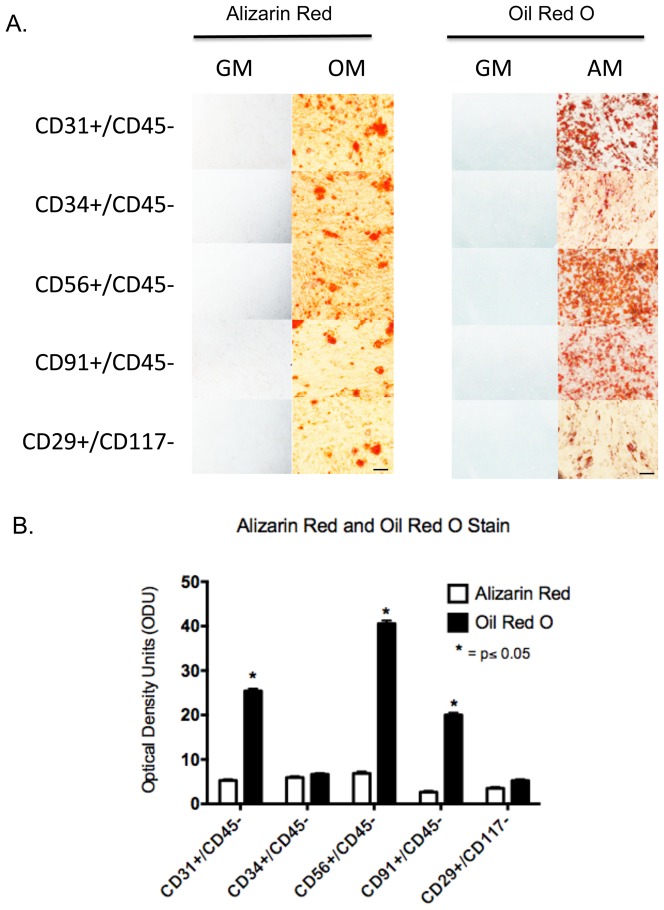
Here we show that distinct subpopulations of cells exist within traumatic human extremity wounds, each having the ability to differentiate into multiple cells types in vitro. A crude cell suspension derived from traumatized muscle was positively sorted for CD29, CD31, CD34, CD56 or CD91. The cell suspension was also simultaneously negatively sorted for either CD45 or CD117 to exclude hematopoietic stem cells. These subpopulations varied in terms their total numbers and their abilities to grow, migrate, differentiate and secrete cytokines. While all five subpopulations demonstrated equal abilities to undergo osteogenesis, they were distinct in their ability to undergo adipogenesis and vascular endotheliogenesis. The most abundant subpopulations were CD29+ and CD34+, which overlapped significantly. The CD29+ and CD34+ cells had the greatest proliferative and migratory capacity while the CD56+ subpopulation produced the highest amounts of TGFß1 and TGFß2. When cultured under endothelial differentiation conditions the CD29+ and CD34+ cells expressed VE-cadherin, Tie2 and CD31, all markers of endothelial cells. These data indicate that while there are multiple cell types within traumatized muscle that have osteogenic differentiation capacity and may contribute to bone formation in post-traumatic heterotopic ossification (HO), the major contributory cell types are CD29+ and CD34+, which demonstrate endothelial progenitor cell characteristics.
我们在此表明,创伤性人类肢体伤口中存在不同的细胞亚群,每个亚群在体外都有分化为多种细胞类型的能力。从受伤肌肉中获得的粗细胞悬液针对CD29、CD31、CD34、CD56或CD91进行阳性分选。细胞悬液还同时针对CD45或CD117进行阴性分选,以排除造血干细胞。这些亚群在总数以及生长、迁移、分化和分泌细胞因子的能力方面存在差异。虽然所有五个亚群在成骨能力上表现相当,但它们在脂肪生成和血管内皮生成能力方面有所不同。最丰富的亚群是CD29 +和CD34 +,它们有显著重叠。CD29 +和CD34 +细胞具有最强的增殖和迁移能力,而CD56 +亚群产生的TGFβ1和TGFβ2量最高。当在内皮分化条件下培养时,CD29 +和CD34 +细胞表达VE-钙黏蛋白、Tie2和CD31,这些都是内皮细胞的标志物。这些数据表明,虽然受伤肌肉中有多种具有成骨分化能力的细胞类型,可能在创伤后异位骨化(HO)中促成骨形成,但主要的促成骨细胞类型是CD29 +和CD34 +,它们表现出内皮祖细胞特征。