Cousijn Janna, Koolschijn P Cédric M P, Zanolie Kiki, Kleibeuker Sietske W, Crone Eveline A
Brain and Development Lab, Department of Psychology, Leiden University, Leiden, The Netherlands; Department of Developmental and Experimental Psychology, Utrecht University, Utrecht, The Netherlands.
Dutch Autism & ADHD Research Center, Brain and Cognition, Department of Psychology, University of Amsterdam, Amsterdam, The Netherlands.
PLoS One. 2014 Dec 16;9(12):e114619. doi: 10.1371/journal.pone.0114619. eCollection 2014.
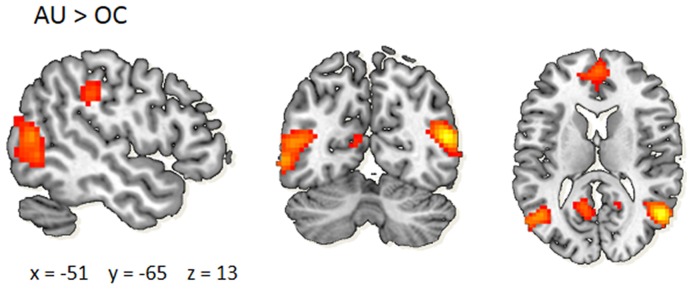
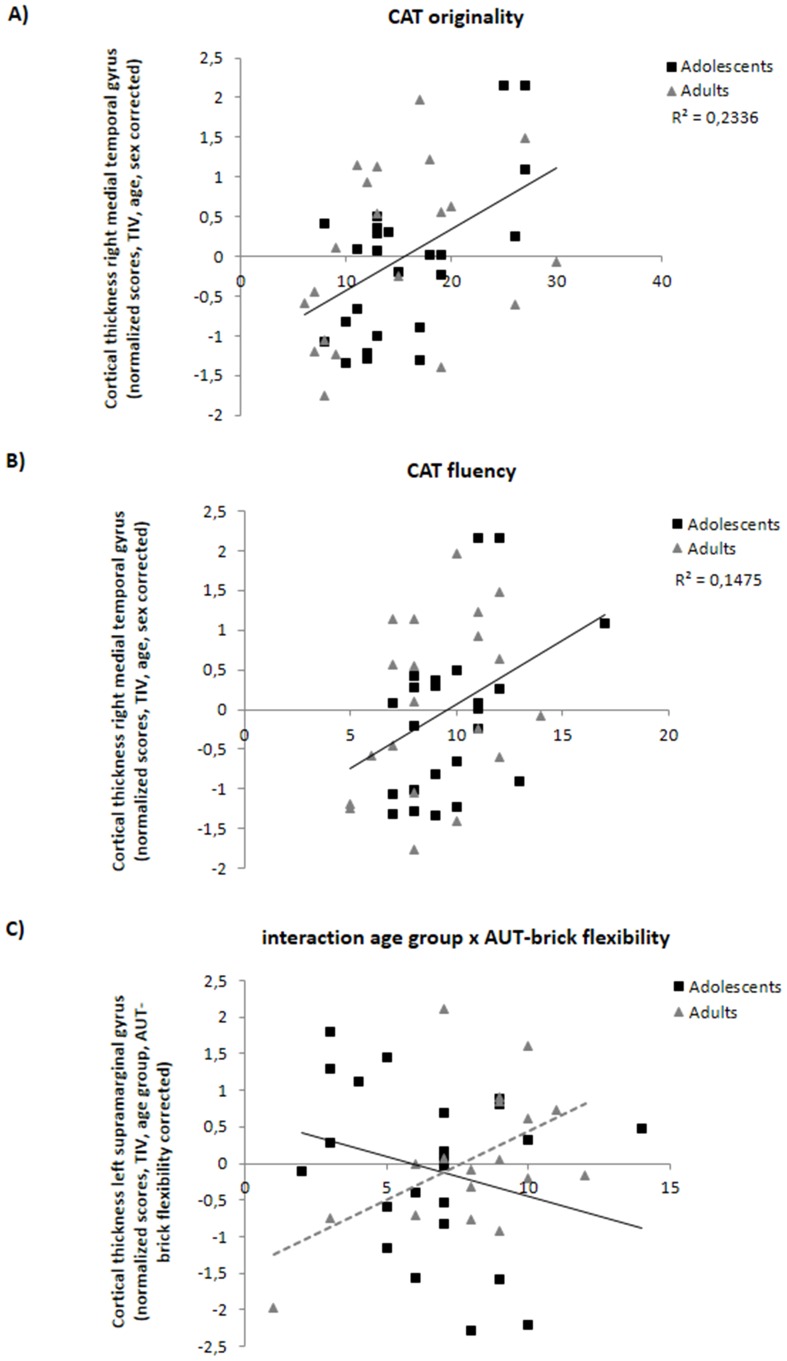
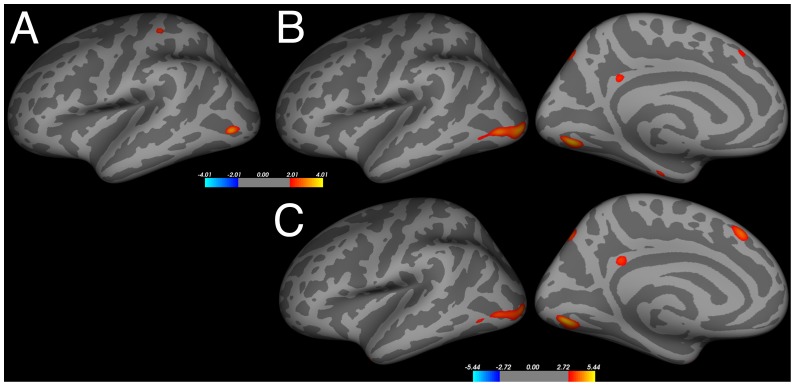
Adolescence and early adulthood are developmental time periods during which creative cognition is highly important for adapting to environmental changes. Divergent thinking, which refers to generating novel and useful solutions to open-ended problems, has often been used as a measure of creative cognition. The first goal of this structural neuroimaging study was to elucidate the relationship between gray matter morphology and performance in the verbal (AUT; alternative uses task) and visuo-spatial (CAT; creative ability test) domain of divergent thinking in adolescents and young adults. The second goal was to test if gray matter morphology is related to brain activity during AUT performance. Neural and behavioral data were combined from a cross-sectional study including 25 adolescents aged 15-17 and 20 young adults aged 25-30. Brain-behavior relationships were assessed without a priori location assumptions and within areas that were activated during an AUT-scanner task. Gray matter volume and cortical thickness were not significantly associated with verbal divergent thinking. However, visuo-spatial divergent thinking (CAT originality and fluency) was positively associated with cortical thickness of the right middle temporal gyrus and left brain areas including the superior frontal gyrus and various occipital, parietal, and temporal areas, independently of age. AUT brain activity was not associated with cortical thickness. The results support an important role of a widespread brain network involved in flexible visuo-spatial divergent thinking, providing evidence for a relation between cortical thickness and visuo-spatial divergent thinking in adolescents and young adults. However, studies including visuo-spatial divergent thinking tasks in the scanner are warranted.
青少年期和成年早期是发展阶段,在此期间创造性认知对于适应环境变化极为重要。发散性思维,即针对开放式问题提出新颖且有用的解决方案,常被用作创造性认知的衡量指标。这项结构性神经影像学研究的首要目标是阐明青少年和青年在言语(AUT;替代用途任务)和视觉空间(CAT;创造力测试)领域发散性思维中灰质形态与表现之间的关系。第二个目标是测试在执行AUT任务期间灰质形态是否与大脑活动相关。神经和行为数据来自一项横断面研究,该研究纳入了25名15 - 17岁的青少年和20名25 - 30岁的青年。在没有先验位置假设的情况下,并在AUT - 扫描仪任务期间激活的区域内评估脑 - 行为关系。灰质体积和皮质厚度与言语发散性思维无显著关联。然而,视觉空间发散性思维(CAT的独创性和流畅性)与右侧颞中回以及包括额上回和各个枕叶、顶叶和颞叶区域在内的左侧脑区的皮质厚度呈正相关,且与年龄无关。AUT任务期间的大脑活动与皮质厚度无关。这些结果支持了一个广泛的脑网络在灵活的视觉空间发散性思维中所起的重要作用,为青少年和青年的皮质厚度与视觉空间发散性思维之间的关系提供了证据。然而,有必要开展在扫描仪中纳入视觉空间发散性思维任务的研究。