Daini Roberta, Comparetti Chiara M, Ricciardelli Paola
Department of Psychology, University of Milano-Bicocca Milan, Italy ; Milan Centre for Neuroscience Milan, Italy.
Department of Psychology, University of Milano-Bicocca Milan, Italy.
Front Hum Neurosci. 2014 Dec 3;8:974. doi: 10.3389/fnhum.2014.00974. eCollection 2014.
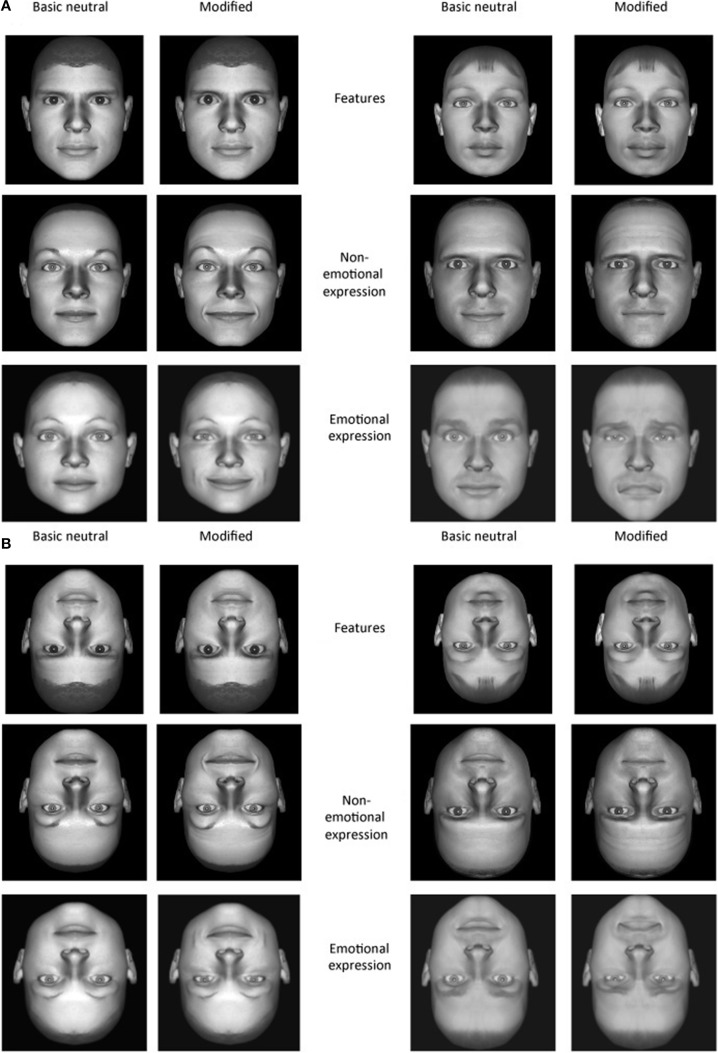
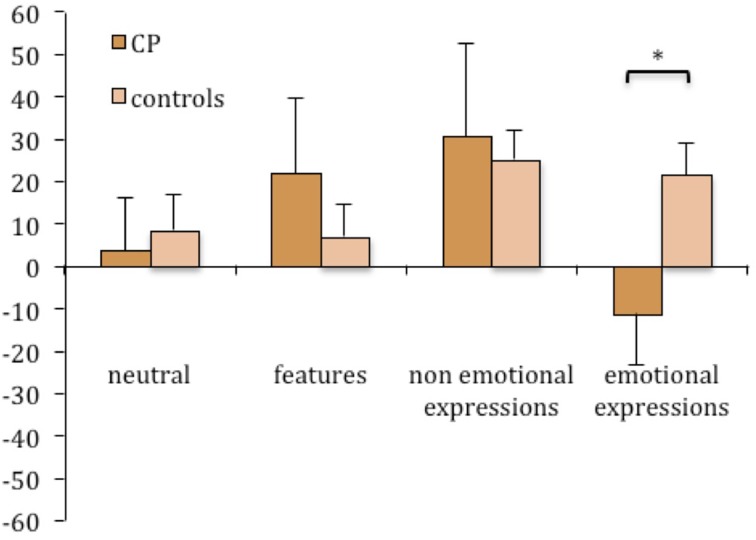
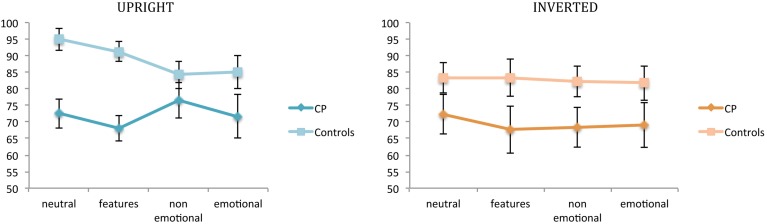
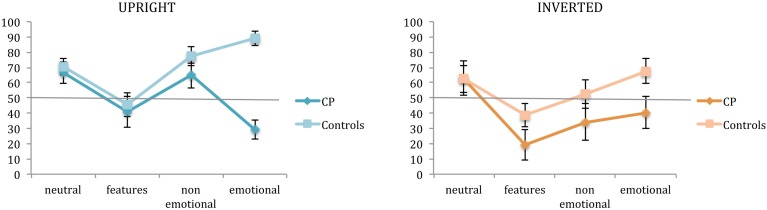
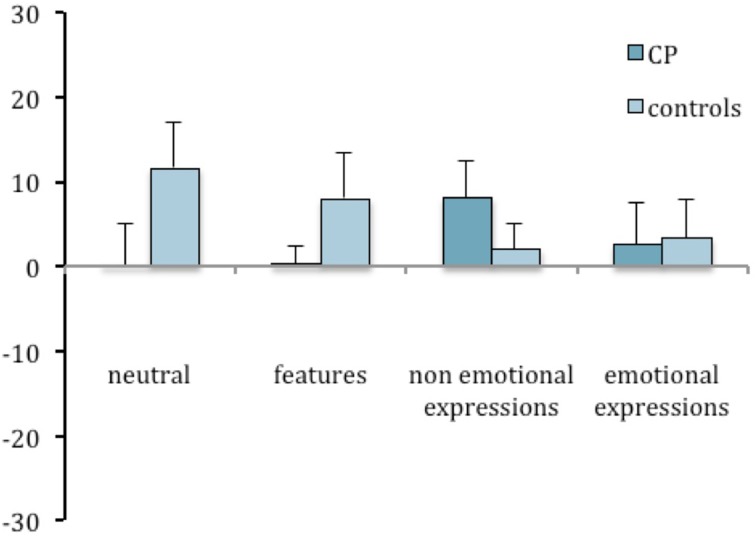
Neuropsychological and neuroimaging studies have shown that facial recognition and emotional expressions are dissociable. However, it is unknown if a single system supports the processing of emotional and non-emotional facial expressions. We aimed to understand if individuals with impairment in face recognition from birth (congenital prosopagnosia, CP) can use non-emotional facial expressions to recognize a face as an already seen one, and thus, process this facial dimension independently from features (which are impaired in CP), and basic emotional expressions. To this end, we carried out a behavioral study in which we compared the performance of 6 CP individuals to that of typical development individuals, using upright and inverted faces. Four avatar faces with a neutral expression were presented in the initial phase. The target faces presented in the recognition phase, in which a recognition task was requested (2AFC paradigm), could be identical (neutral) to those of the initial phase or present biologically plausible changes to features, non-emotional expressions, or emotional expressions. After this task, a second task was performed, in which the participants had to detect whether or not the recognized face exactly matched the study face or showed any difference. The results confirmed the CPs' impairment in the configural processing of the invariant aspects of the face, but also showed a spared configural processing of non-emotional facial expression (task 1). Interestingly and unlike the non-emotional expressions, the configural processing of emotional expressions was compromised in CPs and did not improve their change detection ability (task 2). These new results have theoretical implications for face perception models since they suggest that, at least in CPs, non-emotional expressions are processed configurally, can be dissociated from other facial dimensions, and may serve as a compensatory strategy to achieve face recognition.
神经心理学和神经影像学研究表明,面部识别和情绪表达是可分离的。然而,尚不清楚是否存在一个单一系统支持对情绪和非情绪面部表情的处理。我们旨在了解先天性面孔失认症(CP)患者能否利用非情绪面部表情将一张面孔识别为已见过的面孔,从而独立于面孔特征(CP患者的面孔特征识别受损)和基本情绪表情来处理这一面部维度。为此,我们开展了一项行为研究,将6名CP患者的表现与典型发育个体的表现进行比较,使用正立和倒立的面孔。在初始阶段呈现四张中性表情的虚拟头像面孔。在识别阶段呈现目标面孔,要求进行识别任务(二选一范式),目标面孔可能与初始阶段的面孔相同(中性),也可能在面孔特征、非情绪表情或情绪表情方面呈现生物学上合理的变化。完成这项任务后,进行第二项任务,参与者必须检测识别出的面孔是否与研究面孔完全匹配或是否存在任何差异。结果证实了CP患者在面孔不变方面的构型加工存在损伤,但同时也显示出非情绪面部表情的构型加工未受影响(任务1)。有趣的是,与非情绪表情不同,CP患者在情绪表情的构型加工方面存在缺陷,且这并未提高他们的变化检测能力(任务2)。这些新结果对面孔感知模型具有理论意义,因为它们表明,至少在CP患者中,非情绪表情是通过构型方式进行加工的,可以与其他面部维度分离,并且可能作为一种补偿策略来实现面孔识别。