Zhang Zhen, Tan Ee Phie, VandenHull Nicole J, Peterson Kenneth R, Slawson Chad
Department of Biochemistry and Molecular Biology, University of Kansas Medical Center , Kansas City, KS , USA.
Department of Biochemistry and Molecular Biology, University of Kansas Medical Center , Kansas City, KS , USA ; KUMC Cancer Center, University of Kansas Medical Center , Kansas City, KS , USA ; Institute for Reproductive Health and Regenerative Medicine, University of Kansas Medical Center , Kansas City, KS , USA.
Front Endocrinol (Lausanne). 2014 Dec 1;5:206. doi: 10.3389/fendo.2014.00206. eCollection 2014.
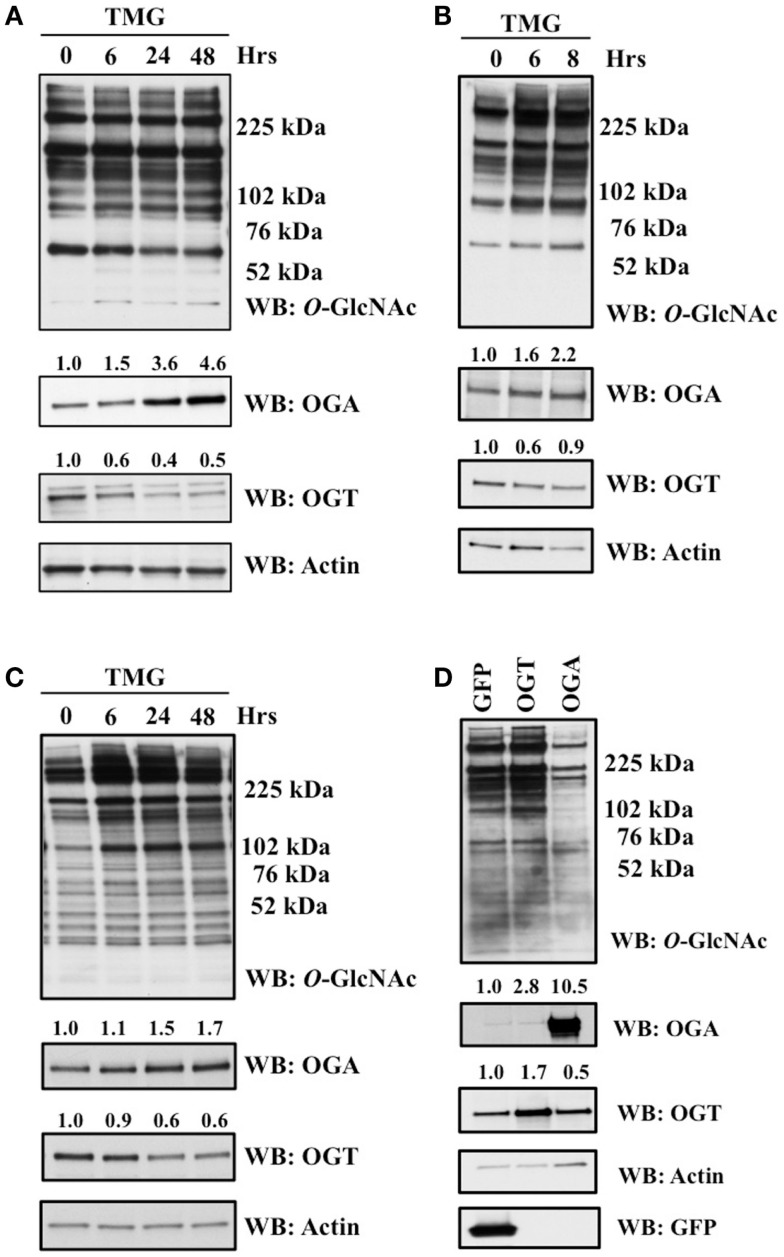
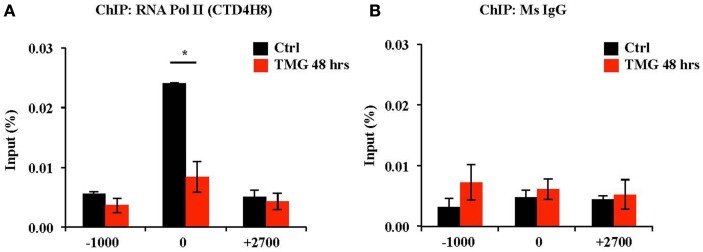
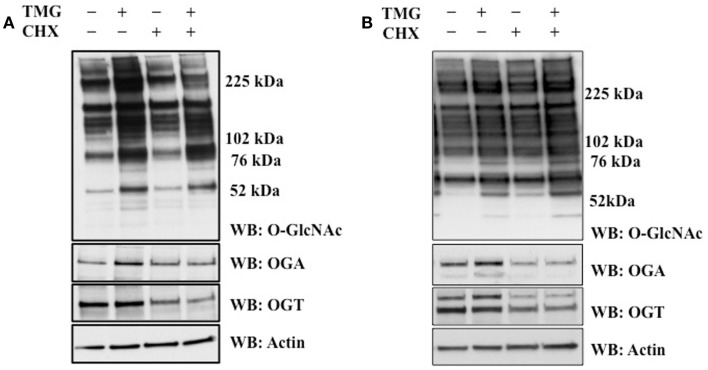
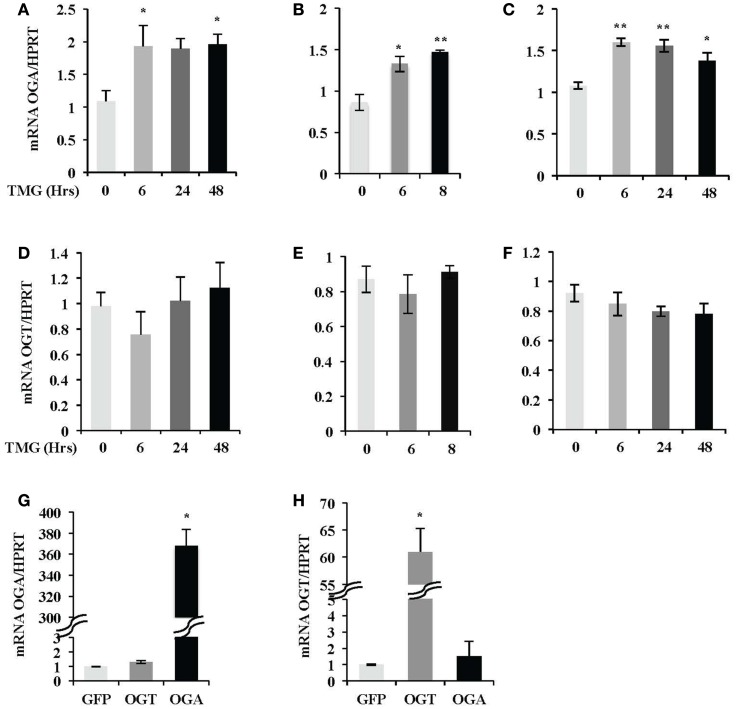
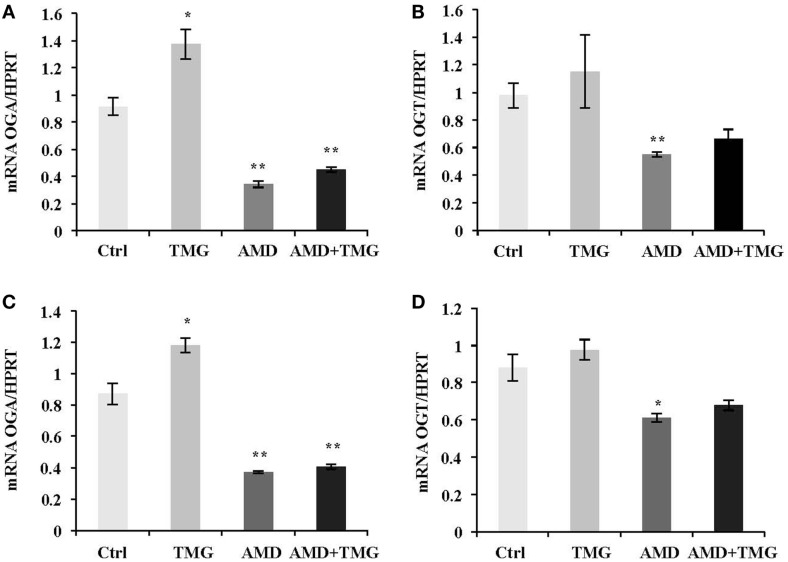
O-linked N-acetylglucosamine (O-GlcNAc) is a post-translational modification involving an attachment of a single β-N-acetylglucosamine moiety to serine or threonine residues in nuclear and cytoplasmic proteins. Cellular O-GlcNAc levels are regulated by two enzymes: O-GlcNAc transferase (OGT) and O-GlcNAcase (OGA), which add and remove the modification, respectively. The levels of O-GlcNAc can rapidly change in response to fluctuations in the extracellular environment; however, O-GlcNAcylation returns to a baseline level quickly after stimulus removal. This process termed O-GlcNAc homeostasis appears to be critical to the regulation of many cellular functions including cell cycle progress, stress response, and gene transcription. Disruptions in O-GlcNAc homeostasis are proposed to lead to the development of diseases, such as cancer, diabetes, and Alzheimer's disease. O-GlcNAc homeostasis is correlated with the expression of OGT and OGA. We reason that alterations in O-GlcNAc levels affect OGA and OGT transcription. We treated several human cell lines with Thiamet-G (TMG, an OGA inhibitor) to increase overall O-GlcNAc levels resulting in decreased OGT protein expression and increased OGA protein expression. OGT transcript levels slightly declined with TMG treatment, but OGA transcript levels were significantly increased. Pretreating cells with protein translation inhibitor cycloheximide did not stabilize OGT or OGA protein expression in the presence of TMG; nor did TMG stabilize OGT and OGA mRNA levels when cells were treated with RNA transcription inhibitor actinomycin D. Finally, we performed RNA Polymerase II chromatin immunoprecipitation at the OGA promoter and found that RNA Pol II occupancy at the transcription start site was lower after prolonged TMG treatment. Together, these data suggest that OGA transcription was sensitive to changes in O-GlcNAc homeostasis and was potentially regulated by O-GlcNAc.
O-连接的N-乙酰葡糖胺(O-GlcNAc)是一种翻译后修饰,涉及将单个β-N-乙酰葡糖胺部分连接到核蛋白和细胞质蛋白中的丝氨酸或苏氨酸残基上。细胞内O-GlcNAc水平由两种酶调节:O-GlcNAc转移酶(OGT)和O-GlcNAcase(OGA),它们分别添加和去除这种修饰。O-GlcNAc水平可响应细胞外环境的波动而迅速变化;然而,在刺激去除后,O-GlcNAcylation会迅速恢复到基线水平。这个被称为O-GlcNAc稳态的过程似乎对包括细胞周期进程、应激反应和基因转录在内的许多细胞功能的调节至关重要。有人提出O-GlcNAc稳态的破坏会导致疾病的发生,如癌症、糖尿病和阿尔茨海默病。O-GlcNAc稳态与OGT和OGA的表达相关。我们推测O-GlcNAc水平的改变会影响OGA和OGT的转录。我们用噻美特-G(TMG,一种OGA抑制剂)处理了几种人类细胞系,以提高整体O-GlcNAc水平,导致OGT蛋白表达降低,OGA蛋白表达增加。TMG处理后OGT转录水平略有下降,但OGA转录水平显著增加。在用蛋白质翻译抑制剂环己酰亚胺预处理细胞后,在TMG存在的情况下,OGT或OGA蛋白表达并未稳定;当用RNA转录抑制剂放线菌素D处理细胞时,TMG也未稳定OGT和OGA的mRNA水平。最后,我们在OGA启动子处进行了RNA聚合酶II染色质免疫沉淀,发现长时间TMG处理后,转录起始位点处的RNA Pol II占有率较低。总之,这些数据表明OGA转录对O-GlcNAc稳态的变化敏感,并可能受O-GlcNAc调控。