Chandani Yasmin, Andersson Sarah, Heaton Alexis, Noel Megan, Shieshia Mildred, Mwirotsi Amanda, Krudwig Kirstin, Nsona Humphreys, Felling Barbara
JSI Research & Training Institute, Inc., Nairobi, Kenya.
JSI Research & Training Institute, Inc., Arlington, VA, USA.
J Glob Health. 2014 Dec;4(2):020405. doi: 10.7189/jogh.04.020405.
A UNICEF review of the challenges to scaling up integrated community case management (iCCM) found that drug shortages were a common bottleneck. In many settings, little thought has gone into the design of supply chains to the community level and limited evidence exists for how to address these unique challenges. SC4CCM's purpose was to conduct intervention research to identify proven, simple, affordable solutions that address the unique supply chain challenges faced by CHWs and to demonstrate that supply chain constraints at the community level can be overcome.
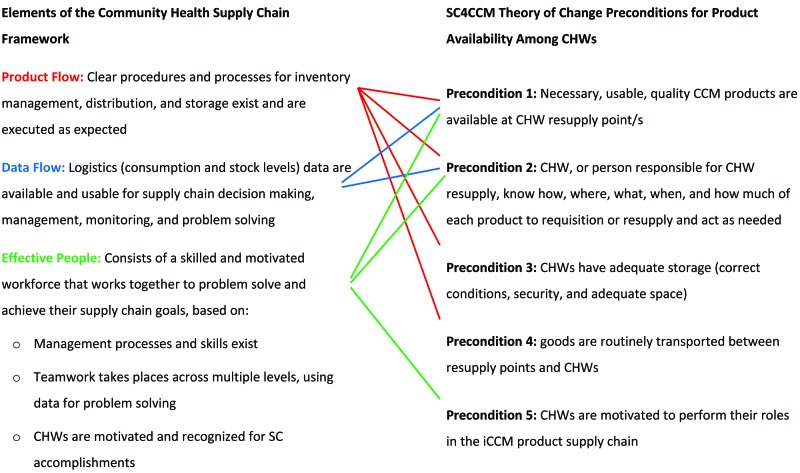
SC4CCM selected three countries to implement supply chain innovations and developed a theory of change (TOC) framework for the learning phase, which identified the main drivers of product availability and was used for baseline assessments, design, implementation and evaluation of interventions in Ethiopia, Malawi, and Rwanda. Interventions were developed in each country and tested over 12-24 months. Mixed-method follow up assessments were conducted in each country in 2012-2013. The Supply Chain for Community Case Management (SC4CCM) Project then simplified the TOC into a Community Health Supply Chain (CHSC) framework to enable cross country analysis.
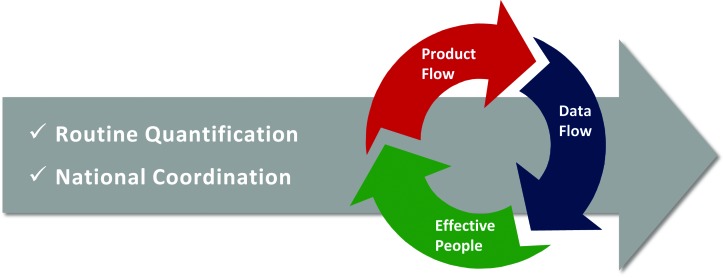
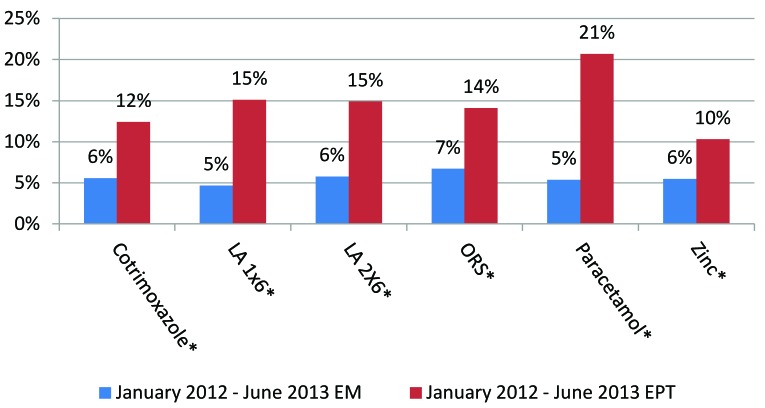
The findings from interventions in the three countries suggest that the greatest supply chain benefits are realized when all three CHSC framework elements (data flow, product flow, and effective people) are in place and working together. The synergistic effect of these three elements on supply chain performance was most effectively demonstrated by results from the Enhanced Management and Quality Collaborative interventions in Malawi and Rwanda, respectively, which were characterized by lower mean stockout rates and higher in stock rates on day of visit, when compared to other interventions.
Many conditions are necessary to ensure continuous product availability at the community level, however a supply chain works best when three key elements (product flow, data flow, and effective people) are deliberately included as an integral part of the system design. Although these elements may be designed differently in different settings, streamlining and synchronizing them while ensuring inclusion of all components for each element improves supply chain performance and promotes product availability at the community level.
联合国儿童基金会对扩大综合社区病例管理(iCCM)所面临挑战的一项审查发现,药品短缺是一个常见的瓶颈。在许多情况下,对社区层面供应链的设计考虑甚少,而且关于如何应对这些独特挑战的证据有限。社区病例管理供应链项目(SC4CCM)的目的是进行干预研究,以确定经证实的、简单且经济实惠的解决方案,应对社区卫生工作者所面临的独特供应链挑战,并证明社区层面的供应链限制是可以克服的。
SC4CCM选择了三个国家来实施供应链创新,并为学习阶段制定了一个变革理论(TOC)框架,该框架确定了产品可得性的主要驱动因素,并用于埃塞俄比亚、马拉维和卢旺达干预措施的基线评估、设计、实施和评价。在每个国家制定干预措施并进行了12至24个月的测试。2012年至2013年在每个国家进行了混合方法的后续评估。然后,社区病例管理供应链(SC4CCM)项目将TOC简化为社区卫生供应链(CHSC)框架,以便进行跨国分析。
在这三个国家进行干预的结果表明,当社区卫生供应链框架的所有三个要素(数据流、产品流和有效的人员)都到位并协同工作时,供应链能实现最大效益。这三个要素对供应链绩效的协同效应在马拉维和卢旺达分别进行的强化管理与质量协作干预措施的结果中得到了最有效的体现,与其他干预措施相比,这些干预措施的特点是平均缺货率较低,在访视当天的库存率较高。
要确保社区层面产品的持续可得性,需要具备许多条件,然而,当三个关键要素(产品流、数据流和有效的人员)被有意纳入系统设计的组成部分时,供应链的运作效果最佳。尽管这些要素在不同环境中的设计可能不同,但在确保每个要素的所有组成部分都包含在内的同时,对它们进行简化和同步,可以提高供应链绩效并促进社区层面的产品可得性。