Lugada Eric, Komakech Henry, Ochola Irene, Mwebaze Shiela, Olowo Oteba Martin, Okidi Ladwar Denis
Management Sciences for Health, Plot 15, Princess Anne Drive, P. O. Box 71419, Bugolobi, Kampala, Uganda.
J Pharm Policy Pract. 2022 Mar 1;15(1):14. doi: 10.1186/s40545-022-00412-4.
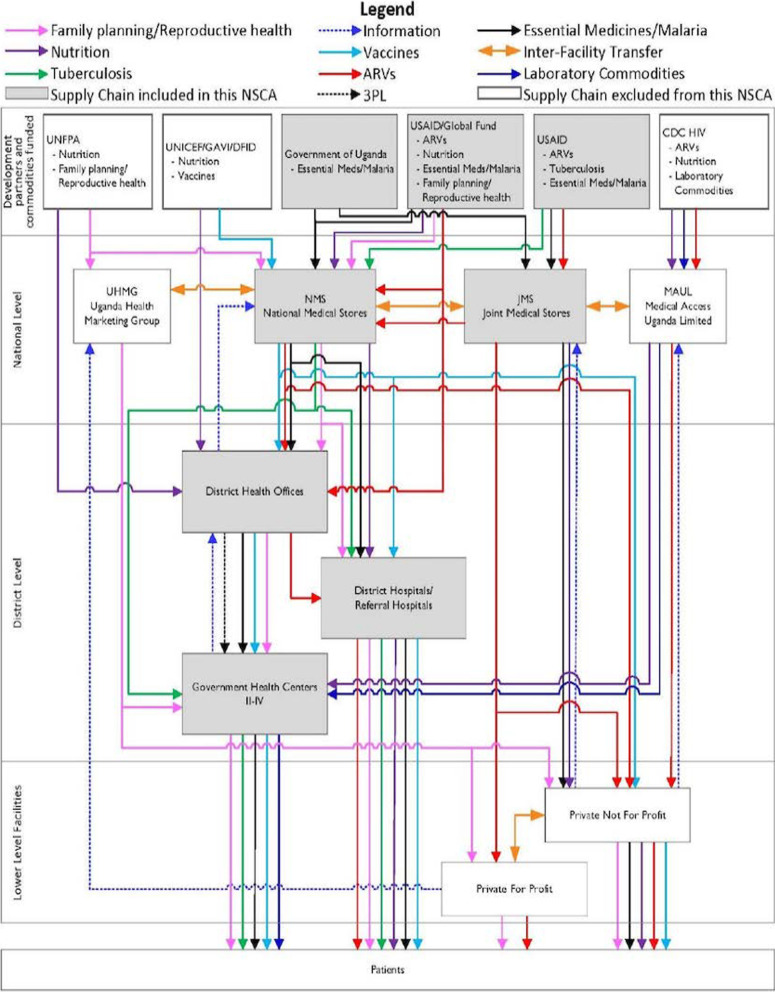
The health supply chain system is essential for the optimum performance of the healthcare system. Despite increased investments in the health supply chain system, access to quality Essential Medicines and Health Supplies remain a big challenge in Uganda. This article discusses the structure, performance, and challenges of the health supply chain system in Uganda. It provides reflections and implications for ongoing interventions for system strengthening.
The findings highlight several issues and challenges affecting the health supply chain system from functioning optimally across all levels of the health system. The challenges identified include an ineffective structure to support planning, coordination and management, inadequate funding, shortage of skilled staff, weak regulatory and governance structures at national and sub-national levels, and slow adoption and use of Electronic Logistics Information Systems to support supply chain processes and functions. Overcoming these challenges will require greater investments to improve policy development and implementation, infrastructure, equipment and support systems, knowledge and skills of supply chain personnel, increased funding and improving governance and accountability.
卫生供应链系统对于医疗系统的最佳运行至关重要。尽管对卫生供应链系统的投资有所增加,但在乌干达,获得优质基本药物和卫生用品仍然是一项巨大挑战。本文讨论了乌干达卫生供应链系统的结构、绩效和挑战。它为正在进行的加强系统干预措施提供了思考和启示。
研究结果突出了影响卫生供应链系统在卫生系统各级实现最佳运作的若干问题和挑战。确定的挑战包括支持规划、协调和管理的结构无效、资金不足、技术人员短缺、国家和国家以下各级监管和治理结构薄弱,以及电子物流信息系统的采用和使用缓慢,无法支持供应链流程和功能。克服这些挑战需要加大投资,以改善政策制定和实施、基础设施、设备和支持系统、供应链人员的知识和技能、增加资金并改善治理和问责制。