Hsu Joanne W, Willis Robert
Federal Reserve Board.
University of Michigan.
J Hum Cap. 2013 Apr 1;2013:45. doi: 10.2139/ssrn.2339225.
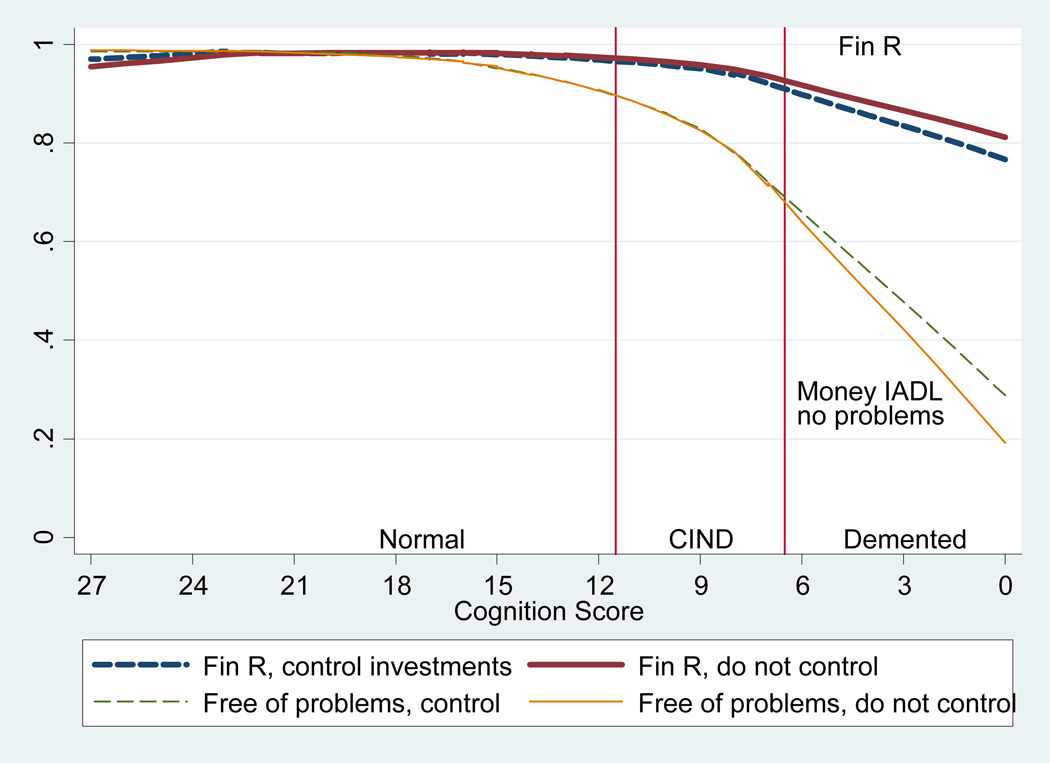
The knowledge and reasoning ability needed to manage one's finances is a form of human capital. Alzheimer's disease and other dementias cause progressive declines in cognition that lead to a complete loss of functional capacities. In this paper we analyze the impact of information about cognitive decline on the choice of household financial decision-maker. Using longitudinal data on older married couples in a novel application of survival analysis, we find that as the financial decision maker's cognition declines, the management of finances is eventually turned over to his cognitively intact spouse, often well after difficulties handling money have already emerged. However, a memory disease diagnosis increases the hazard of switching the financial respondent by over 200 percent for couples who control their retirement accounts, like 401(k) accounts, relative to those who passively receive retirement income. This finding is consistent with a model of the value of information: households with the most to gain financially from preparation are most responsive to information about cognitive decline.
管理个人财务所需的知识和推理能力是一种人力资本形式。阿尔茨海默病和其他痴呆症会导致认知能力逐渐下降,最终导致功能能力完全丧失。在本文中,我们分析了认知能力下降信息对家庭财务决策者选择的影响。通过对老年已婚夫妇的纵向数据进行生存分析的新颖应用,我们发现,随着财务决策者认知能力的下降,财务管理最终会交给认知能力未受损的配偶,而且往往是在处理金钱出现困难之后很久才会这样做。然而,对于那些控制退休账户(如401(k)账户)的夫妇来说,与那些被动领取退休收入的夫妇相比,记忆疾病诊断会使更换财务受访者的风险增加200%以上。这一发现与信息价值模型一致:从准备中获得最大经济利益的家庭对认知能力下降的信息反应最为敏感。