Bonmati-Carrion Maria Angeles, Arguelles-Prieto Raquel, Martinez-Madrid Maria Jose, Reiter Russel, Hardeland Ruediger, Rol Maria Angeles, Madrid Juan Antonio
Department of Physiology, Faculty of Biology, University of Murcia, Murcia 30100, Spain.
Department of Cellular and Structural Biology, University of Texas Health Science Center, San Antonio, TX 78229, USA.
Int J Mol Sci. 2014 Dec 17;15(12):23448-500. doi: 10.3390/ijms151223448.
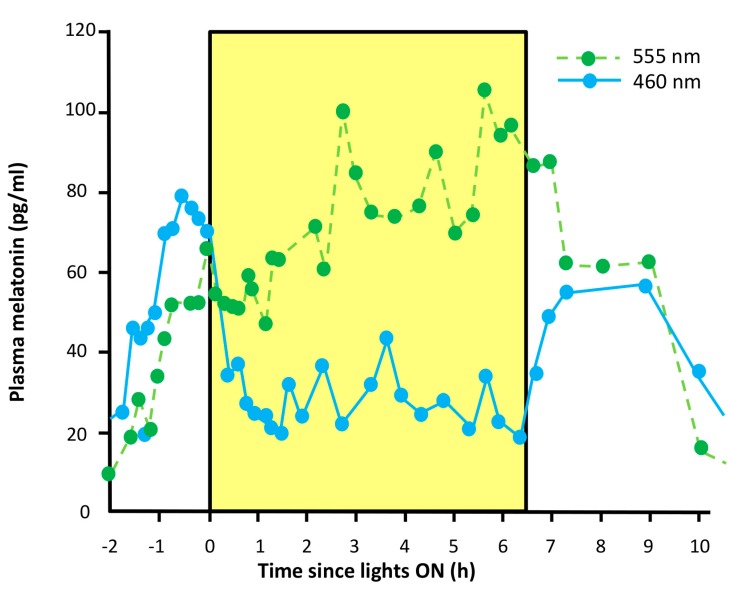
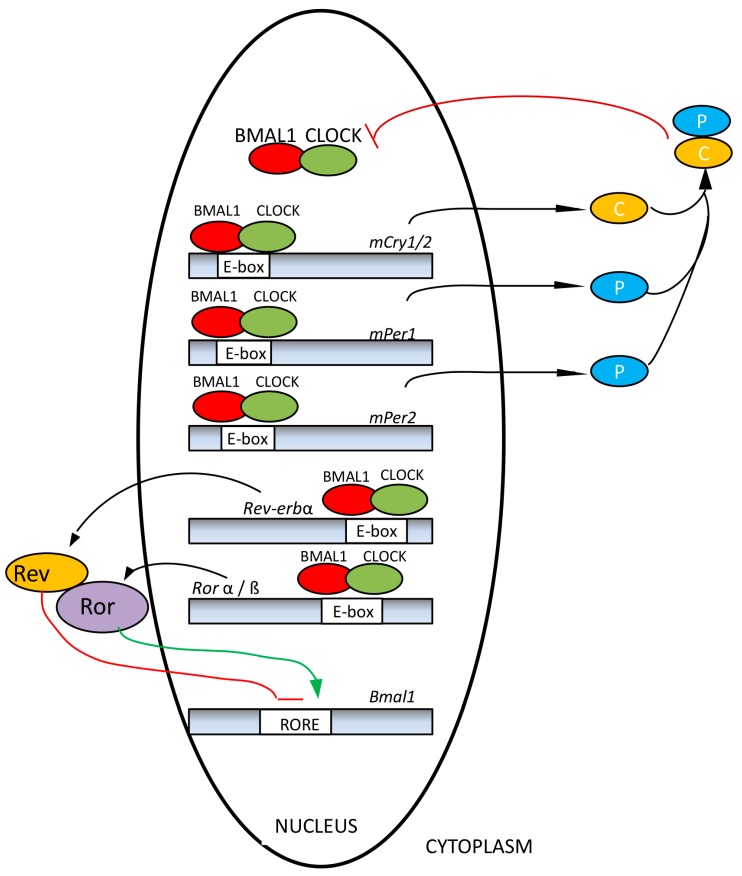
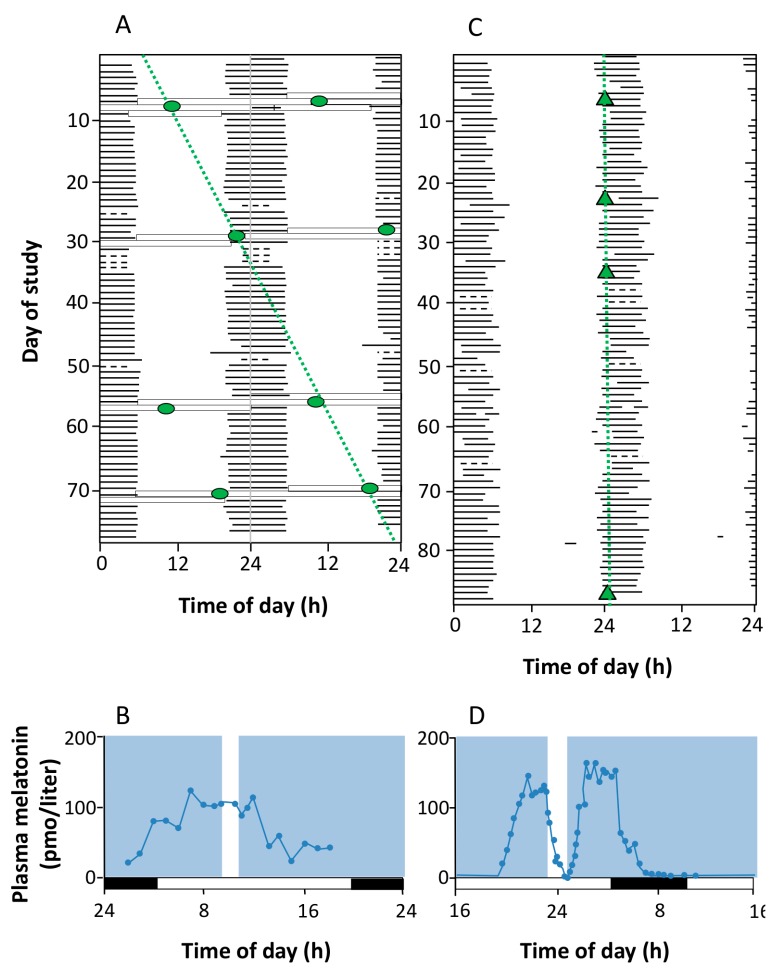
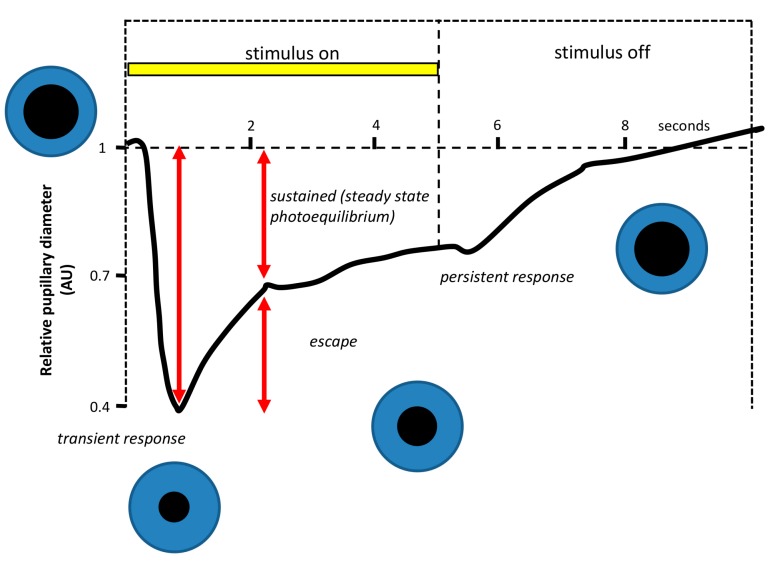
Currently, in developed countries, nights are excessively illuminated (light at night), whereas daytime is mainly spent indoors, and thus people are exposed to much lower light intensities than under natural conditions. In spite of the positive impact of artificial light, we pay a price for the easy access to light during the night: disorganization of our circadian system or chronodisruption (CD), including perturbations in melatonin rhythm. Epidemiological studies show that CD is associated with an increased incidence of diabetes, obesity, heart disease, cognitive and affective impairment, premature aging and some types of cancer. Knowledge of retinal photoreceptors and the discovery of melanopsin in some ganglion cells demonstrate that light intensity, timing and spectrum must be considered to keep the biological clock properly entrained. Importantly, not all wavelengths of light are equally chronodisrupting. Blue light, which is particularly beneficial during the daytime, seems to be more disruptive at night, and induces the strongest melatonin inhibition. Nocturnal blue light exposure is currently increasing, due to the proliferation of energy-efficient lighting (LEDs) and electronic devices. Thus, the development of lighting systems that preserve the melatonin rhythm could reduce the health risks induced by chronodisruption. This review addresses the state of the art regarding the crosstalk between light and the circadian system.
目前,在发达国家,夜晚被过度照明(夜间光照),而白天主要在室内度过,因此人们所接触到的光照强度比自然条件下要低得多。尽管人造光有积极影响,但我们为夜间轻易获得光照付出了代价:我们的昼夜节律系统紊乱或出现时间节律失调(CD),包括褪黑素节律的紊乱。流行病学研究表明,时间节律失调与糖尿病、肥胖症、心脏病、认知和情感障碍、早衰以及某些类型癌症的发病率增加有关。对视网膜光感受器的了解以及在一些神经节细胞中发现黑视蛋白表明,必须考虑光照强度、时间和光谱,以保持生物钟正常同步。重要的是,并非所有光波长对时间节律的干扰程度都相同。蓝光在白天特别有益,但在夜间似乎更具干扰性,并且会引发最强的褪黑素抑制作用。由于节能照明(发光二极管)和电子设备的激增,夜间蓝光暴露目前正在增加。因此,开发能维持褪黑素节律的照明系统可以降低时间节律失调引发的健康风险。本综述阐述了光与昼夜节律系统之间相互作用的最新研究状况。