Ness Kirsten K, Armstrong Gregory T, Kundu Mondira, Wilson Carmen L, Tchkonia Tamara, Kirkland James L
Department of Epidemiology and Cancer Control, St. Jude Children's Research Hospital, Memphis, Tennessee.
Cancer. 2015 May 15;121(10):1540-7. doi: 10.1002/cncr.29211. Epub 2014 Dec 19.
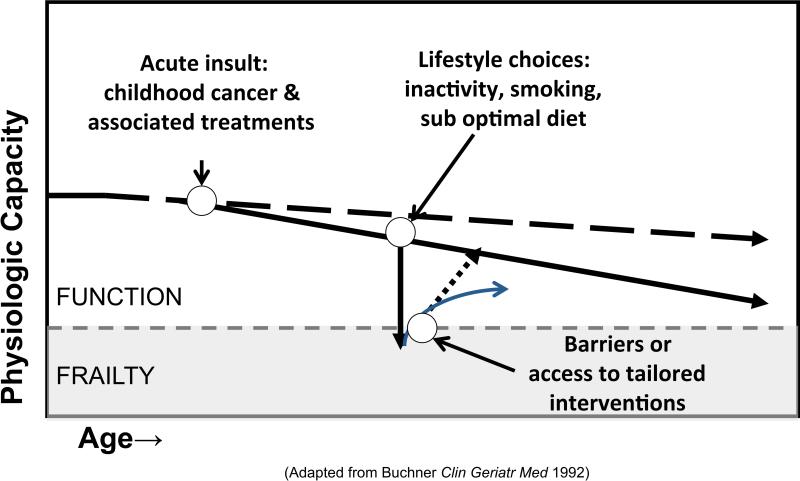
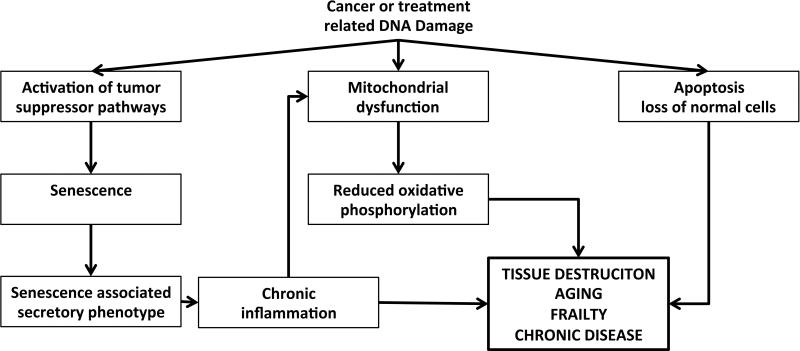
Young adult childhood cancer survivors are at an increased risk of frailty, a physiologic phenotype typically found among older adults. This phenotype is associated with new-onset chronic health conditions and mortality among both older adults and childhood cancer survivors. Mounting evidence suggests that poor fitness, muscular weakness, and cognitive decline are common among adults treated for childhood malignancies, and that risk factors for these outcomes are not limited to those treated with cranial radiation. Although the pathobiology of this phenotype is not known, early cellular senescence, sterile inflammation, and mitochondrial dysfunction in response to initial cancer or treatment-related insults are hypothesized to play a role. To the authors' knowledge, interventions to prevent or remediate frailty among childhood cancer survivors have not been tested to date. Pharmaceutical, nutraceutical, and lifestyle interventions have demonstrated some promise.
年轻的成年期儿童癌症幸存者出现虚弱的风险增加,虚弱是一种通常在老年人中发现的生理表型。这种表型与老年人和儿童癌症幸存者中新发的慢性健康状况及死亡率相关。越来越多的证据表明,在接受过儿童恶性肿瘤治疗的成年人中,身体状况不佳、肌肉无力和认知能力下降很常见,而且这些结果的风险因素并不局限于接受过颅脑放疗的人。尽管这种表型的病理生物学尚不清楚,但据推测,早期细胞衰老、无菌性炎症以及对初始癌症或治疗相关损伤产生的线粒体功能障碍在其中发挥了作用。据作者所知,迄今为止尚未对预防或改善儿童癌症幸存者虚弱状况的干预措施进行过测试。药物、营养保健品和生活方式干预已显示出一些前景。