Weedall Gareth D, Hall Neil
Institute of Integrative Biology,Biosciences Building, Crown Street,University of Liverpool,Liverpool L69 7ZB,UK.
Parasitology. 2015 Feb;142 Suppl 1(Suppl 1):S120-7. doi: 10.1017/S0031182014001693. Epub 2014 Dec 22.
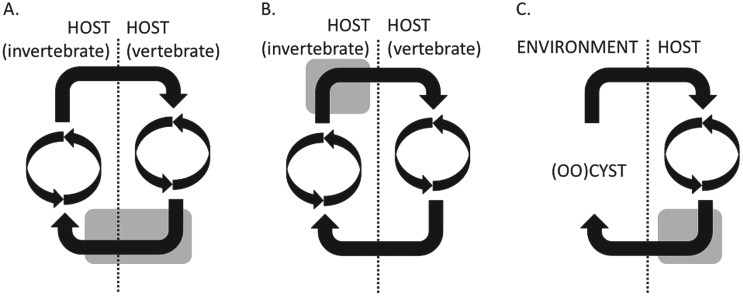
A key part of the life cycle of an organism is reproduction. For a number of important protist parasites that cause human and animal disease, their sexuality has been a topic of debate for many years. Traditionally, protists were considered to be primitive relatives of the 'higher' eukaryotes, which may have diverged prior to the evolution of sex and to reproduce by binary fission. More recent views of eukaryotic evolution suggest that sex, and meiosis, evolved early, possibly in the common ancestor of all eukaryotes. However, detecting sex in these parasites is not straightforward. Recent advances, particularly in genome sequencing technology, have allowed new insights into parasite reproduction. Here, we review the evidence on reproduction in parasitic protists. We discuss protist reproduction in the light of parasitic life cycles and routes of transmission among hosts.
生物体生命周期的一个关键部分是繁殖。对于许多导致人类和动物疾病的重要原生生物寄生虫而言,它们的有性生殖多年来一直是一个争论的话题。传统上,原生生物被认为是“高等”真核生物的原始亲属,它们可能在有性生殖进化之前就已经分化,并通过二分裂进行繁殖。关于真核生物进化的最新观点表明,有性生殖和减数分裂很早就进化了,可能在所有真核生物的共同祖先中就已出现。然而,在这些寄生虫中检测有性生殖并非易事。最近的进展,特别是在基因组测序技术方面的进展,使人们对寄生虫繁殖有了新的认识。在这里,我们综述了有关寄生原生生物繁殖的证据。我们根据寄生生命周期和宿主间的传播途径来讨论原生生物的繁殖。